


Can You Install Tile Over Cracked Concrete?
Yes, you can install tile over cracked concrete if the slab is sound and stable and the tile assembly is designed for its condition. A small surface crack doesn't automatically mean you need to replace the slab.
The important question is whether the crack is part of a larger problem. Before choosing tile or setting a schedule, look at the concrete beneath the proposed floor.
When a Cracked Slab Can Support New Tile
Small shrinkage cracks are common in concrete. If a crack is stable and the slab is otherwise sound, a tile installer may be able to prepare the surface and use a compatible crack-isolation system.
A crack can still transfer stress into a rigid floor. Tile, grout, mortar, and brittle leveling compounds can all crack if the concrete moves beneath them. The installation plan needs to address the slab, not just cover its appearance.
A damaged or unstable slab needs attention first. Loose concrete, exposed reinforcement, noticeable movement, or a difference in height across a crack calls for an evaluation before tile work begins.
How to Assess a Crack Before Tiling
Document What You Can See
Remove rugs and loose debris so you can see the full length of the crack. Take dated photos and note its location, any visible width changes, and whether one side sits higher than the other.
Keep those records if the crack changes or if a professional needs to assess it. A single photo or measurement cannot establish whether a crack is stable, and appearance alone doesn't reveal its cause.
Look Beyond the Floor
Widening cracks, cracks that return after repair, and height differences across a crack need professional evaluation. The same is true when cracks extend into walls or other structural areas.
Look for related changes around the room, including new wall cracks, sticking doors, heaving, or a sloping floor. These signs don't identify a cause on their own, but they can point to a problem that extends beyond the tile surface.
If you see them, pause the installation and have a qualified professional assess the slab. A structural engineer may be needed when foundation movement is suspected.
What a Crack-Isolation Membrane Can and Can't Do
Protection Against Limited Movement
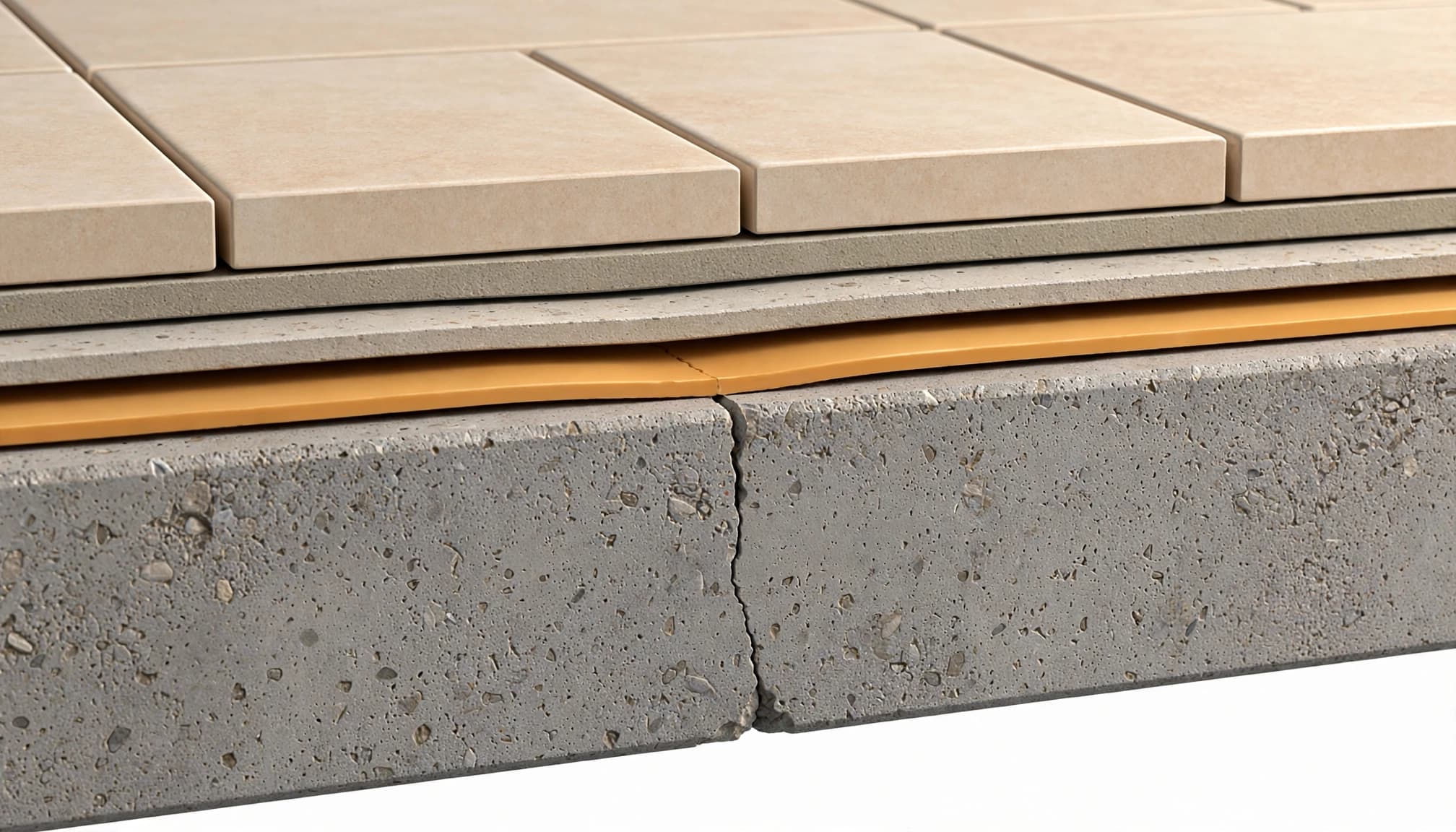
A crack-isolation membrane sits between the concrete and the tile assembly. It can help protect tile from limited movement along the plane of the slab that might otherwise transfer through the floor.
Sheet and liquid-applied systems are available. The installer should select a system suited to the slab, tile, mortar, and room conditions. The materials also need a clean surface and the cure time specified for each layer.
The Limits of a Membrane
A membrane doesn't fix settlement, heaving, or structural movement. It also doesn't make loose or damaged concrete suitable for tile.
Don't assume that an uncoupling product and a crack-isolation product provide identical protection. Choose the system for the actual conditions rather than relying on a product name.
In a shower or another wet area, waterproofing is a separate consideration. A crack-isolation layer shouldn't be treated as a complete waterproofing system unless it's part of an approved assembly. Our guide to bathroom waterproofing before tile covers the drains, corners, and other details that need protection.
Prepare the Concrete Before Installing Tile
Clean and Flatten the Surface
Tile needs concrete that's sound, clean, and flat enough for the tile size and installation method. Paint, oil, old adhesive, dust, and weak surface material can interfere with bonding.
An installer can use a straightedge to find high and low areas. High spots may need grinding with proper dust control, while low areas may need a compatible cement-based patch or leveling product. Large-format tile generally requires a flatter surface than smaller tile because uneven areas can leave noticeable raised edges.
For more on the condition of the base, see our guide to concrete slab preparation for flooring.
Address Moisture and Cure Times
A slab can look dry and still have a moisture problem. Stains, salt-like deposits, past flooding, and damp areas deserve attention before materials go down.
Find and address the source of water first. The flooring system's requirements determine which moisture tests and preparation methods apply. Primers, patches, membranes, and mortar also need their stated cure times before the next layer is installed.
Plan Joints and Finished Floor Height
Existing control joints and construction joints need a place in the tile plan. Depending on the joint and assembly, a movement joint may need to continue through the finished tile. Covering a joint with rigid material can create a predictable line of failure.
Movement space also matters at the room perimeter and at changes in plane. These details belong in the layout before the installer starts setting tile.
Consider the height of the complete floor as well. Tile, mortar, a membrane, and any leveling material can affect door clearance, transitions, and appliances. In a bathroom, the finished height can also affect the toilet and the transition into a shower.
Common Mistakes That Can Shorten Tile Life
Covering a crack without addressing its cause can leave the new floor exposed to the same movement that damaged the slab. Another mistake is treating every membrane as a solution for every crack, even when the concrete needs structural attention.
It's also easy to focus on the visible tile and overlook preparation. Dust under a membrane, an uncured patch, or an unaddressed moisture source can compromise the layers below the finish. Planning for joints and floor height early helps prevent problems that are harder to correct after installation.
Start With the Slab, Not the Tile
New tile can go over a cracked concrete slab when the concrete is stable and the installation addresses the crack. A membrane may help with limited movement, but it can't correct a structural problem.
Start with an assessment of the slab and resolve the conditions that make it unsuitable. Once the base is ready, a properly planned tile assembly has a sound place to begin.