
Naples kitchen ventilation options for high-heat cooking
Searing a steak or firing up a wok can fill a kitchen with smoke within minutes, especially in an open Naples floor plan. The right Naples kitchen ventilation system captures grease, heat, moisture, and cooking odors before they spread through the home.
For most homeowners who cook at high temperatures, ducted exhaust is the strongest option. Ductless hoods can work in limited situations, but they recirculate air instead of removing it. Your cooking style, range type, kitchen layout, and roof or exterior wall configuration should guide the decision.
Key Takeaways
- Ducted exhaust is generally the most effective choice for smoke, grease, heat, and humidity.
- Hood width, capture depth, blower capacity, and duct design all affect performance.
- Island cooktops often need more careful hood placement because air currents can carry smoke away.
- Ductless systems filter some particles and odors, but they don't remove heat or moisture.
- Confirm current requirements with local building authorities and a licensed installer before construction.
Why high-heat cooking needs stronger exhaust
High-heat cooking creates more than visible smoke. Searing produces grease vapor and fine particles. Wok cooking sends heat and steam upward at a rapid rate. Indoor grilling can release smoke across a wider area than a standard saucepan.
Gas ranges also produce combustion gases, including carbon monoxide and nitrogen dioxide. A properly designed exhaust hood helps move cooking byproducts outdoors. Even induction ranges need effective ventilation because they create steam, grease, and odors when food cooks at high temperatures.
Naples homes also face warm, humid weather for much of the year. When a hood fails to remove moisture, condensation can collect on nearby cabinets, ceilings, and walls. Repeated exposure can damage finishes and leave the kitchen feeling damp after cooking.
A hood's performance depends on more than its advertised blower rating. The capture area must cover the cooking surface, and the duct must move air efficiently. Long duct runs, multiple elbows, undersized ducts, and restrictive exterior caps can reduce actual airflow.
The hood should also match the range. A 30-inch electric cooktop used for light meals has different needs than a 48-inch gas range with a wok burner. High-BTU appliances and indoor grills typically require a system selected around the appliance's heat output and the room's layout.
A powerful blower cannot compensate for a hood that is too narrow, mounted too high, or connected to poorly planned ductwork.
Naples kitchen ventilation: ducted exhaust options
Ducted systems pull contaminated air through a hood and discharge it outside through a wall or roof. For high-heat cooking, this approach generally provides the best control over smoke, grease, humidity, and heat.
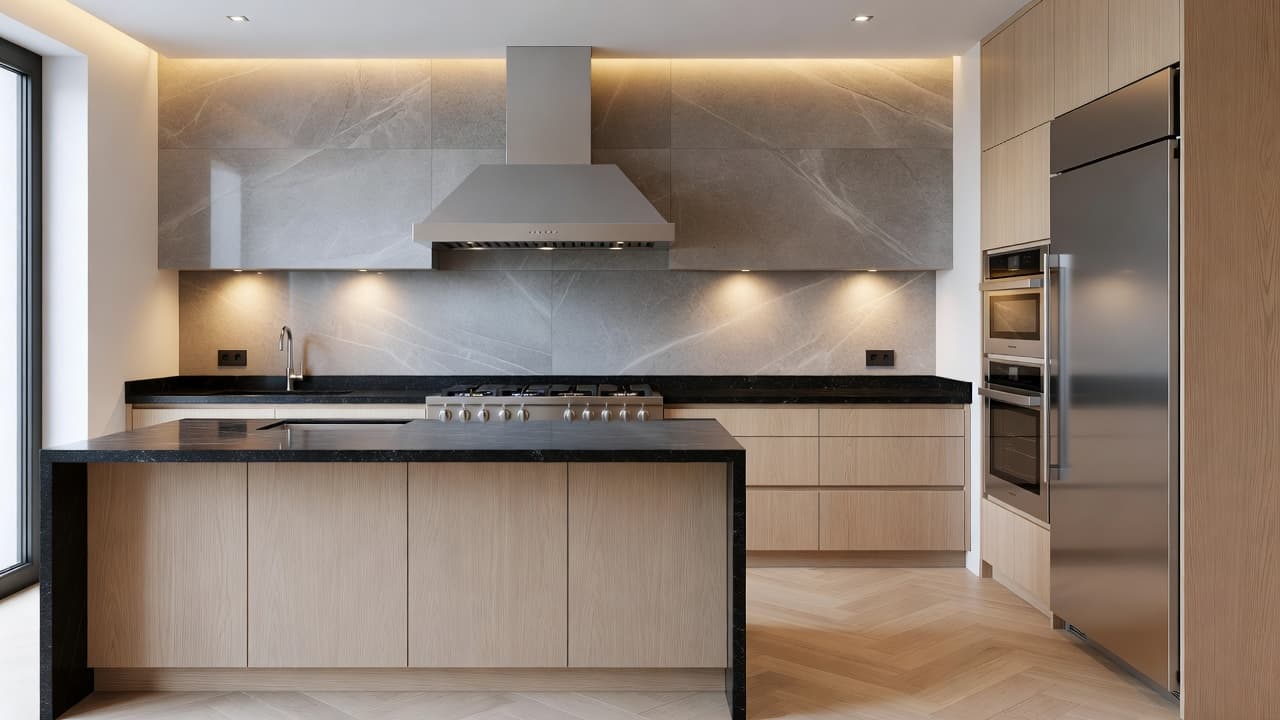
The hood style should fit both the range and the kitchen architecture:
- Wall-mounted chimney hoods work well above ranges placed against an exterior or interior wall. They offer a visible design feature and can provide generous capture space.
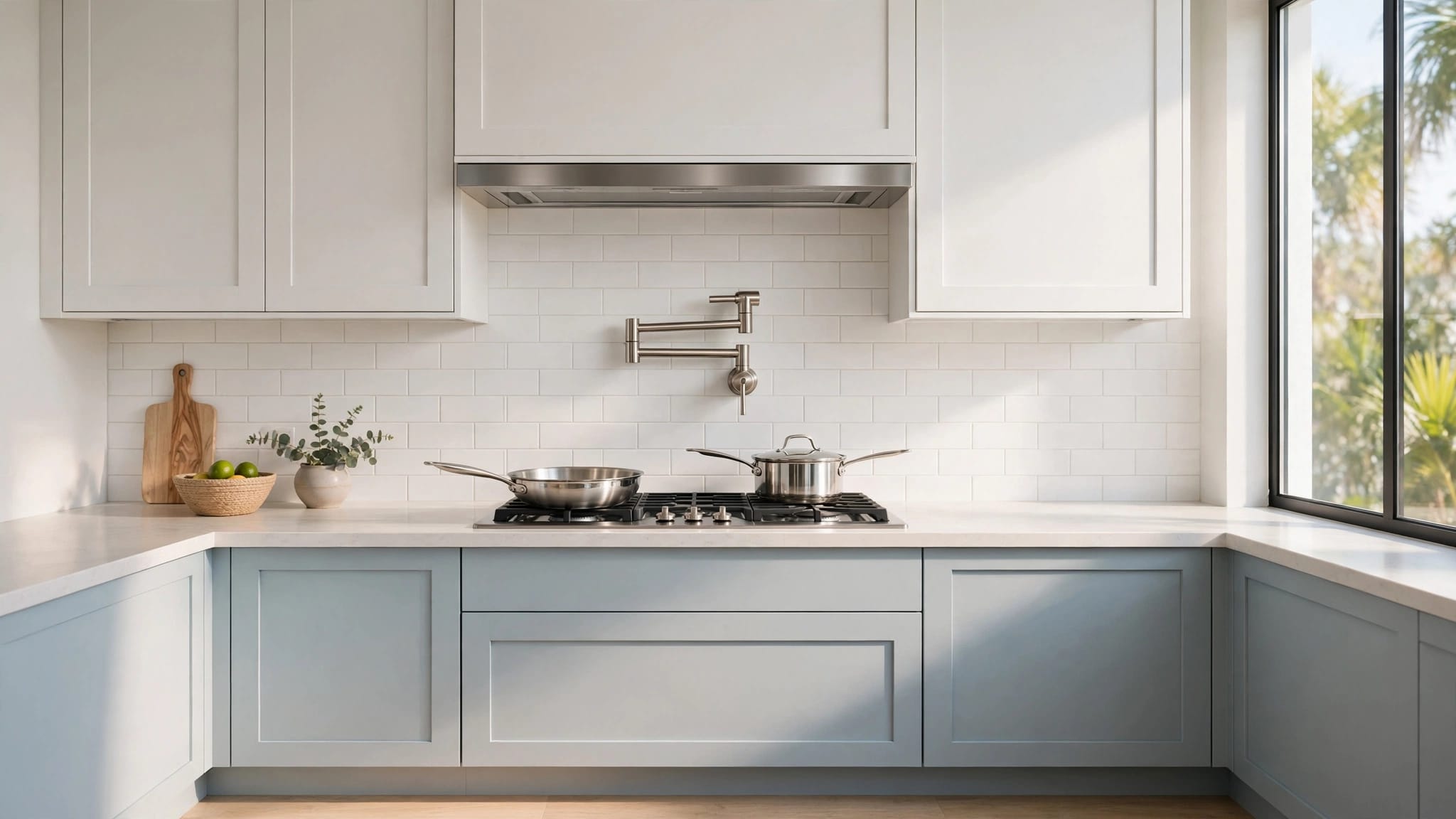
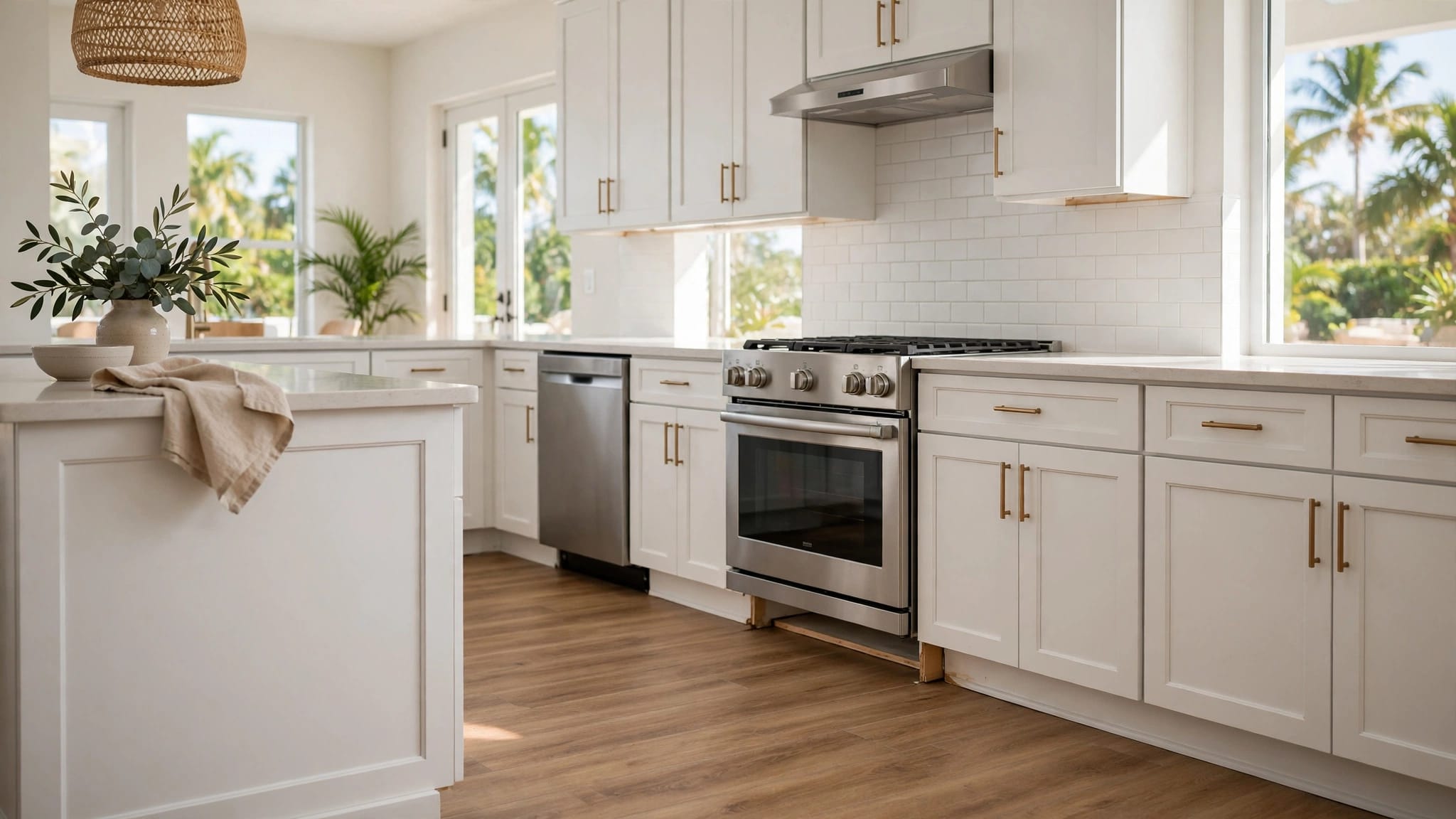
- Under-cabinet hoods fit beneath existing cabinetry. They can be practical during a smaller renovation, although cabinet depth may limit capture performance.
- Hood inserts install inside a custom wood or plaster enclosure. This option works well when you want the ventilation system to blend with custom cabinetry.
- Island hoods hang above a cooktop positioned away from the walls. They need careful sizing because cross-currents can push smoke toward seating areas and adjacent rooms.
- Remote blower systems place the motor outside the kitchen area, such as in an attic or on the roof. They may reduce sound at the hood, but the full system still requires correct duct planning.
For a wok or indoor grill, a deeper canopy can capture rising plumes more effectively than a shallow decorative hood. A hood that extends beyond the cooking surface also gives smoke more room to enter the capture zone.
Blower capacity matters, but higher airflow isn't automatically better. Excessive exhaust can increase noise, pull conditioned air from the home, and create pressure problems. The installer should consider the range, duct length, home size, and whether the house has a tight building envelope.
A variable-speed control is useful because you can run the hood at a lower setting for simmering and increase airflow for searing. Separate controls for lights and the blower also make daily use easier.
For homeowners planning a new layout, ventilation should be considered before cabinets, ceilings, and electrical work are finalized. Blue Heron's custom kitchen design services can help coordinate the hood location with cabinetry, appliances, and the wider renovation plan.
When a ductless hood makes sense
A ductless hood, also called a recirculating hood, draws air through grease filters and an activated-carbon filter. It then sends the filtered air back into the kitchen.
This setup may suit a condo, an interior kitchen, or a renovation where exterior ductwork isn't practical. It can also work for homeowners who cook mostly with low or moderate heat.
However, ductless ventilation has clear limits. The filters can capture some grease and reduce certain odors, but the system doesn't send air outside. Heat stays in the room, and steam remains part of the indoor air. Carbon filters also require regular replacement because they lose effectiveness as they become saturated.
Ductless systems are usually a poor match for frequent wok cooking, indoor grilling, or heavy searing. Those methods release smoke and grease faster than a recirculating filter can handle. The result may be lingering odors, greasy cabinet surfaces, and extra cleaning around the cooking area.
This comparison can help narrow the choice before you discuss specific models with an installer.
| Feature | Ducted hood | Ductless hood |
|---|---|---|
| Smoke removal | Sends air outdoors | Filters and recirculates air |
| Heat removal | Yes, when properly designed | No |
| Humidity control | Better | Limited |
| Grease control | Depends on filters and airflow | Depends on filters and airflow |
| Installation | Requires duct route and exterior termination | Easier where ducting isn't available |
| High-heat cooking | Usually the better fit | Limited fit |
Ductless is a compromise for certain layouts, not an equal substitute for an exterior exhaust system.
Match the hood to your kitchen layout
The best Naples kitchen ventilation setup can change based on where the range sits.
A range against a wall usually offers the simplest duct route. The wall can conceal part of the duct, and the hood can connect to an exterior termination with fewer bends. Even so, the installer must check framing, plumbing, wiring, and the location of the exterior wall.
Island cooking areas require more planning. Smoke can drift before it reaches the hood, especially when ceiling fans, air-conditioning vents, open doors, or nearby windows create moving air. An island hood needs enough width and depth to capture rising vapors from every side.
Open-concept kitchens also need attention to noise and sightlines. A loud blower may carry sound into the dining and living areas. A large hood enclosure can affect views across the room, while a small hood may leave the adjoining space exposed to smoke and odors.
A downdraft system can preserve an open view above a peninsula or island. However, it pulls air downward or sideways, while heat and smoke naturally rise. That makes it less suitable for aggressive wok cooking, indoor grilling, and high-temperature searing than a well-sized overhead hood.
Your home configuration affects the duct route as well. A one-story home may allow a short roof run, while a two-story home could require a longer path through an attic or chase. Slab construction, structural beams, and existing utilities can limit where the duct can go.
Before choosing a hood, review:
- Range width and fuel type
- Burner output and use of a wok ring or indoor grill
- Wall, peninsula, or island placement
- Ceiling height and hood mounting height
- Duct route, length, diameter, and number of elbows
- Exterior wall or roof access
- Noise tolerance in an open floor plan
- Available space for makeup air and electrical connections
The hood should follow the cooking zone, not force the kitchen layout to work around an appliance selected too early.
Design, installation, and maintenance details
Good ventilation starts with a complete system. The hood is only one part of it. The plan may also include ductwork, an exterior wall or roof cap, backdraft protection, electrical service, framing, drywall repair, cabinet modifications, and controls.
Ask the installer how the proposed duct route affects airflow. Smooth, properly sized metal ductwork generally performs better than a route with sharp turns and unnecessary length. The exterior termination should also protect the opening from rain and pests without creating excessive resistance.
Makeup air may need consideration when a high-capacity hood removes a large volume of air. In a tightly sealed home, exhaust can affect pressure and comfort. A licensed HVAC or ventilation professional can determine whether a makeup-air solution belongs in the design.
Naples homeowners should also choose materials that tolerate frequent cleaning and humid coastal conditions. Stainless steel is common because it handles heat and wipes clean. Filters should be easy to remove, and dishwasher-safe baffle filters can simplify maintenance when the manufacturer allows it.
Run the hood before smoke reaches the ceiling, then leave it on for several minutes after cooking. Clean metal filters regularly, wipe the hood surface, and replace charcoal filters according to the manufacturer's instructions if you use a ductless system.
Finally, don't rely on a generic installation package for every home. Confirm current requirements with the City of Naples or the relevant local building authority, then have a licensed installer verify the design, permits, appliance clearances, electrical work, and exterior termination.
Choosing the right option for your cooking style
A homeowner who mostly sautés vegetables and cooks pasta may be satisfied with a compact wall hood. Someone who sears steaks several nights a week needs more capture area and a stronger ducted system.
For wok cooking, prioritize a deep overhead canopy, a clear duct path, and controls that let you raise airflow quickly. For an indoor grill, focus on grease filtration and a hood that covers the entire cooking surface. Gas ranges call for careful exhaust planning because the system handles both cooking emissions and food byproducts.
If the range is on an island, give the hood enough presence to capture air from all sides. If the kitchen is open to the living room, compare blower noise before choosing a model. If exterior ducting would require major structural work, weigh the renovation cost against the ongoing limits of recirculating ventilation.
A good decision comes down to the actual way you cook. The most attractive hood won't perform well if it doesn't match the range, room, and duct route.
Conclusion
High-heat cooking puts greater demands on a kitchen exhaust system, especially in an open Naples home. Ducted Naples kitchen ventilation usually gives homeowners the strongest control over smoke, grease, heat, and humidity, while ductless systems fit only certain layouts and cooking habits.
Start with your range, then review hood size, capture depth, duct routing, noise, and home configuration. A licensed installer can confirm the design and current local requirements before construction begins, helping your remodeled or newly built kitchen stay comfortable during the next high-heat meal.