

Cape Coral Temporary Kitchen Setup During a Remodel
A major kitchen remodel can leave your household without a sink, range, refrigerator, or usable counter for weeks. A thoughtful temporary kitchen setup won't feel like your finished kitchen, but it can keep meals, cleanup, and daily routines manageable while construction moves forward.
Cape Coral homeowners also need to plan around heat, humidity, pests, and severe weather. Start before demolition, when you still have time to choose a safe location, move supplies, and coordinate utility work with your contractor.
Plan Your Temporary Kitchen Setup Before Demolition
The best temporary kitchen is simple, organized, and placed outside the active work zone. Meet with your contractor before the project starts to confirm which rooms will remain accessible and when water, power, or gas may be shut off.
A major remodel often moves through design approval, permits, demolition, rough plumbing and electrical work, cabinetry, countertops, final connections, and inspections. Your temporary plan should account for the periods when dust barriers are up and access routes change.
For homeowners planning Cape Coral kitchen remodeling, early coordination prevents a rushed setup after the old cabinets are already gone.
Match the Setup to Your Actual Routine
Start with the meals your household eats most often. A family that relies on coffee, school lunches, and simple dinners needs different equipment than a household that cooks every night.
Choose a limited menu for the remodeling period. Microwaveable meals, slow-cooker recipes, sandwiches, salads, and sheet-pan meals prepared elsewhere can reduce cleanup and heat inside the home. Keep a few familiar foods available, especially if children or older relatives live in the house.
Create a Small, Defined Work Zone
Measure the temporary area before buying carts or tables. You need room to open the refrigerator, reach a microwave, carry water, and pass through without tripping over cords or storage bins.
Keep construction materials, tools, and dust away from food and dishes. If the remodel requires plastic containment, don't place your food station inside that enclosed work area.
A temporary kitchen should reduce daily friction, but it must never interfere with a contractor's work path, an exterior exit, or access to the electrical panel.
Choose a Safe Location for Daily Cooking
A dining room, breakfast nook, laundry room, or garage can work, depending on conditions. The location must be dry, ventilated, accessible, and suitable for each appliance you plan to use.
Avoid bedrooms, bathrooms, narrow hallways, and areas with active construction traffic. Don't use a space that has visible moisture, a roof leak, damaged outlets, or poor access to an exterior door.
Dining Areas Keep the Routine Indoors
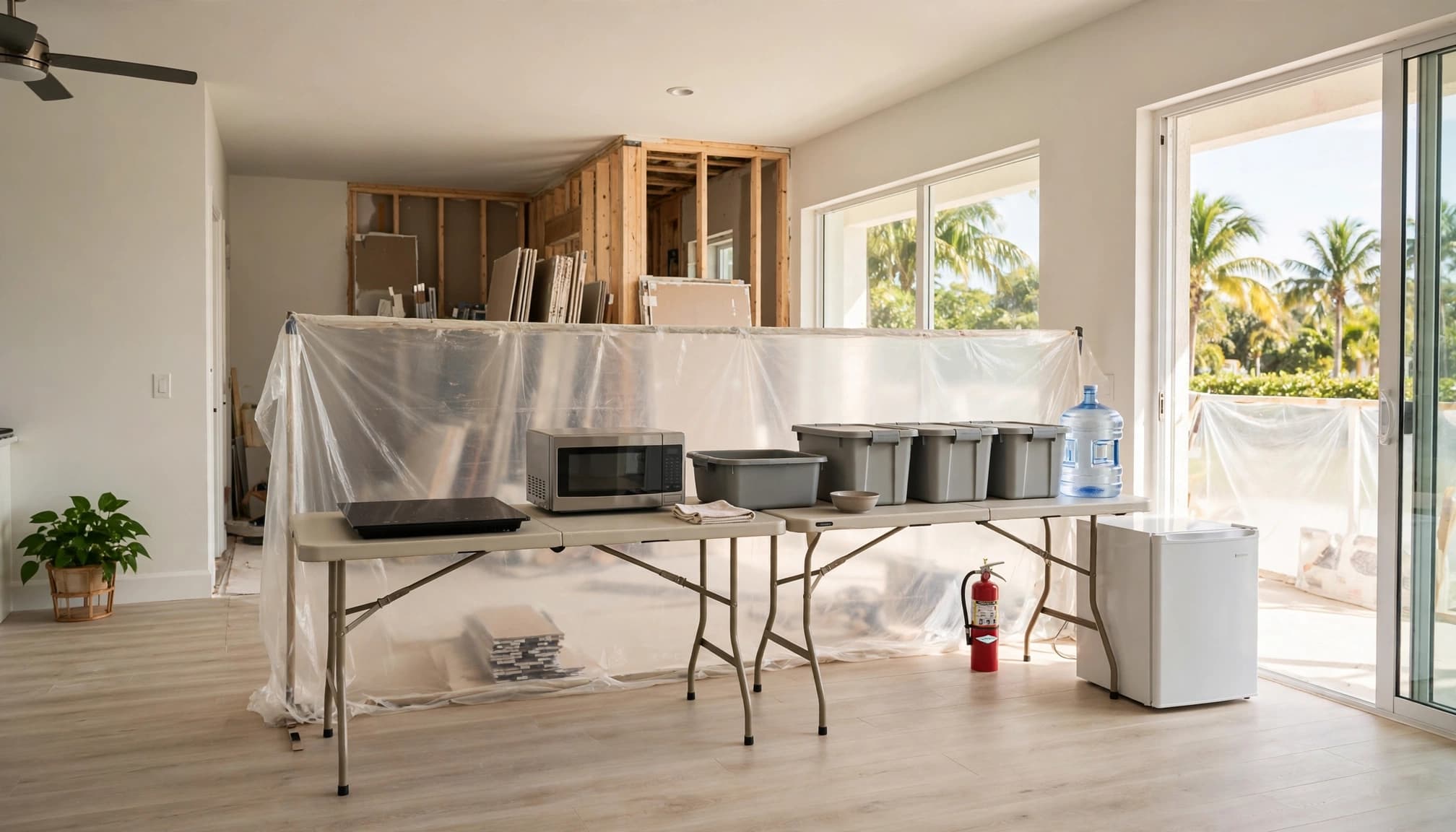
A dining room is often the easiest choice because it has stable flooring, lighting, and nearby outlets. Use a sturdy folding table or rolling utility cart for a microwave, coffee maker, and food-prep surface.
Protect floors with a washable mat under water dispensers and dish tubs. Leave clear space around hot appliances, and don't cover ventilation openings on a microwave or compact refrigerator.
Garages and Laundry Rooms Need Extra Checks
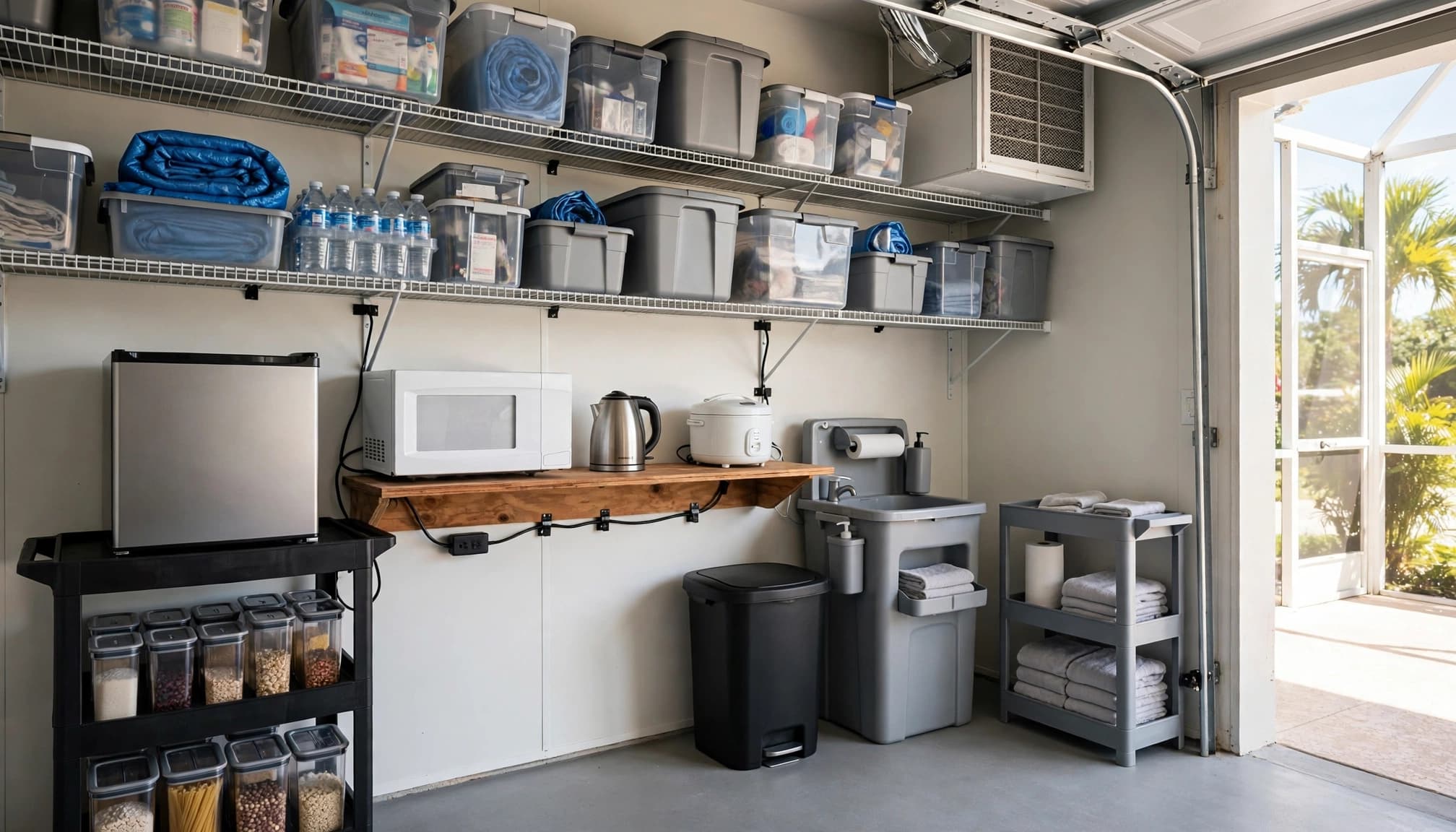
A garage can provide useful separation from construction dust. However, Cape Coral garage temperatures can become intense, and many refrigerators or small appliances aren't designed for extreme heat or humidity. Check the manufacturer's location and temperature guidance before moving appliances there.
Laundry rooms may offer water access and easy-to-clean floors. Still, keep food and clean dishes separate from laundry products. Never block the washer, dryer, utility sink, electrical panel, or paths needed for routine maintenance.
Build a Practical Appliance and Supply List
A temporary kitchen works best when every item has a purpose. Avoid filling the area with duplicate gadgets that crowd the counter and add more cords.
A compact refrigerator, microwave, electric kettle, and coffee maker cover many households' daily needs. A countertop induction cooktop or slow cooker can add warm meals when the space and electrical supply allow it.
| Need | Practical Temporary Option | Important Check |
|---|---|---|
| Cold food storage | Compact or garage-rated refrigerator | Leave space for airflow and confirm the manufacturer's temperature limits. |
| Reheating meals | Microwave | Keep vents clear and plug directly into a suitable outlet. |
| Simple hot meals | Induction cooktop, slow cooker, or rice cooker | Use on a stable, heat-resistant surface. |
| Food prep | Folding table or utility cart | Choose a washable top and keep it clear of construction dust. |
| Cleanup | Dish basin, drying rack, and water container | Plan for handwashing and wastewater disposal. |
Keep a basic set of dishes, utensils, can opener, cutting board, dish soap, paper towels, and food-storage containers. Fewer items make daily cleanup easier and give pests fewer places to hide.
Protect Electrical Connections
High-wattage appliances can overload a circuit when several run at once. A microwave, kettle, toaster oven, induction cooktop, and refrigerator may need more capacity than one outlet can safely provide.
Plug appliances directly into permanent wall outlets whenever possible. Avoid daisy-chaining power strips or using lightweight extension cords as a long-term solution. Keep cords away from water, doorways, and walking paths.
If your remodel needs a new circuit, relocated receptacle, temporary power arrangement, panel work, or permanent wiring, use a licensed electrician. Electrical changes often require permits and inspections, so confirm current Cape Coral requirements before work begins.
Keep Gas and Open Flames Out of the Plan
Do not use propane cookers, charcoal grills, gas grills, or camp stoves inside the home, garage, lanai, or enclosed porch. Carbon monoxide, fire, and burn hazards rise quickly in partially enclosed areas.
Outdoor cooking may be an option only when the appliance is approved for that use, placed on a stable surface, and kept well away from doors, windows, combustible materials, and storm debris. Follow the manufacturer's instructions and local fire rules.
Keep a working smoke alarm nearby and an accessible, rated fire extinguisher. Never use water on a grease fire.
Set Up Water, Dishes, and Food Storage
Losing the kitchen sink is often harder than losing the range. Plan for handwashing, dishwashing, safe drinking water, and wastewater before the demolition crew arrives.
If a laundry or utility sink stays available, use it for dishes only when it remains clean and accessible. Don't wash food-prep items in a sink used for paint, grout, construction debris, or chemical cleanup.
Use a Two-Bin Dishwashing Method
A simple two-bin system can work when there is no usable sink. Use one basin for hot, soapy wash water and a second for clean rinse water. Air-dry dishes on a rack rather than drying them with a damp towel.
Replace wash water often, especially after handling raw meat, eggs, or greasy cookware. Empty wastewater through an approved plumbing fixture, not into the yard, storm drain, or driveway.
Handwashing needs its own plan. Keep soap, clean water, and disposable towels together in one spot. If work disrupts a bathroom or utility sink, discuss temporary sanitation access with your contractor.
Limit What You Keep at Room Temperature
Florida warmth shortens the safe window for perishable foods. Return groceries to refrigeration promptly, keep cold foods chilled, and discard food that has sat in unsafe conditions.
Use sealed containers for dry goods, pet food, bread, and snacks. Lidded trash cans are also important. Empty trash frequently, because food odors attract ants, roaches, and rodents.
Manage Cape Coral Heat, Humidity, Pests, and Storms
Cape Coral's climate changes how a temporary kitchen performs. Humid air can make paper goods limp, encourage mold on damp towels, and wear down appliances placed in an unconditioned garage.
Store dry supplies in clear, sealed bins raised off the floor. Wipe down counters every day, dry dish racks fully, and don't leave wet sponges in closed containers. If an area smells musty or shows water staining, choose another location.
Keep Insects and Moisture Under Control
Do not rely on open bags, cardboard boxes, or loosely covered bowls for pantry storage. Ants can find a small spill, while roaches thrive near moisture and food residue.
Check the setup each evening. Wipe crumbs, empty the trash, store fruit as appropriate, and inspect near exterior doors for pest activity. A clean temporary kitchen is easier to maintain than one that needs a deep reset every weekend.
Prepare for Severe Weather Interruptions
During hurricane season, keep the temporary kitchen flexible. Store light equipment where it can be moved quickly, and don't block a route to shutters, windows, or exterior doors.
Have a cooler, ice packs, bottled water, shelf-stable food, manual can opener, and battery-powered lighting ready. If a storm threatens, unplug countertop appliances and move them away from windows or areas that could take on water.
Coordinate the Setup With Construction and Payments
A remodel schedule can change after inspections, material delays, or hidden conditions behind walls. Water damage, corroded pipes, outdated wiring, or previous unpermitted work may require additional repairs once demolition begins.
Ask your contractor for a written sequence that identifies major milestones and expected utility interruptions. You don't need a perfect completion date, but you do need notice when a change affects where your family cooks, cleans, or stores food.
Keep Work, Draws, and Decisions Documented
For financed projects, compare the lender's draw process with the construction contract. A lender may inspect work before releasing funds, while a contractor may need payment for ordered cabinets or completed milestones.
Keep permits, invoices, material selections, inspection records, and approved change orders together. A change order should state its price and the expected schedule effect. Clear records reduce confusion when the project scope changes.
For larger projects involving several rooms, whole-home remodeling in Cape Coral benefits from the same discipline. The kitchen may be the daily inconvenience, but plumbing, electrical, structural, and permit work can affect the entire household.
A Functional Kitchen While Your New One Takes Shape
A successful temporary kitchen setup gives your household a clean place to store food, prepare simple meals, and wash up without creating new safety problems. Choose a dry, accessible space, keep appliances within their limits, and treat electrical, gas, water, and sanitation work with care.
Your finished kitchen deserves careful planning, and your temporary arrangement does too. With realistic expectations and a clear construction schedule, the disruption stays contained while the permanent space comes together.