
Best Kitchen Cabinet Materials for Humid Cape Coral Homes
Cape Coral humidity is hard on kitchen cabinets. Doors swell, paint starts to fail, and bargain boxes can break down near sinks or dishwashers long before the room feels dated.
That makes cabinet shopping a little different here than in a drier climate. The right kitchen cabinet materials need to resist moisture, hold their shape, and keep their finish intact through daily steam, summer humidity, and the occasional plumbing surprise.
Key Takeaways
- Plywood is usually the strongest all-around choice for cabinet boxes in humid Cape Coral homes.
- Solid wood looks beautiful, but it still moves with moisture, so the finish and joinery matter.
- Moisture-resistant MDF can work well for painted doors when edges stay sealed and dry.
- Particleboard is the riskiest option near sinks, dishwashers, and leak-prone spots.
- Sealed edges and quality finishes matter almost as much as the core material.
Why humidity changes the cabinet decision
Even a well-air-conditioned Cape Coral home still sees moisture swings. Cooking, dishwashing, summer storms, and frequent AC cycling all push cabinets through changing conditions.
That matters because cabinets fail in layers. The face may look fine, while the inside starts to absorb moisture. Once that happens, swelling , delamination , loose veneer, warped doors, and finish breakdown can follow. In a kitchen, the trouble often starts under the sink or around the dishwasher, where a small leak stays hidden longer than it should.
Salt air can add another layer of wear, especially near windows, sliders, or outdoor kitchens connected to the main house. Hardware can corrode faster, and finishes that looked smooth at installation can start to dull or peel.
A cabinet can look perfect on day one and still fail fast if the edges are left unsealed.
That is why the material behind the door matters just as much as the style on the front.
Which cabinet materials hold up best in humid kitchens
The best cabinets for humid homes are the ones that stay stable when moisture sneaks in. Here is how the common options compare.
| Material | Humidity performance | Best use | Watch-outs |
|---|---|---|---|
| Plywood | Very good | Cabinet boxes, sink bases, full remodels | Needs sealed edges and quality construction |
| Solid wood | Good, but moves | Doors, face frames, trim | Can warp, crack, or need seasonal adjustments |
| Moisture-resistant MDF | Fair to good | Painted doors and panels | Edges swell if water gets in |
| Particleboard | Poor | Lowest-budget jobs in dry spots | Swells fast and can delaminate |
| Laminate over a quality core | Good to very good | Modern kitchens, easy cleanup | Cheap cores and weak edges still fail |
The table makes one thing clear. In Cape Coral, the hidden core matters more than the showroom sample.
Plywood cabinet boxes
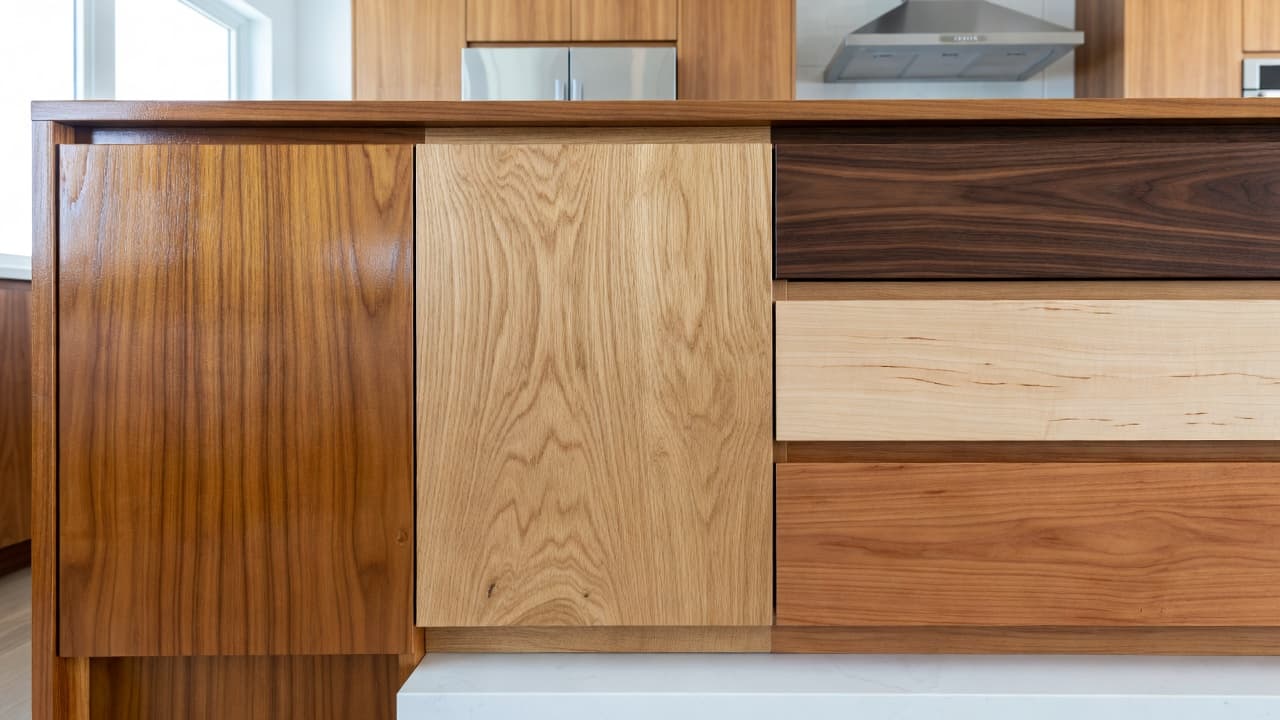
Plywood is usually the safest choice for cabinet boxes in a humid climate. Its cross-laminated layers resist movement better than particleboard, so it handles seasonal moisture shifts with less drama.
That does not mean all plywood is equal. Cabinet-grade plywood with sealed edges is far better than thin, void-filled material that only looks sturdy from the outside. If the sink base takes a hit from a slow leak, plywood still has a better chance of surviving without turning soft and swollen.
For Cape Coral kitchens, plywood works especially well in base cabinets, pantry units, and any run that sits near plumbing. It also holds screws well, which matters when doors, hinges, and drawer slides need to stay tight over time.
Solid wood doors and face frames
Solid wood still has a place in humid homes, especially for doors and face frames. Maple, oak, cherry, and other common cabinet woods can look great and hold up well when they receive a strong finish.
The catch is movement. Wood expands and contracts with moisture, so wide panels can shift, and poorly built doors can twist. That does not make solid wood a bad choice. It just means the construction has to be right.
If you like a stained, natural look, solid wood is often worth the investment. For painted cabinets, it can still work, but the finish needs to cover every edge and joint cleanly. Otherwise, the wood will remind you that it is alive every time the weather changes.
Moisture-resistant MDF for painted cabinets
MDF gives you a smooth surface that takes paint well. It is also more stable than solid wood in flat painted panels, which is why many homeowners like it for clean, modern cabinet fronts.
Still, MDF has one weak spot. When water gets into an exposed edge, it can swell fast. That makes sealed seams, proper edge banding, and careful installation essential. Moisture-resistant MDF helps, but it is not a free pass.
This material works best for upper cabinets, decorative panels, and painted doors in kitchens that stay dry and well maintained. It is less suited to sink bases, dishwashers, or any spot where leaks are likely. If you want painted cabinets without paying top-tier prices, MDF can be a smart middle ground.
Particleboard and thermofoil, where they fall short
Particleboard is the least forgiving of the common cabinet materials. It is also the one most likely to swell, crumble, or delaminate after a leak. In a Cape Coral kitchen, that risk shows up too often to ignore.
Thermofoil cabinets can look clean and modern, but heat and humidity can be hard on them. When the wrap loosens near an oven or a steamy sink area, it can peel at the edges. Once that happens, the cabinet usually needs repair or replacement.
That does not mean these materials never get used. They do appear in budget projects, rental properties, and quick updates. However, they make the least sense in a home where you want long-term durability and fewer repair calls.
What to ask before you approve a cabinet quote
If your cabinet project is part of a bigger remodel, kitchen remodeling services in Cape Coral can help you match the cabinet build, layout, and finish to the rest of the room.
Before you sign a quote, ask a few direct questions:
- Is the cabinet box plywood, MDF, or particleboard?
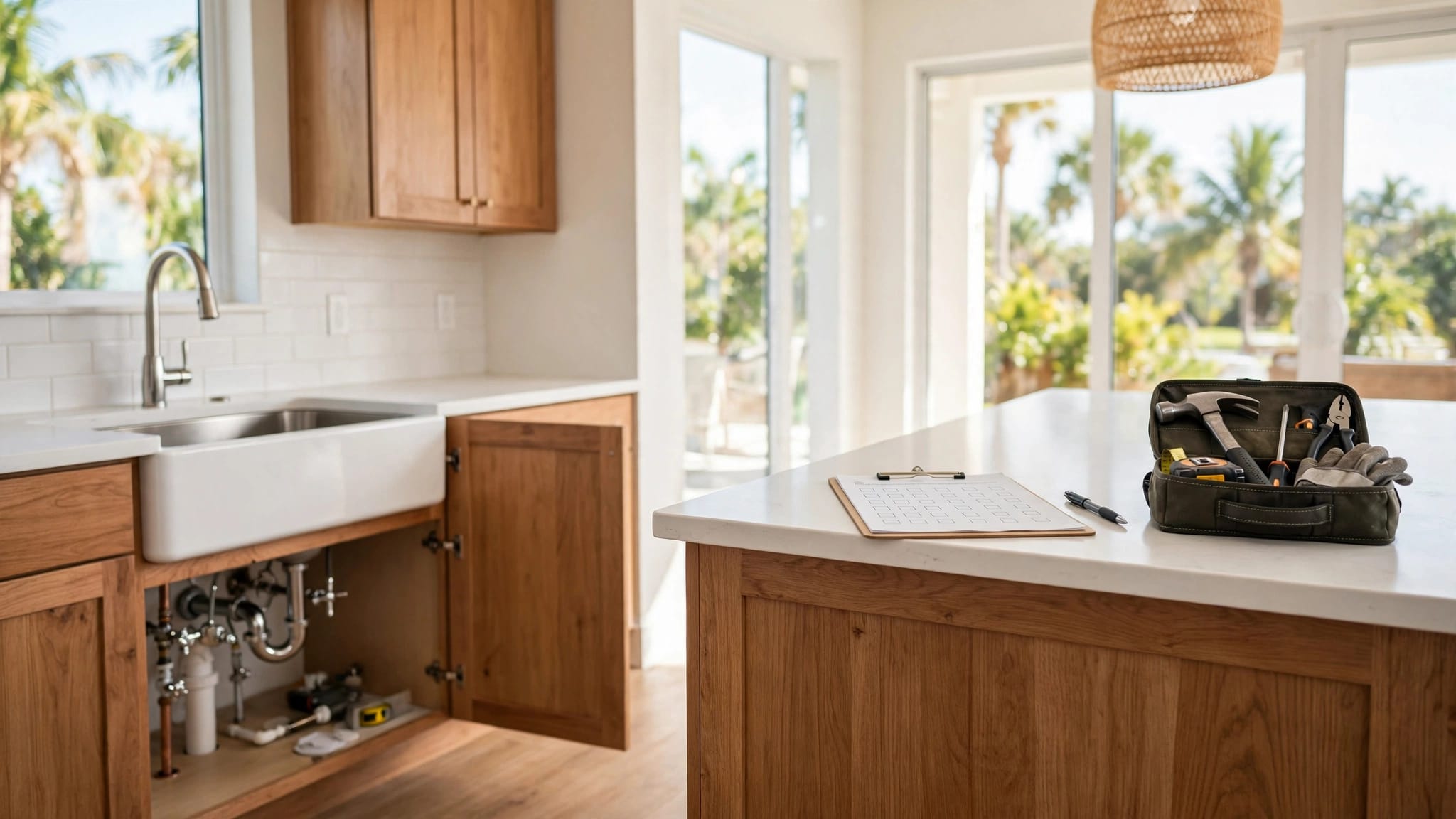
- Are the edges sealed around the sink, dishwasher, and exposed sides?
- What finish is used on the doors, and how does it handle steam and heat?
- Does the warranty cover swelling, peeling, or delamination?
- What hardware is included, and is it corrosion-resistant for coastal conditions?
These questions tell you more than a polished sample door ever will. They also help you compare bids on a real basis, not just on price.
A lower quote can hide cheaper core materials, thinner finishes, or poor edge protection. That becomes expensive fast when the first leak or humid spell hits.
Choosing the right cabinet mix for your budget
The best cabinet choice does not always mean the most expensive one. It means the mix of materials that fits the way you live.
For many Cape Coral homeowners, the smartest middle ground is plywood cabinet boxes with solid wood or moisture-resistant MDF doors. That combination gives you a stable structure and a finish that can fit the style you want. If you prefer a modern look, high-pressure laminate over a quality core can also hold up well and clean easily.
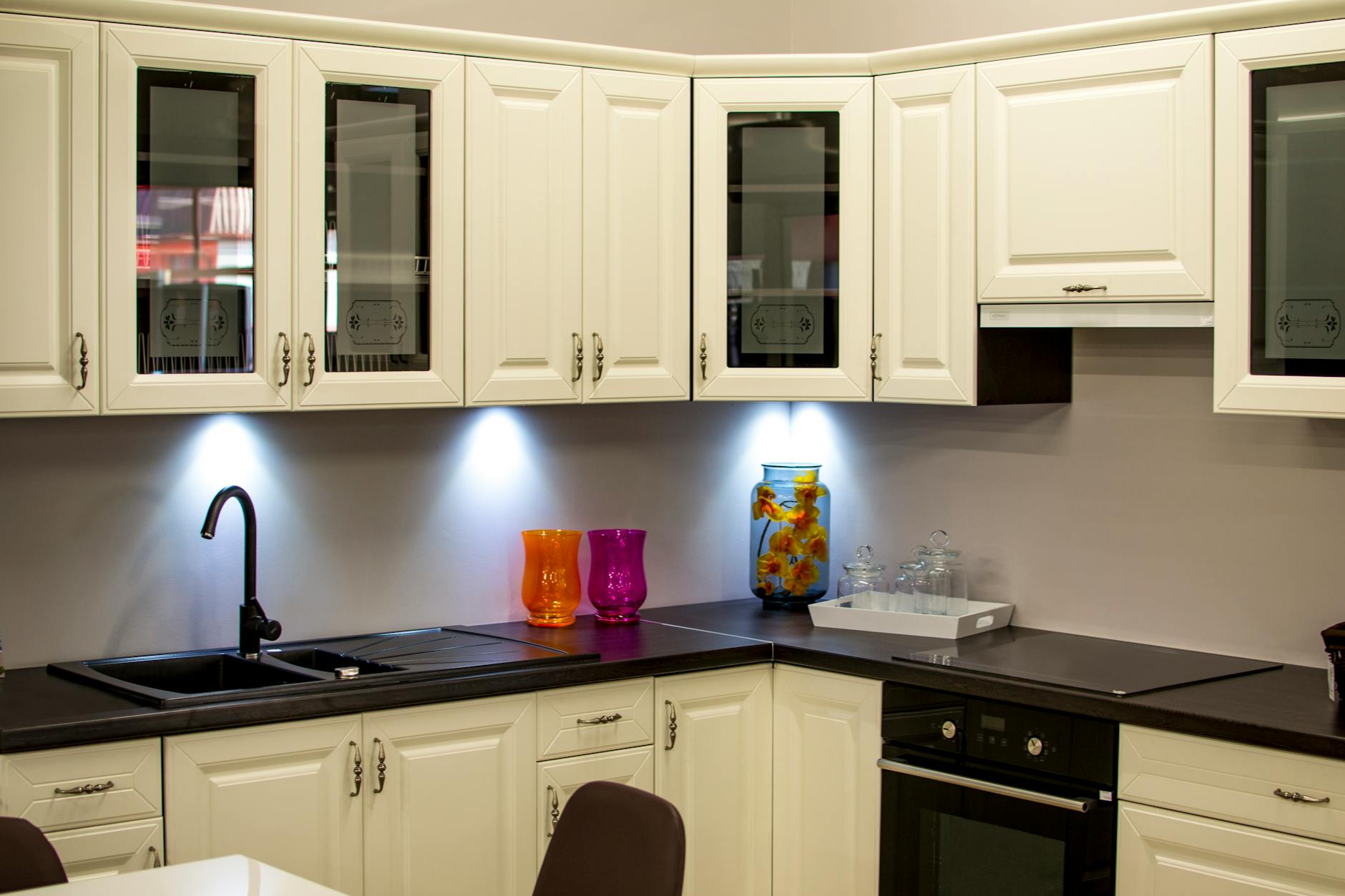
Photo by AS Photography
If you want the longest service life, spend more on the box construction, sealed edges, and finish quality before you spend on decorative extras. Good hinges, sturdy drawer slides, and corrosion-resistant hardware also matter in a coastal climate. They keep the cabinet working smoothly after the first year, which is where cheaper builds usually start to show their age.
Conclusion
Cape Coral humidity puts cabinet materials to the test every day. The winners are the ones that resist swelling , stand up to moisture, and keep their finish sealed around the edges.
For the best performance, plywood boxes are hard to beat. For a painted look on a tighter budget, moisture-resistant MDF can work well if the installation is careful. Particleboard is the least reliable choice in humid kitchens, especially near water and heat.
Choose the material that matches your budget, but do not compromise on structure or sealing. In a coastal home, those details decide whether your cabinets age well or start failing early.