
How to Add Storage to a Small Cape Coral Bathroom
A small bathroom can fill up fast, especially when towels, toiletries, cleaning supplies, and daily essentials all need a place to live. In Cape Coral, humidity makes the problem feel even bigger because damp air turns loose clutter into a constant cleanup job.
The best small bathroom storage plan does more than add shelves. It keeps the room open, easy to clean, and comfortable to use every day.
Key Takeaways
- Start by sorting what you use daily, what can be tucked away, and what should leave the bathroom altogether.
- Use wall space, mirrored cabinets, and recessed niches before adding bulky furniture.
- A smart vanity upgrade often creates more usable storage than a larger cabinet with wasted space.
- Choose moisture-resistant materials and easy-clean finishes that hold up in Florida humidity.
- Keep the room visually light so the storage feels built in, not added on.
Start With What the Bathroom Actually Needs
Good small bathroom storage starts with a quick reality check. Open every cabinet and drawer, then sort items into daily use, occasional use, and backup supplies. Toothpaste, hand soap, and skincare should stay close. Extra tissue, spare shampoo, and cleaning products can move higher or farther back.
That simple step helps you see where the real pressure points are. Maybe the countertop is crowded, but the problem is really the lack of drawer space. Maybe the shower feels messy, but the issue is missing wall storage near the tub. When you know what needs a home, it's easier to pick the right fix.
Measure the room before you buy anything. The wall beside the vanity, the space above the toilet, and the area behind the door often hold more than people expect. In a compact bathroom, every inch matters, because a cabinet that sticks out too far can make the room feel narrower than it is.
Keep the floor as open as possible. A clear path makes the bathroom feel calmer, even if the storage footprint stays small.
Use Wall Space Before Floor Space
Wall storage is often the easiest win in a tight bathroom. It adds room for towels, toiletries, and baskets without eating into the walking area. That matters in a Cape Coral home, where a bathroom can already feel busy with a shower, vanity, and toilet packed into a small footprint.
Floating shelves that stay light
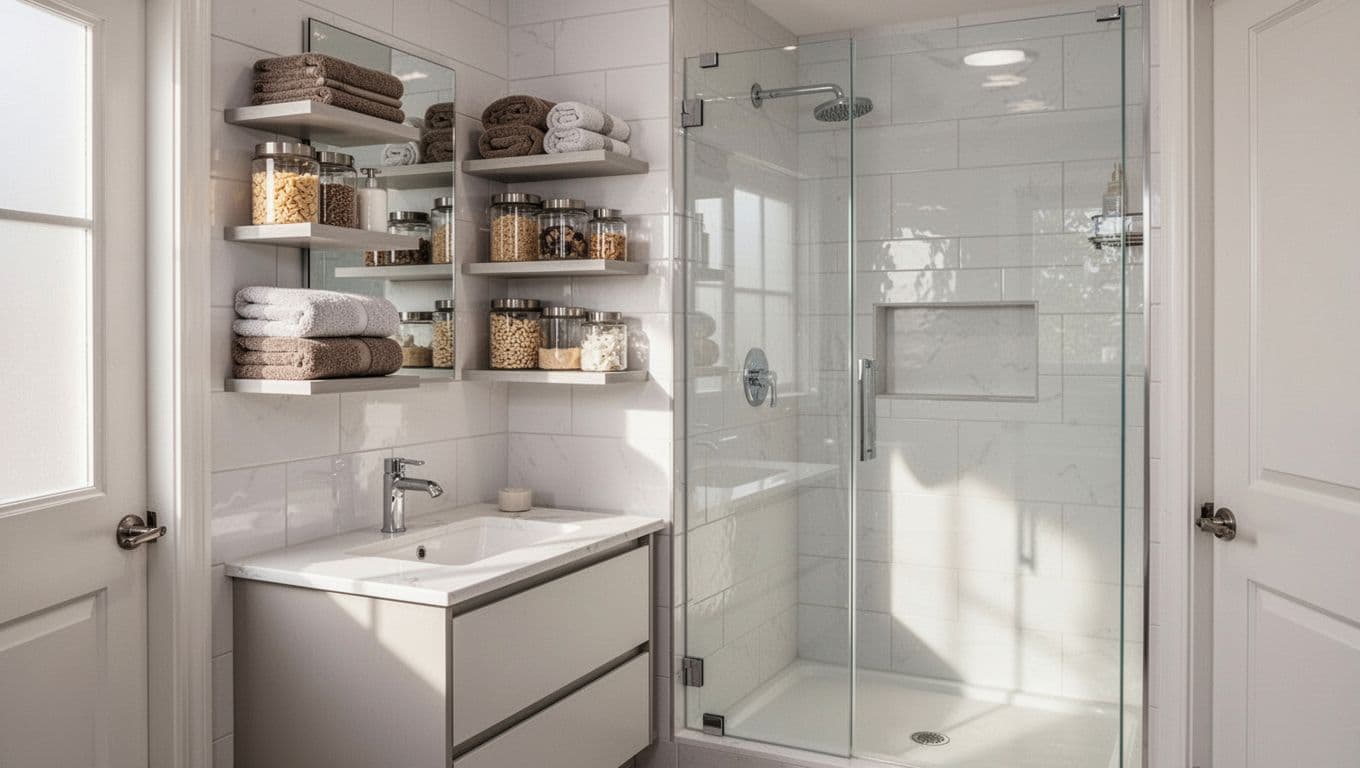
Floating shelves work well when you keep them shallow and purposeful. Use them for rolled towels, a few containers, or a basket that holds small extras. When shelves stay narrow and simple, they feel like part of the room instead of extra furniture.
Open shelving looks best when it stays edited. A single stack of towels and one or two containers usually looks cleaner than a shelf packed edge to edge. If you want a softer look, choose baskets that match the wall color or the vanity finish.
Built-ins that disappear into the wall
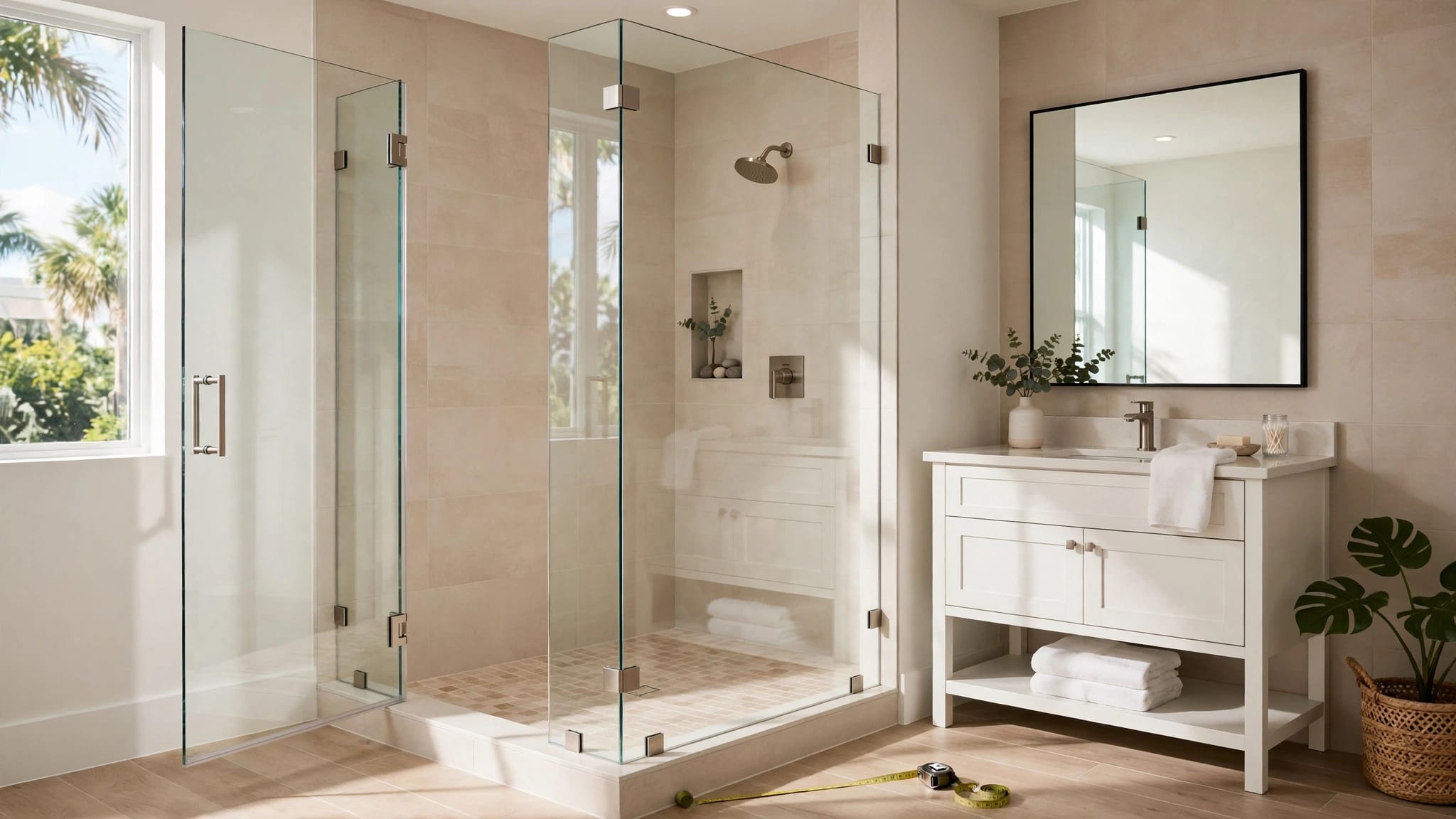
Recessed storage gives you function without the visual bulk. A built-in shower niche keeps shampoo bottles off the floor of the shower, and a recessed medicine cabinet clears space around the sink. Because these options sit inside the wall, they help the room feel less crowded.
Deep storage can make a small bathroom feel smaller. Shallow, closed storage often works better.
A wall cabinet also works well when it matches the trim or vanity. Painted the same color as the wall, it blends in. Finished in wood or a contrasting tone, it can become a design feature without taking up any more room.
Make the Vanity Work Harder
The vanity usually offers the biggest storage opportunity in a small bathroom. If your current setup has a lot of wasted space around the plumbing, the cabinet may be doing less work than it could. Drawers, pullouts, and better interior organization often solve that problem faster than adding another piece of furniture.
Drawer storage beats one deep cabinet for most bathrooms. Drawers let you separate makeup, hair tools, first-aid items, and backup products, so you don't have to dig through one dark cavity. Add dividers or small bins inside the drawer, and the space gets easier to keep tidy.
If the layout needs plumbing changes or a wider cabinet, professional bathroom remodeling services can help you fit the storage into the room instead of forcing the room around the cabinet. A floating vanity can also make the floor feel more open, which is helpful in a tight bath.
Look for features that save space inside the cabinet too. Soft-close drawers, pullout trays, and a tilt-out tray under the sink all make a difference. The best vanity is the one that fits your routine, not the one with the largest cabinet box.
A good example is a vanity with a tall drawer for hair tools, a shallow drawer for cosmetics, and a lower drawer for towels. That setup keeps each item in reach without creating a mess.
Add Hidden Storage Where Guests Won't Notice It
Hidden storage is useful because it works behind the scenes. The bathroom stays clean and open, but the things you use every day still have a place. That balance matters in a small room, where too many visible containers can make the space feel crowded fast.
A mirrored medicine cabinet is one of the simplest hidden-storage options. It replaces a plain mirror, holds the items you reach for most, and leaves the counter clear. Behind the door, over-the-toilet cabinets and narrow wall cabinets can do the same job for tissues, lotions, and spare toiletries.
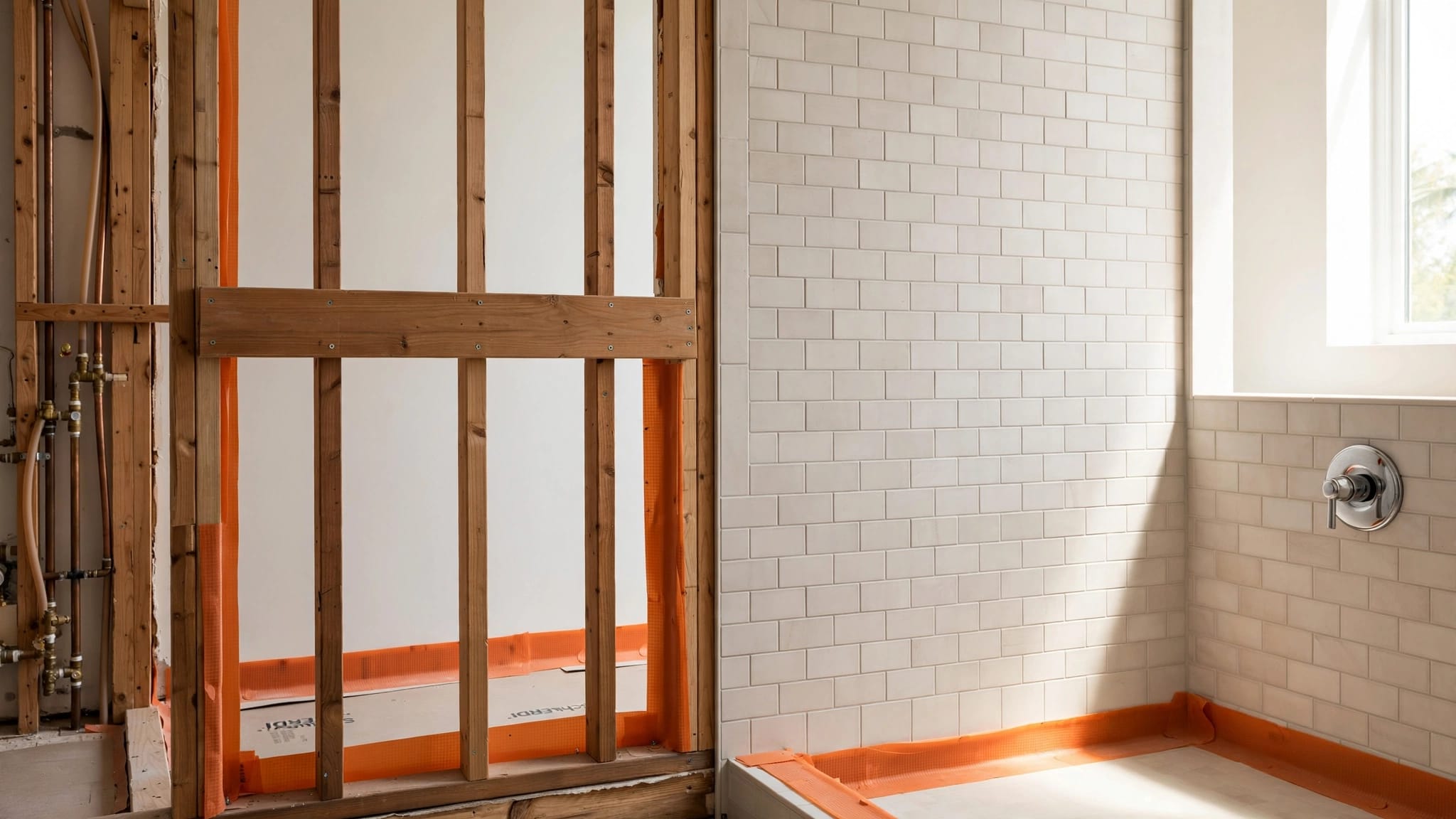
If you're remodeling, think about storage that blends into the architecture. A recessed linen cabinet, a shower niche with matching tile, or a slim pullout between studs can hold more than a decorative shelf ever could. These choices work especially well when the room has to do a lot with very little wall space.
The back of the door is useful too. Hooks can hold robes or towels, and an over-the-door organizer can store cleaning supplies or extra bath products without taking up floor space. For a family bath, a hidden hamper inside a cabinet keeps laundry out of sight and off the floor.
Choose Materials That Handle Cape Coral Humidity
Florida humidity changes the storage conversation. Wood that isn't sealed well can swell, hardware can spot, and some finishes start to look tired faster than they should. That's why moisture-resistant materials matter just as much as the storage layout.
For cabinets and shelving, look for options designed for humid spaces. Sealed wood, PVC, engineered materials with water-resistant coatings, and powder-coated metal all hold up better than fragile finishes. In a bathroom that sees daily showers and constant steam, those details matter.
Easy-clean finishes make life simpler too. Quartz countertops, porcelain tile, and solid-surface materials wipe down quickly and don't need much fuss. Satin or semi-gloss paint is usually easier to maintain than a flat finish, especially near sinks and towel hooks where splashes happen often.
Ventilation still matters. An exhaust fan helps protect cabinets, mirrors, and shelving from lingering moisture. So does a habit of wiping down damp counters and not letting wet towels sit in a heap. Storage lasts longer when the room stays dry between uses.
If you want open shelves near the shower, keep them uncluttered and avoid overloading them with damp items. Closed storage usually makes more sense for products that need to stay dry and organized.
Keep the Room Open While You Add Storage
The best storage plan makes the bathroom feel easier, not busier. That usually means choosing a few strong solutions and giving each one a clear job. A wall cabinet should hold one category. A vanity drawer should hold another. Open shelves should display only the items that look neat on purpose.
Color and finish matter as much as the cabinet style. Light walls, simple hardware, and matching tones help storage blend into the room. If every finish competes for attention, the space starts to feel chopped up. When the cabinet, mirror, and shelving share a clean visual language, the room feels larger.
Lighting helps too. A bright vanity light, a well-placed mirror, and clear sightlines can make storage feel less heavy. Even a small bath can look surprisingly open when the storage sits close to the wall and stays visually calm.
The goal is simple. Make the room easier to use, keep the floor clear, and let the storage do its job without shouting for attention.
Make Every Inch Count
A small Cape Coral bathroom does not need to stay cramped. With the right mix of wall cabinets, built-ins, drawer organizers, vanity upgrades, and hidden storage, it can hold more than you expect.
The smartest changes usually happen in layers. Sort first, then use the walls, then improve the vanity, and finish with materials that can handle humidity. When those pieces work together, the room feels calmer and more functional every day.