
Bathroom Faucet Mounting Styles: Wall-Mount or Deck-Mount?
Choosing a bathroom faucet is partly about appearance, but its mounting style affects plumbing, sink compatibility, cleaning, and future repairs. The main faucet mounting styles are wall-mount and deck-mount, and the right choice depends on your basin, vanity, and renovation plan.
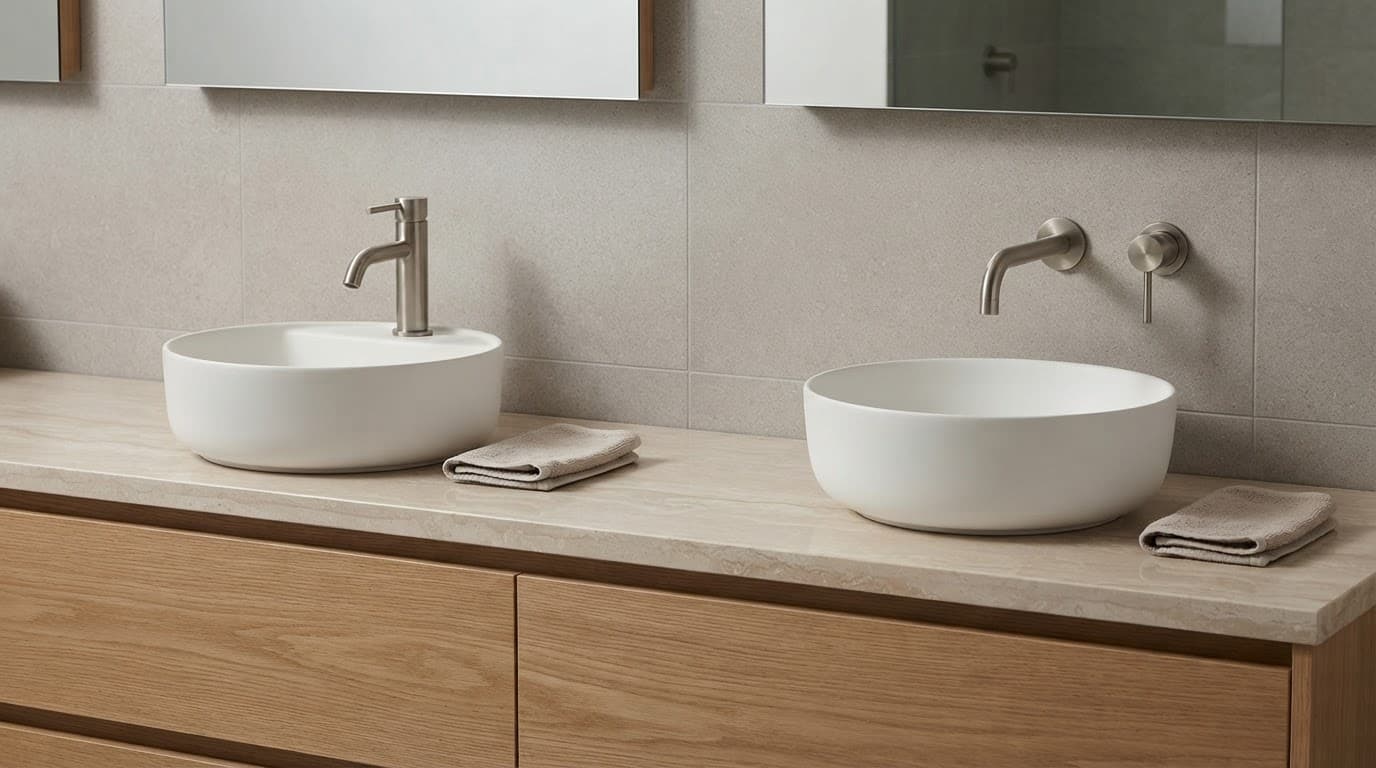
A deck-mounted faucet sits on the sink or countertop. A wall-mounted faucet comes through the wall above the basin. Both can work well, but each calls for different rough-in planning. Start with where the faucet will attach, then coordinate the sink and plumbing around it.
Faucet Mounting Styles at a Glance
Where each faucet attaches
A deck-mount faucet attaches to a horizontal surface, either the sink deck or the countertop. Its supply connections typically run below that surface, inside the vanity.
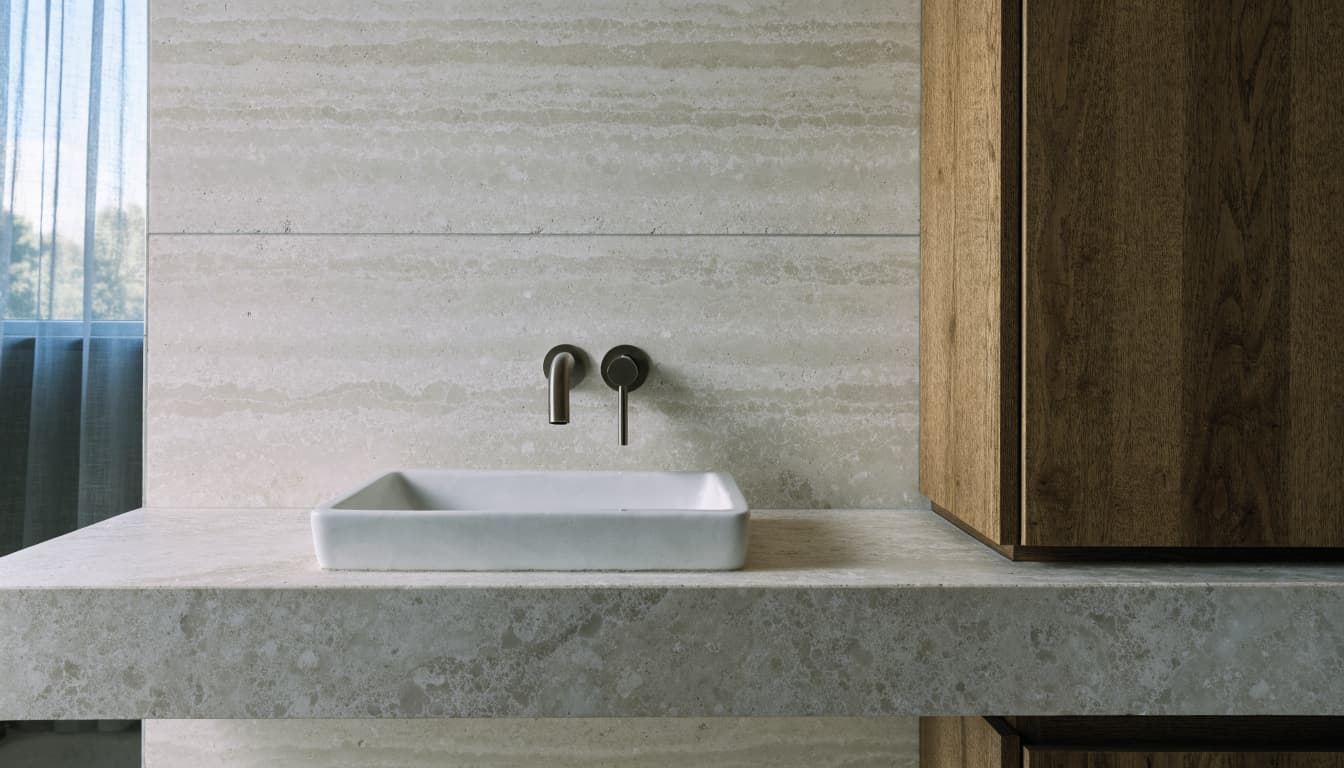
A wall-mount faucet attaches to the wall above the sink. Its supply lines and any concealed valve components sit behind the finished wall, so the faucet's position must be planned before the wall is closed.
What the choice changes
The mounting style determines which surfaces need faucet openings and where the plumbing must emerge. It also changes how the faucet relates to the basin, backsplash, and storage below the sink.
Neither option is automatically better. A deck mount often fits common vanity layouts with fewer changes, while a wall mount can leave more of the countertop clear. The specific faucet and sink still need to work together.
What a Wall-Mounted Faucet Requires
Plan the wall before finishing it
Wall-mounted faucets need hot and cold water lines in the wall, positioned to match the chosen faucet. Depending on the design, the valve or other components may also sit behind the finished surface. The faucet's specifications determine the rough-in arrangement.
That means choosing the faucet early matters. Wall thickness, tile, waterproofing, and trim can affect the final placement. A rough-in set for the wrong finished-wall depth can leave the faucet trim sitting poorly or prevent it from fitting as intended.
Support and service access matter
The framing and plumbing need to support the selected assembly. Plan for the faucet location and any required backing before installing wall finishes. Also consider how the valve will be serviced later. Some components can be accessed from the front; others may require more involved work if a repair is needed.
A wall-mounted faucet also puts water close to the wall surface. The spout needs to reach the basin in a way that directs water into the bowl, not onto the counter or backsplash. Confirm the faucet's reach and basin arrangement as a pair.
Why Choose a Deck-Mounted Faucet?
It suits many standard vanity layouts
Deck-mounted faucets are a familiar option for bathroom sinks and vanity tops. They can be installed in the sink's faucet deck or in openings in the countertop, depending on the sink and faucet design.
This arrangement can be practical when the existing water supplies already rise below the vanity. It may also make sense in a remodel where the sink and faucet remain in roughly the same location. Still, the number and spacing of faucet openings must match the selected fixture.
The trade-off is countertop space
A deck-mounted faucet uses part of the sink rim or counter, and the area around its base can collect water, soap, or mineral residue. The vanity cabinet below usually provides access to the supply connections, although a crowded cabinet can make work awkward.
The faucet also needs enough clearance from the basin, backsplash, and nearby fixtures. With a vessel sink, for example, the faucet height and spout reach must suit the bowl. A faucet that looks right on its own may not direct water comfortably into the sink.
Sink and Countertop Compatibility
Match the faucet to the basin
Start with the sink's faucet configuration. Some sinks have one opening, others have multiple openings, and some have no faucet deck because the faucet is intended to mount on the wall. The faucet must match the sink's layout, or the countertop must be designed for the selected installation.
Basin shape matters, too. A broad, shallow bowl and a deep vessel basin interact differently with faucet height and reach. Review the sink and faucet together so water lands where it should and the handles remain easy to use.
Consider the full vanity surface
A wall-mount faucet can keep the counter around the sink more open, which may simplify wiping the surface. However, it needs an appropriate wall location and finish behind the basin. A deck-mount faucet uses counter or sink space, but it doesn't require faucet penetrations through the wall.
Include the vanity, sink, countertop, and faucet in the same selection plan. Blue Heron Construction's bathroom renovation planning checklist covers these selections alongside other bathroom finishes, so they can be considered before work begins.
Plumbing and Installation Planning
Coordinate rough-in with the finished layout
A bathroom rough-in includes hot and cold supplies, drain lines, vent piping, fixture connections, and shutoff locations. The faucet style affects the supply locations, but the rough-in must fit the entire finished bathroom, not just the open framing.
For a wall mount, set the supply and valve locations for the faucet before finishing the wall. For a deck mount, make sure the lines and shutoffs can connect below the sink without colliding with drawers or other cabinet features. A bathroom plumbing rough-in plan should account for wall thickness, tile, cabinets, trim, and fixture specifications.
Plan remodel changes before demolition
Keeping a faucet near its current location may allow the existing supply routes to remain useful. Moving it to a different wall can require rerouting pipes and coordinating the work with framing and finished surfaces. The scope depends on the existing bathroom and the new design.
During a remodel, plumbing changes may need additional review. The vanity, faucet, sink, and wall finish should be selected early enough for the plumber and other trades to work from the same plan. In our Cape Coral bathroom remodeling projects, fixture placement is part of planning the room as a whole, not an isolated finish decision.
Cleaning and Maintenance
Cleaning around the faucet
With a deck-mounted faucet, water and grime can collect around the base and in the openings where the faucet meets the sink or counter. Regularly wiping those joints helps keep residue from building up. The underside of the counter may also need attention if splashes reach it.
A wall-mounted faucet leaves the sink deck more open, so there are fewer faucet bases to wipe around. However, the wall and backsplash near the spout can get wet. The finished surface needs to tolerate routine splashes and cleaning.
Think about repairs as well as upkeep
Deck-mounted supply connections are usually beneath the sink, where a plumber can reach them through the vanity. The cabinet can still limit access, especially if drawers or stored items block the connections.
Wall-mounted components may be concealed behind the finished wall. Access depends on the faucet design, so consider serviceability before choosing a model. Either style needs routine care and occasional repair; the difference is where the parts sit and how easily someone can reach them.
Practical Trade-Offs to Consider
Compare the whole installation
A deck mount may be a straightforward fit when the sink openings and existing plumbing already match. A wall mount can involve additional wall-side planning, especially if the plumbing has to move or the wall is being rebuilt. Neither style has a fixed cost advantage in every bathroom.
Compare the complete scope, including the faucet, sink, countertop work, plumbing changes, wall finish, and cabinet access. That gives you a more useful comparison than looking at the faucet alone.
Weigh appearance against flexibility
A wall mount can create a clean, open look at the sink, but its placement is tied to the finished wall. Changing the basin or vanity later may require more coordination if the new arrangement shifts the faucet's relationship to the sink.
A deck mount uses visible counter space, but it can be easier to align with a range of vanity designs when the faucet holes and basin suit each other. The better option is the one that fits your bathroom's layout and future maintenance needs.
How to Choose the Right Mounting Style
Choose wall-mount when the wall plan supports it
A wall-mounted faucet may suit a design that calls for a clear sink deck or a vessel basin without faucet holes. It works best when you can coordinate the wall, plumbing, faucet reach, and basin before installation.
It can be a less convenient choice if the plumbing location is fixed in an incompatible spot or if the finished wall is already complete and would need significant changes. Service access is another factor to weigh.
Choose deck-mount when the sink and plumbing align
A deck-mounted faucet is a sensible choice when the sink or countertop has compatible openings and the supply connections can fit inside the vanity. It may also help preserve an existing layout during a renovation.
Before settling on either style, review the faucet specifications, sink configuration, countertop plan, and vanity interior together. For primary bathroom layouts, vanity and bathroom design planning can help connect fixture decisions to the room's storage and circulation needs.
Key Takeaways
- Wall-mount faucets attach to the finished wall and need coordinated in-wall plumbing.
- Deck-mount faucets attach to the sink or countertop and need compatible openings.
- Basin shape, faucet reach, backsplash, vanity storage, and supply locations affect the fit.
- Cleaning and repair access differ, so consider upkeep alongside appearance.
- Select the faucet before rough-in work and coordinate it with the sink and countertop.
Frequently Asked Questions
Can you replace a deck-mount faucet with a wall-mount faucet?
Yes, but it may require changes to the plumbing and wall. The new faucet's supply and valve arrangement must fit the planned location, and the sink and counter should suit the wall-mounted design.
Does a wall-mounted faucet work with every sink?
No. The sink must work with a faucet mounted separately on the wall. The spout must reach the basin appropriately, and the basin should not depend on faucet openings that the selected wall-mount design won't use.
Is one style easier to maintain?
It depends on the installation. Deck-mounted connections are generally below the sink, while wall-mounted components may be concealed. A wall mount can reduce wiping around faucet bases, but the wall near the spout still needs cleaning.
Conclusion
Choose the faucet mounting style as part of the sink, vanity, and plumbing plan. A wall mount can keep the sink deck open, while a deck mount can suit a compatible vanity and existing supply layout.
The best choice fits the finished bathroom and remains practical to clean and service. Plan the faucet before rough-in work begins, and coordinate its placement with the basin and surrounding surfaces.