

Asbestos and Lead Testing Before Fort Myers Remodels
Demolition can turn an undisturbed building material into a dust problem before your renovation gets going. For an older Fort Myers home, assessment before disturbance helps protect your household and keeps hazardous-material decisions out of the demolition phase.
Asbestos and lead testing can identify materials that need special handling, but testing requirements depend on the property and project. Lead-safe renovation rules and asbestos requirements are separate, so start with the home's history and the surfaces your remodel will disturb.
Key Takeaways
- Plan professional assessment before removing suspect flooring, scraping ceilings, cutting walls, or disturbing older painted surfaces.
- Testing identifies materials or hazards; abatement is separate work that removes or controls them.
- Federal lead rules generally cover paid renovations disturbing paint in pre-1978 housing. Testing isn't mandatory when contractors follow the applicable lead-safe requirements.
- Asbestos rules depend on the building, project, and work involved. A residential exemption under one program doesn't make suspect materials safe to disturb.
When Asbestos and Lead Testing Makes Sense
Age is a useful starting point, but the planned work determines which materials deserve attention. A cabinet replacement and a full kitchen demolition can affect different layers of the same room.
Match the assessment to the demolition scope
Professional evaluation is especially useful before removing resilient flooring, scraping textured ceilings, replacing windows, or opening older walls. Plumbing and HVAC changes may also expose insulation or concealed materials.
Give the assessor the demolition plan, including proposed openings and trade routes. Otherwise, a limited assessment may miss materials the contractor later needs to cut.
Our guidance on safely opening older interior walls also addresses structural and mechanical planning. Hazardous-material assessment belongs alongside that review, before demolition.
Use records without assuming they settle everything
The construction date matters for lead because federal renovation rules generally use a pre-1978 cutoff. However, asbestos has no equivalent universal residential cutoff that proves every material is asbestos-free.
Past additions, reroofing, flooring changes, and storm repairs can introduce different materials into the same house. Records may narrow the assessment, but a recent finish doesn't establish what's underneath it.
After storm or water damage, assess suspect materials before further demolition. Damage doesn't remove the need for controlled handling.
Where Suspect Materials May Be Found
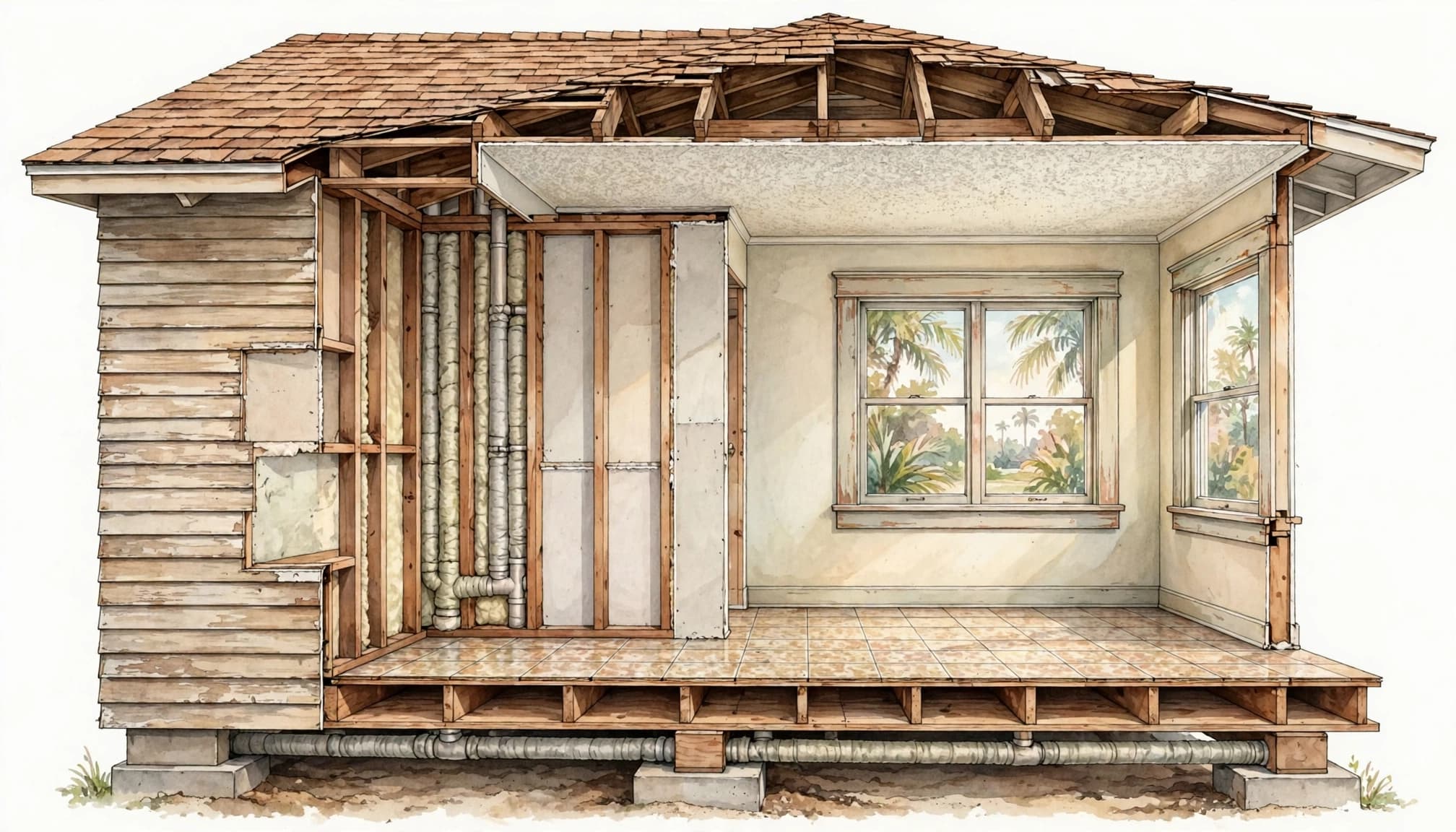
Asbestos may be hidden beneath finishes
Some older floor tiles, flooring adhesives, textured coatings, pipe insulation, roofing materials, and cement products may contain asbestos. These are possible locations, not proof that a particular home contains it.
Appearance alone can't establish whether a material contains asbestos. Even similar-looking materials within one house may have different compositions.
Don't lift a tile corner, scrape a ceiling, drill a suspect surface, or collect a sample yourself. A qualified professional should determine where sampling is appropriate and collect samples under controlled conditions.
Lead can remain beneath newer paint
Older painted windows, doors, trim, cabinets, and walls may retain lead-based paint beneath later coats. Sanding or demolition can reach those older layers even when the visible finish looks sound.
Windows and doors deserve attention because friction can generate dust as painted parts move against each other. A surface doesn't need extensive peeling to warrant evaluation.
Lead-based paint and asbestos are different hazards. A negative result for one doesn't establish that the other is absent, and neither can be ruled out through an ordinary visual walkthrough.
Testing Is Different From Abatement
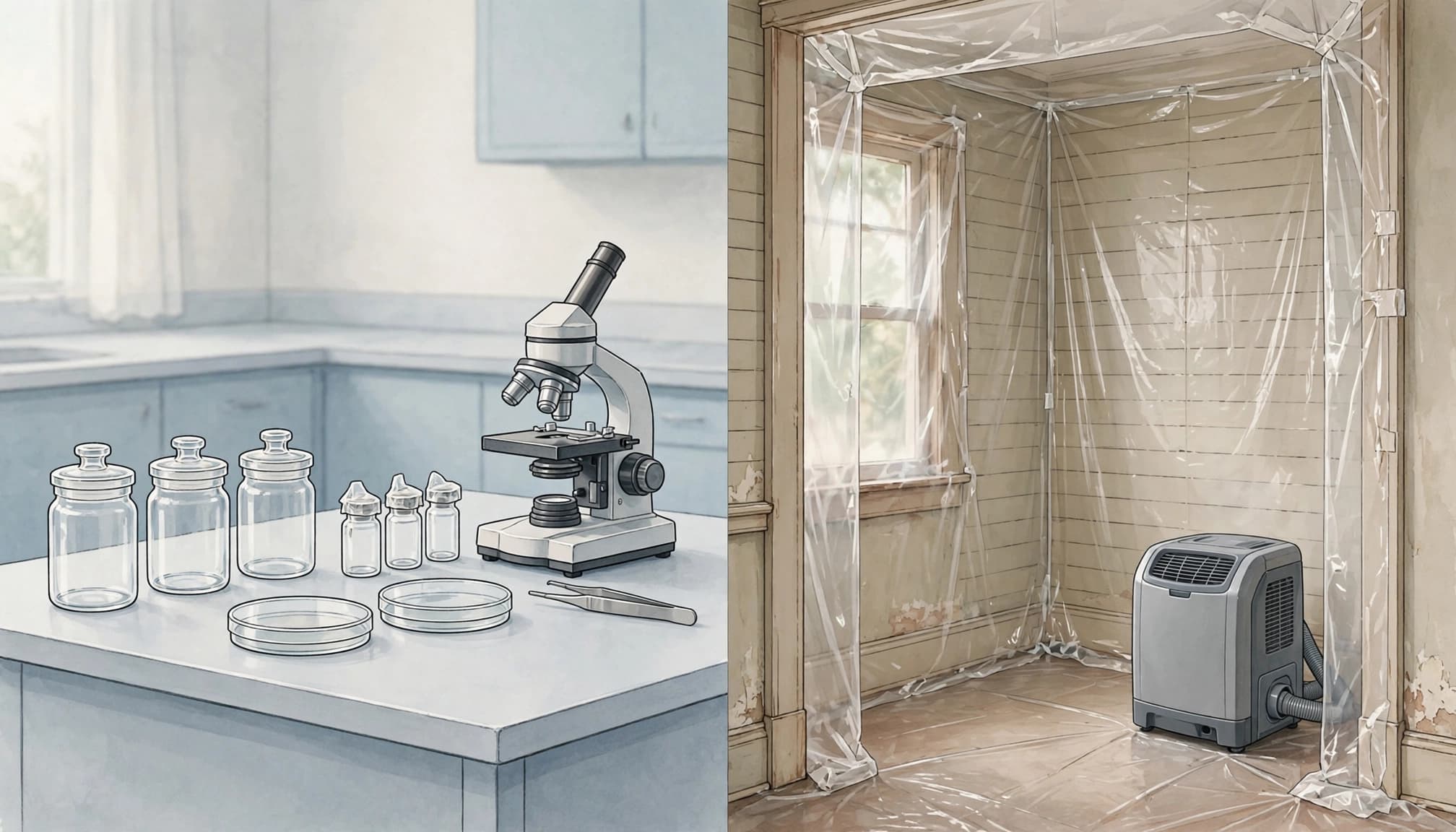
Testing establishes what the work will affect
An asbestos survey identifies suspect materials and uses laboratory analysis where appropriate. Lead evaluation may involve specialized instruments or approved testing methods.
A useful report connects each result to a specific material and location. It should also make the assessment's limits clear, including inaccessible areas or surfaces outside the agreed scope.
A negative sample doesn't clear every similar-looking surface throughout the home. Likewise, testing an accessible finish may leave underlying layers unassessed.
Abatement addresses the identified material
Abatement is separate work to remove or control hazardous materials. Depending on the condition and renovation plan, professionals may recommend removal, enclosure, encapsulation, or leaving suitable material undisturbed.
A positive test doesn't automatically mean every affected material must be removed. However, a remodel that will cut or demolish that material needs a handling plan.
Lead-safe renovation also differs from lead abatement, which is intended to permanently eliminate lead-based paint hazards.
A testing report identifies a condition; it doesn't authorize an ordinary demolition crew to disturb it.
Keep assessment, remediation, disposal, and any required post-work evaluation distinct in the project scope.
Florida Asbestos Requirements Depend on the Project
Florida licensing requirements and federal asbestos rules address different responsibilities. Neither should be reduced to a blanket statement about all older homes.
Use qualified asbestos professionals
Florida Statutes Chapter 469 requires people conducting asbestos surveys or monitoring and evaluating abatement to have the required training and asbestos consultant license.
Asbestos contractors also need the applicable Florida licensing. Work affecting building structures or systems can involve additional contractor licensing under Chapter 489.
A general home inspection or remodeling license doesn't establish asbestos consulting qualifications. Professional assessment should identify the materials affected by the actual construction plan.
Understand NESHAP coverage and exemptions
The federal Asbestos National Emission Standards for Hazardous Air Pollutants, or NESHAP , generally excludes residential buildings with four or fewer dwelling units. That exclusion may not apply when buildings are part of a larger commercial or public project.
For covered facilities, a thorough asbestos inspection precedes renovation or demolition. Notification requirements generally include at least 10 working days before covered demolition or qualifying asbestos renovation work.
Regulated quantities include 260 linear feet on pipes, 160 square feet on other facility components, or 35 cubic feet when material can't be measured before stripping.
Covered demolition can require notification even without those asbestos quantities. Conversely, falling below a quantity threshold doesn't establish safety or eliminate every other applicable requirement.
Fort Myers Permit Paperwork Is a Separate Issue
The City of Fort Myers publishes a Contractor Asbestos Notification Statement for demolition or renovation permits involving existing structures. Its building checklist also calls for an Asbestos Affidavit.
That paperwork shouldn't be confused with a laboratory result, an asbestos survey, or an abatement completion record. Each document addresses a different part of the project.
A Fort Myers mailing address doesn't necessarily place a property within city limits. City properties and properties in unincorporated Lee County follow different permitting workflows.
The permit holder should identify the property's jurisdiction and include the documents required for that project's approval. Don't carry a Cape Coral permit assumption into a Fort Myers project.
Construction approvals also depend on the work. Moving plumbing, adding circuits, changing ventilation, or altering structural openings can require separate review and staged inspections.
Our Southwest Florida remodel selections checklist connects material decisions with permit planning. Hazardous-material findings should enter that process early because they may change demolition methods, sequencing, or scope.
Federal Lead Rules for Pre-1978 Homes
The EPA's Renovation, Repair and Painting Rule, usually called RRP , generally applies to paid work disturbing painted surfaces in pre-1978 housing.
Testing is optional under RRP
Covered work requires an EPA-certified renovation firm and an assigned Certified Renovator. Without appropriate documentation showing affected paint isn't lead-based, the firm must treat it as lead-based and follow the rule.
Therefore, a contractor doesn't always need a lead test before performing covered work. Testing can establish whether particular affected surfaces contain lead-based paint, but it isn't a universal legal prerequisite.
Approved routes include an EPA-recognized test kit used by a Certified Renovator, X-ray fluorescence testing by a certified inspector or risk assessor, and paint-chip sampling by eligible professionals.
A homeowner's DIY test isn't a substitute for the documentation required under RRP.
Small-work exceptions have limits
The minor repair and maintenance exception generally covers no more than six square feet of disturbed paint per room indoors or 20 square feet outdoors.
However, that exception doesn't cover window replacement or demolition of painted surfaces. A window project can therefore fall under RRP despite a small painted area.
Homeowners working on their own owner-occupied homes are generally outside RRP, with exceptions involving situations such as rental use or child-care operations. That regulatory distinction doesn't eliminate exposure risks or make DIY sampling appropriate.
Build Assessment Into the Remodeling Schedule
Schedule asbestos and lead testing before finalizing demolition pricing and booking work that will disturb suspect materials. The results can change labor methods, containment, waste handling, and occupancy arrangements.
Use a written sequence so the renovation doesn't advance before those decisions are settled:
- Define the affected rooms, materials, wall openings, and plumbing or HVAC routes.
- Have qualified professionals complete the appropriate assessment and document its limits.
- Incorporate any required hazard controls, abatement, notifications, and permit documents into the scope.
- Begin approved construction only after the necessary preparatory work and project-specific approvals are complete.
The proposal should separate assessment costs from remediation and ordinary remodeling. It should also explain how newly discovered materials or changed demolition plans will be handled.
For an occupied home, plan access routes, room isolation, and usable bathrooms before work begins. Our guidance on dust control during occupied remodels addresses household planning, but ordinary dust protection doesn't replace asbestos or lead controls.
After hazardous-material work, coordinate framing and rough plumbing, electrical, and HVAC work. Required inspections must occur before drywall or other finishes conceal those systems.
Keep reports, approved plans, revisions, inspection records, and applicable completion documentation together.
Frequently Asked Questions
Does every older Fort Myers home need both tests?
No single rule requires both tests before every residential remodel. Asbestos obligations depend on the property and project, while RRP allows covered contractors to presume lead-based paint and use required practices without testing.
Professional assessment remains appropriate when the planned work will disturb suspect materials.
What happens if suspect material appears during demolition?
Stop work affecting that material and leave it undisturbed. Don't continue cutting, sanding, sweeping, or collecting samples.
A qualified professional should assess it before the crew resumes affected work. The findings may require a revised handling plan, scope, schedule, or permit documentation.
Can a remodeling contractor perform the assessment?
Only with the qualifications required for the service. Florida asbestos surveys require asbestos consultant licensing.
For lead, the permitted testing method determines the necessary certification. A general contractor license alone doesn't establish either qualification.
Assess First, Then Remodel
An older home's hidden materials deserve attention before demolition creates dust. The strongest plan connects professional assessment to the exact surfaces and systems your renovation will affect.
Keep testing separate from abatement, and apply asbestos and lead rules to the actual property and project. That gives your remodeling team a defined scope before construction begins.