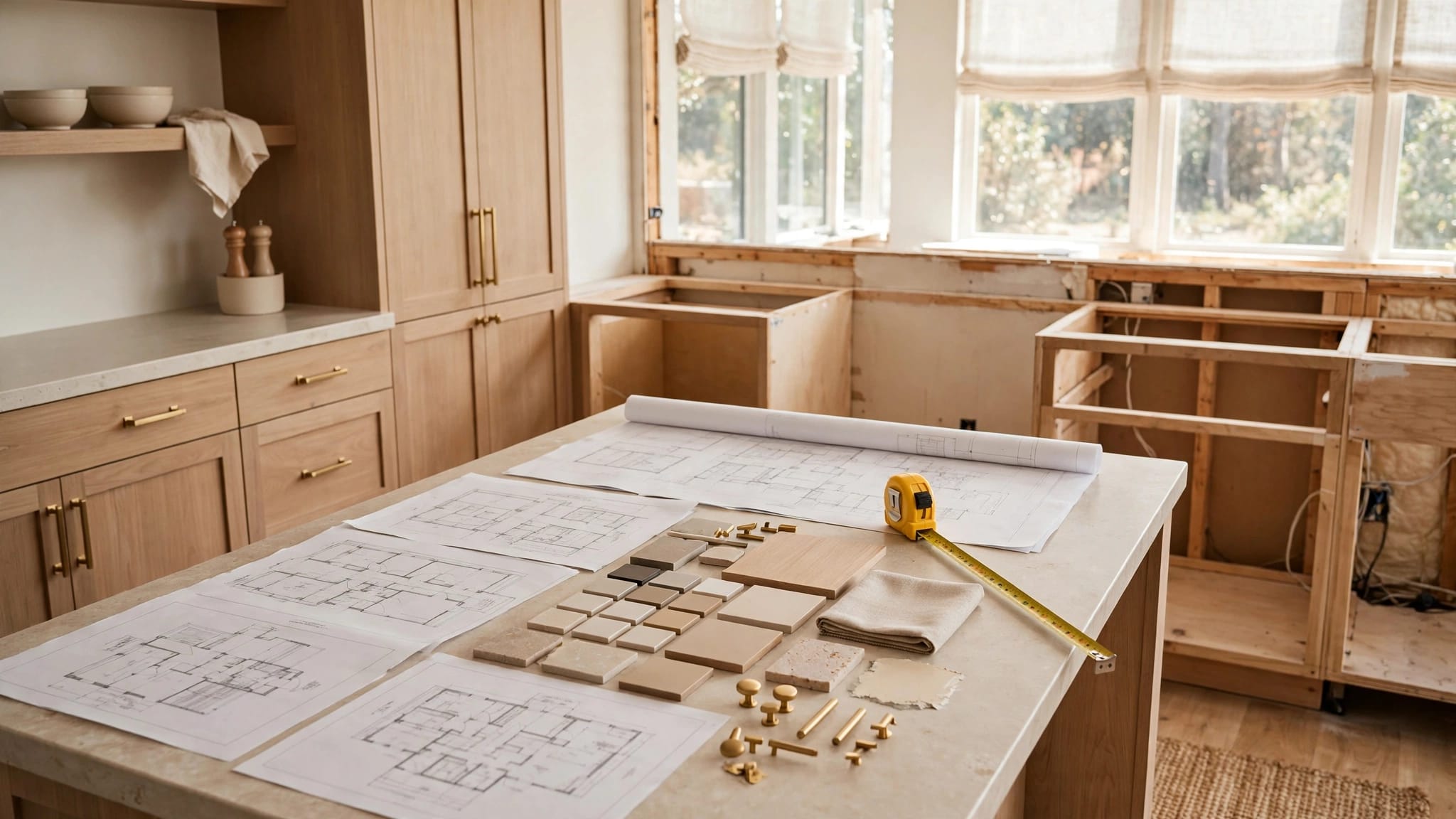


Remodel Dust Control Plans for Occupied Cape Coral Homes
Renovation dust can reach your bedroom long before the new kitchen is finished. For an occupied Cape Coral home, remodel dust control needs to address shared air, daily routines, and the rooms your family still uses.
A written plan should define work-area boundaries , HVAC protection, cleanup responsibilities, and conditions that require temporary relocation. No renovation plan can guarantee a dust-free home, so start by matching the precautions to the work and your household's needs.
Build the Dust Plan Around Your Household
Before demolition, ask the contractor to identify dust-producing tasks and how each will be managed. Tile removal, concrete cutting, drywall sanding, and cabinet work need different controls.
Review the scope alongside Blue Heron Construction's Cape Coral home remodeling services, then request project-specific protection details in writing. Service descriptions alone don't establish which dust-control measures a contractor will provide.
The plan should identify the rooms that remain occupied, worker access, debris routes, and usable exits. Also disclose asthma, respiratory conditions, young children, pets, and anyone who spends most of the day at home.
Agree on when staying elsewhere makes sense. Extensive demolition, interrupted cooling, or work that cannot be isolated may make continued occupancy impractical.
Finally, ask how protection changes as construction moves between rooms. A barrier that works for one bathroom may need relocation when flooring work reaches the hallway. Reassess containment whenever the scope changes.
Contain the Work Area Before Demolition
Seal the Boundary, Including Small Openings
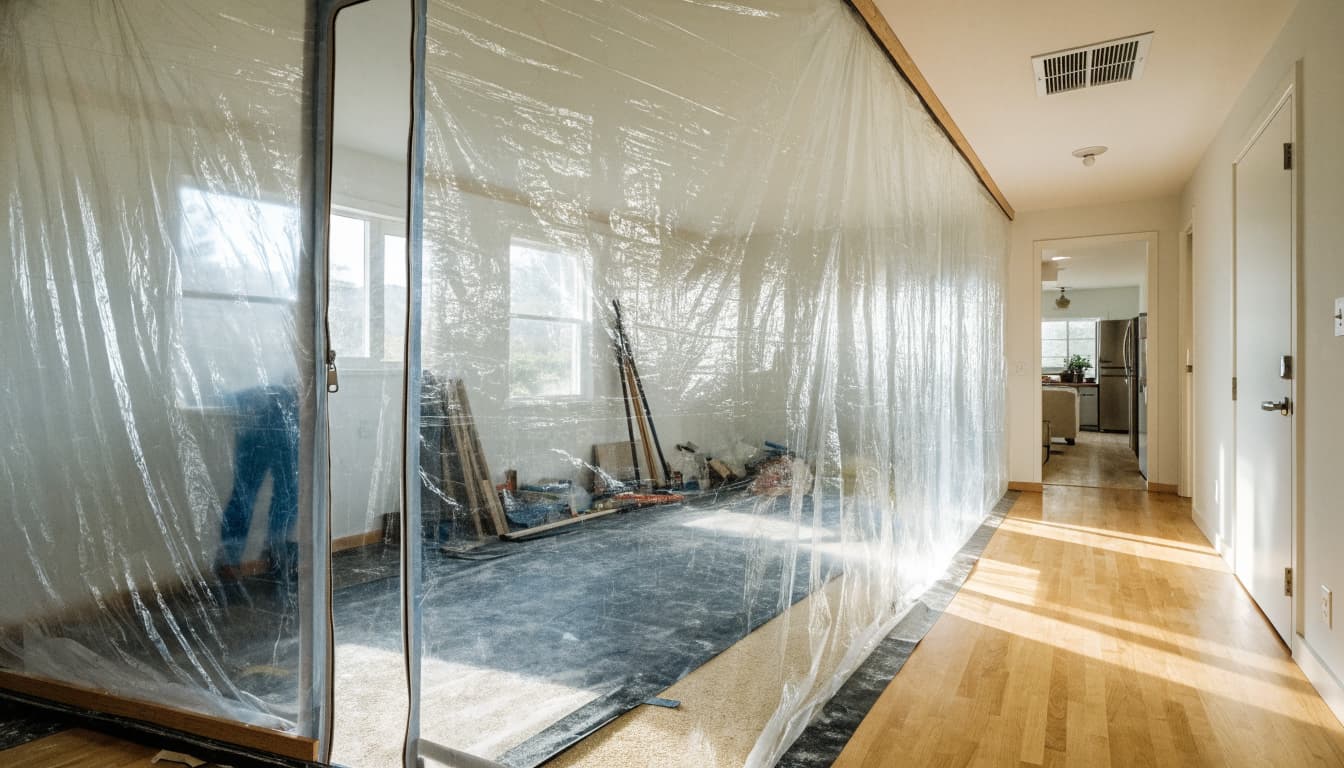
Ask for containment before the first dusty task begins. Temporary plastic barriers, zippered entrances, or temporary partitions can separate construction from occupied rooms.
The enclosure needs attention at its edges. Gaps along ceilings, floors, doorways, and service penetrations allow particles to escape. Workers should inspect seams and repair damage as the project progresses.
Reusable systems such as ZipWall are one option for temporary containment. However, the installation matters more than the product name. A poorly sealed barrier won't control dust effectively.
Establish a Protected Travel Route
Choose one practical route for workers, materials, and debris. When possible, keep that route separate from bedrooms and the household's main living space.
Ask the contractor to protect floors with materials suitable for the surface. Adhesive products need particular care on wood, fresh finishes, and delicate flooring.
Debris should leave in closed bags or covered containers rather than open loads carried through the home. Meanwhile, keep the containment entrance closed between trips.
Protection also needs maintenance. Loose floor coverings create trip hazards, and gritty debris beneath them can scratch finished surfaces.
Protect Belongings and Keep Living Areas Usable
Move dishes, food, linens, electronics, and valuables out of the work zone before demolition. Empty nearby cabinets when their contents could collect dust or obstruct access.
For upholstered furniture, relocation is usually preferable to a loose sheet. If pieces must stay nearby, discuss fitted protective coverings and inspect them for gaps.
During kitchen remodeling in Cape Coral, establish a temporary food-preparation area outside containment. Store utensils in closed containers and keep food away from construction supplies.
Set aside a clean area for sleeping and daily routines. Keep its door closed and avoid storing tools or materials there. A portable HEPA room purifier may supplement protection in occupied rooms, but it doesn't replace source control or containment.
Pets need a separate plan because they can push through barriers. Arrange a secure room or offsite care, and tell workers where animals will stay.
Keep Construction Dust Out of the HVAC System
Agree on Shutdown and Duct Protection
EPA guidance recommends keeping HVAC equipment off during dusty construction and sealing duct openings. Dust can enter registers and return grilles even when the system isn't running.
Before work begins, identify who will protect supply openings, returns, exposed duct ends, and equipment. Covers should suit the surface and remain secure throughout the dusty phase.
Don't rely on an ordinary household filter as the entire remodel dust control plan. It won't prevent debris from falling into open ducts or protect an exposed air handler.
Ask the HVAC professional to approve any temporary arrangement. Covering too many registers while equipment runs can restrict airflow and affect operation.
Plan for Cape Coral Heat and Humidity
Cooling shutdowns need coordination in Cape Coral's hot, humid conditions. Ask the HVAC contractor how occupied rooms will remain comfortable without drawing construction dust through the system.
Temporary cooling or dehumidification may be appropriate, depending on the layout and work. Plan equipment placement, drainage, electrical supply, and safe exhaust routes before demolition.
A sealed register doesn't make continued HVAC operation safe by itself. The temporary operating plan must account for both dust exposure and system airflow.
Agree on who checks temperature and humidity while the normal system is unavailable.
Use Ventilation Without Spreading Dust
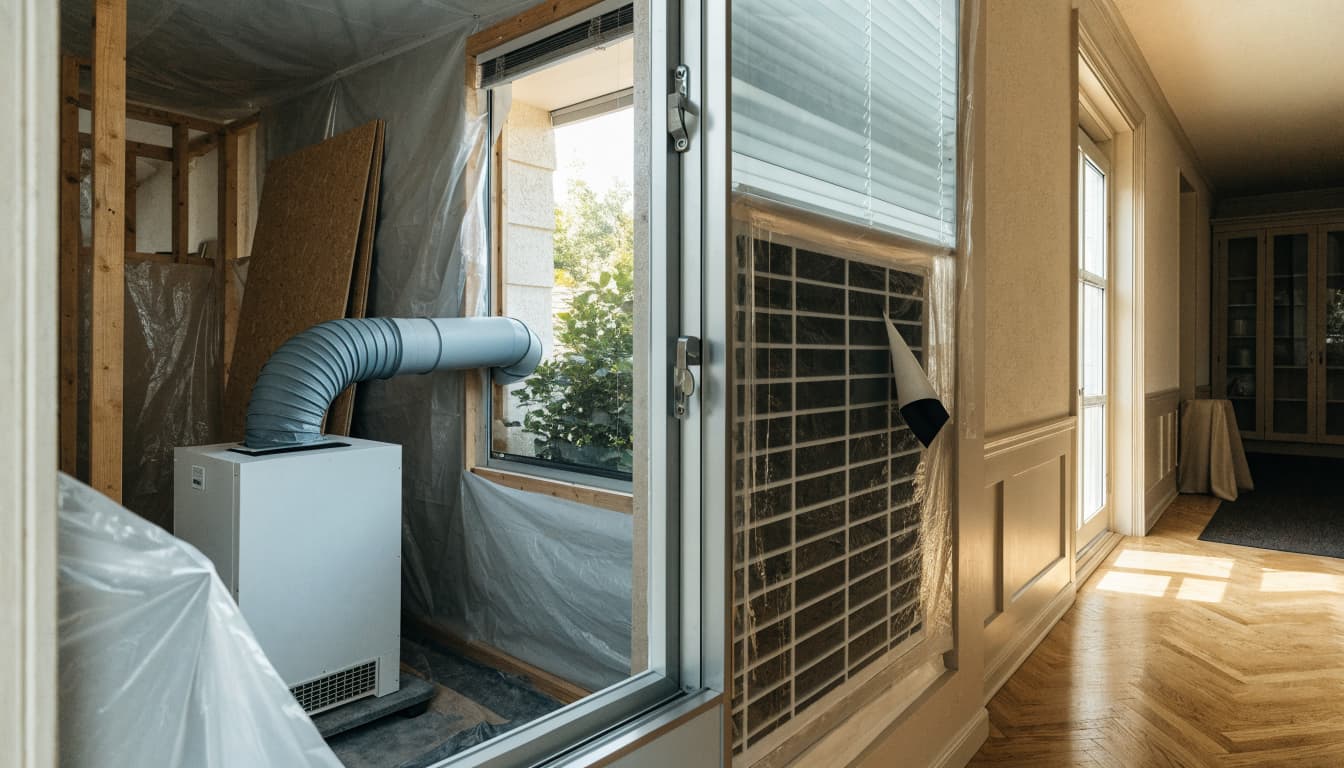
For higher-dust work, ask whether filtered exhaust and negative air pressure belong in the plan. Negative pressure means air moves into the contained work area rather than carrying dust outward.
A qualified contractor should select equipment, establish the discharge location, and check airflow during operation. Exhaust should stay away from open windows, doors, neighboring occupied areas, and outdoor air intakes.
A recirculating HEPA air scrubber captures airborne particles, but recirculation alone doesn't establish negative pressure. Ask which function the proposed setup provides.
Also discuss combustion safety. Exhaust equipment can affect pressure around fuel-burning appliances, so homes with those appliances need appropriate professional review.
Opening windows indiscriminately can introduce humid air or create airflow that spreads dust. In addition, weather changes can alter a temporary ventilation setup.
Source capture remains important. Dust-extracting tool attachments and suitable HEPA vacuums collect particles near cutting or sanding. Ask where cutting will occur, especially for concrete and tile work.
Set Household Safety Limits Before Work Starts
Construction barriers aren't childproof walls. Keep children and pets out of work zones, and explain that a zippered opening isn't permission to enter.
Maintain clear exits throughout the project. Workers should keep cords, hoses, tools, and debris away from household walking routes. Confirm that temporary barriers don't block access to smoke alarms or essential equipment.
Dust hazards also depend on the materials. Cutting concrete, mortar, and some tile can release respirable crystalline silica. Suspected asbestos-containing materials require qualified assessment before disturbance.
For homes built before 1978, ask whether EPA lead-safe renovation requirements apply. Covered work requires appropriate certification and practices, not ordinary cleanup alone.
During bathroom remodeling in Cape Coral, confirm which bathroom remains available and how the family reaches it safely.
If occupants develop breathing symptoms or dust reaches sleeping areas, stop using the affected space and notify the contractor. Health concerns may require medical advice and a revised occupancy plan. Household comfort should never override a needed safety restriction.
Require Daily Cleanup and a Controlled Restart
Clean While Containment Is Still in Place
Ask for a daily sequence: collect debris, vacuum with suitable HEPA equipment, and damp-wipe compatible surfaces. Avoid dry sweeping or compressed air that redistributes fine particles.
Workers should clean the protected travel route as well as the construction room. Vacuum attachments, footwear, and carts can move dust beyond the barrier.
Specify who checks occupied areas and how complaints trigger corrective action. Visible residue outside containment calls for a review of the barrier, traffic pattern, and air movement.
Inspect Before Restoring Normal HVAC Operation
Keep protection in place until dusty work and the associated cleanup are complete. Removing barriers too early can expose cleaned rooms to remaining debris.
Ask the HVAC professional to inspect accessible equipment, grilles, returns, and ducts before normal operation resumes. Inspection may include the coil, blower compartment, and drain pan when exposure warrants it.
Replace the filter before restarting, using the type approved for the system. Duct cleaning isn't automatic after every remodel; base that decision on visible contamination and system condition.
During the final walkthrough, document remaining dust, damaged protection, and cleanup concerns before closeout.
Put Responsibilities and Changes in Writing
A remodel dust control agreement should name the person responsible for containment, HVAC coordination, equipment maintenance, and daily cleanup. Avoid broad language such as "reasonable dust protection" without describing the work.
Ask whether the price includes barrier installation, replacement materials, filtration equipment, filter changes, and final cleaning. Itemized scope makes competing proposals easier to compare without assuming every contractor includes the same protections.
For whole-home remodeling in Cape Coral, discuss phasing room closures so the household retains usable space where practical. Blue Heron Construction lists whole-home remodeling, additions, and storm-damage put-backs among its services.
Establish one contact and a regular update time. Before each phase, confirm upcoming dusty tasks, cooling interruptions, and changes to access.
If demolition reveals water damage or suspect materials, pause the affected work and revise the plan. New conditions can change containment, cleanup, and whether staying home remains appropriate. Record those decisions before the next phase begins.
Key Takeaways for an Occupied Remodel
- Define containment and household access before demolition, then update them as work moves.
- Have an HVAC professional approve shutdowns, duct protection, and temporary cooling arrangements.
- Combine source capture, suitable filtration, and daily cleanup rather than relying on one device.
- Specify who handles protection, inspections, and corrective action when dust escapes.
- Reconsider occupancy when hazardous materials, health concerns, or loss of essential services change the risk.
Make Dust Control Part of the Remodeling Agreement
Keeping your Cape Coral home occupied requires clear responsibilities and controls suited to the project. Barriers, HVAC protection, and cleanup work together, but none guarantees a dust-free renovation.
Before construction starts, settle how the plan will protect daily living and what conditions require a change. A useful agreement gives both you and the contractor clear actions when the work, airflow, or household's needs change.