
Primary Closet Remodeling Ideas for Bonita Springs
A primary closet should make busy mornings easier, not force you to dig through crowded shelves and mismatched hangers. Thoughtful closet remodeling Bonita Springs homeowners can rely on begins with daily routines, available space, and materials that hold up well in a warm, humid home.
The best remodels give every category a clear place, keep frequently worn items within reach, and use lighting that makes colors and details easy to see. Start with what you own, then build a closet around how you actually get dressed.
Key Takeaways
- Divide the closet into dedicated zones for long garments, short garments, folded clothing, shoes, accessories, and laundry.
- Use adjustable shelves and drawers to prevent deep, hard-to-reach storage from becoming cluttered.
- Plan clear walking space before adding a center island, bench, or oversized drawer bank.
- Choose durable, easy-clean cabinet surfaces and corrosion-resistant hardware suited to humid indoor conditions.
- Add layered lighting and maintain airflow so the room stays comfortable and easy to use.
- Confirm permit requirements before moving walls or changing electrical work, because Bonita Springs requirements depend on the project scope and property address.
Begin With Your Real Storage Habits
A beautiful closet can still fail if it doesn't fit the household's clothing, shoes, luggage, and laundry routines. Before selecting cabinetry, empty the existing closet and sort every item by how often you use it.
Count hanging garments, measure the tallest dresses or coats, and group shoes by type. Also note items that need protected storage, such as handbags, watches, seasonal bedding, or delicate fabrics.
Separate Everyday Items From Occasional Items
Place the clothing you reach for most often between waist and eye level. That range is ideal for shirts, pants, favorite shoes, and frequently used accessories.
Seasonal pieces can move higher, especially when stored in labeled bins or closed cabinets. Luggage, extra blankets, and holiday clothing usually belong on upper shelves, where they won't compete with daily essentials.
This simple sorting step prevents one common problem: building an elegant closet with too much space for items you rarely touch.
Measure Before Choosing Cabinet Depths
Depth matters as much as square footage. Standard hanging clothes need room for hangers and garments without rubbing against doors or back panels. Deep shelves can also create hidden piles when they lack pull-outs or dividers.
Measure door swings, window trim, attic access panels, and air vents before finalizing cabinetry. If two people use the closet at once, preserve a comfortable pathway between storage walls.
A closet island only works when drawers can open fully and people can still walk through the space without turning sideways.
Closet Remodeling Bonita Springs: Build Better Storage Zones
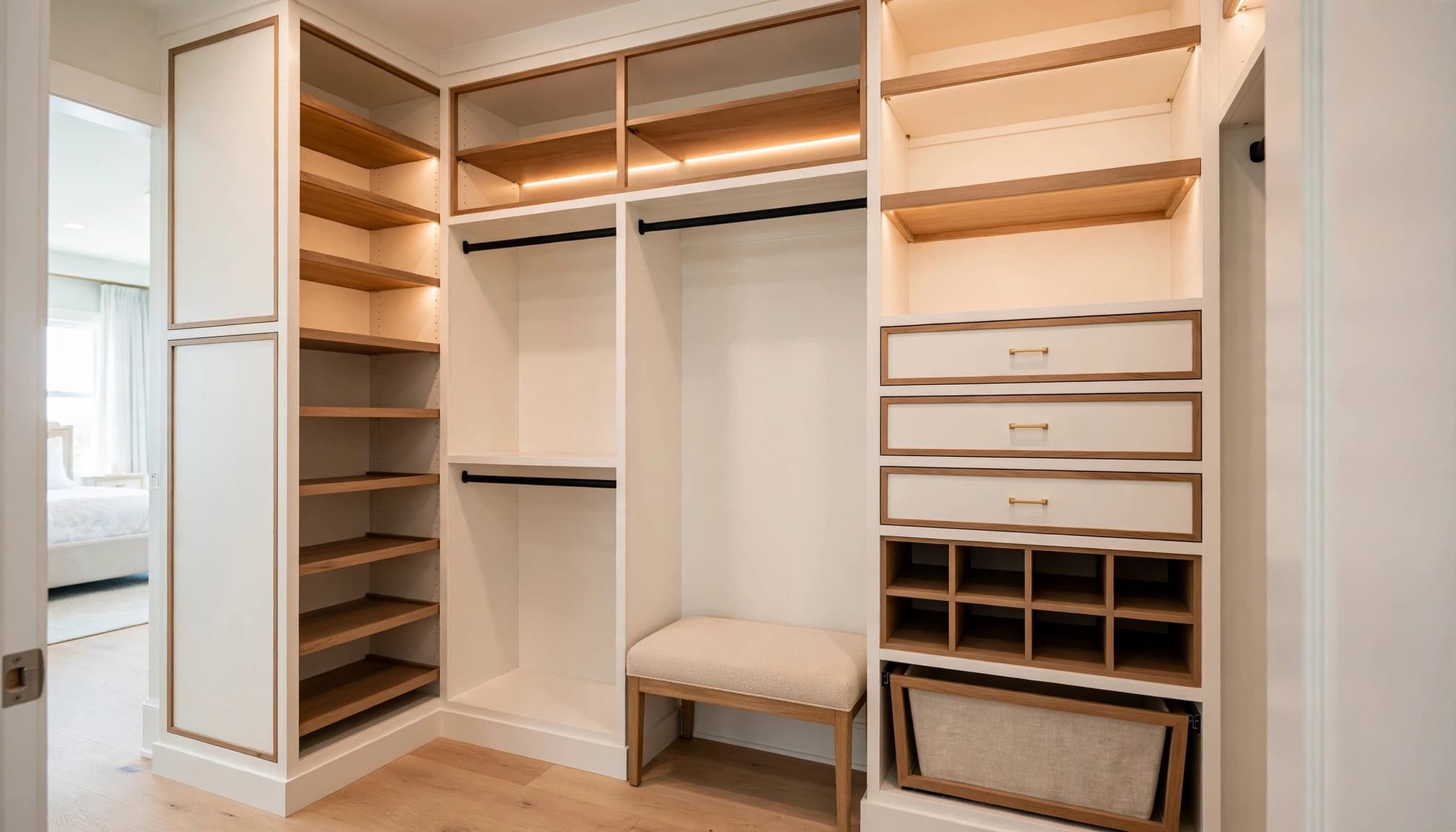
The strongest closet remodeling Bonita Springs projects use a mix of open storage, drawers, and enclosed cabinets. One long shelf and a single hanging rod may be inexpensive, but it wastes usable wall height and makes clothing harder to find.
Build around zones rather than trying to make every wall identical. Your wardrobe should set the proportions.
Use Double Hanging and Full-Height Sections
Double-hang sections create room for shirts, folded-over pants, skirts, and shorter jackets. Put long garments in a separate full-height section so dresses and coats don't drag on the floor.
For a shared primary closet, assigning each person a defined wall or cabinet run reduces overlap. You can still share shoe shelves, laundry storage, and upper seasonal cabinets.
Give Small Items a Dedicated Home
Drawers are more useful than open shelves for undergarments, workout clothing, sleepwear, belts, and accessories. Shallow drawers with simple organizers keep smaller items visible without adding countertop clutter.
Shoe storage needs its own plan. Flat shelves work well for sneakers and sandals, while slightly angled shelves can display dress shoes more clearly. Tall boots need a higher compartment so shafts don't fold over.
Consider adding one pull-out hamper near the spot where you undress. If the closet connects directly to a bathroom, a hamper can prevent damp towels or workout clothes from landing on the floor.
Make the Closet Easier to Use Every Day
Organization should reduce bending, stretching, and searching. A primary closet remodel is a good opportunity to make daily storage more comfortable for every member of the household.
Small changes in placement can have a larger effect than adding more cabinetry.
Keep Frequently Used Storage Within Reach
Reserve the most accessible shelves for shoes, handbags, and folded clothing you use every week. Limit high shelves to seasonal items, travel bags, or backup linens.
Pull-down hanging rods can help use upper cabinet space without requiring a step stool. For lower drawers, full-extension slides let you see the back of the drawer without unloading the front.
A seated bench can be useful for putting on shoes, but only if it doesn't narrow the walkway. In a compact closet, a fold-down seat or a cushioned ottoman that can move may fit better.
Choose Hardware That Feels Good in Hand
Closet hardware gets used repeatedly, often early in the morning when lighting is low. Select drawer pulls that are easy to grip and don't catch on clothing.
Soft-close hinges and drawer slides reduce slamming and protect cabinet boxes over time. For homeowners who prefer a cleaner look, touch-latch doors can work on selected cabinets, though standard pulls are often easier to use with wet or lotion-covered hands.
Choose Finishes for Bonita Springs Conditions
Bonita Springs homes contend with long cooling seasons and humid outdoor air. While a primary closet isn't a wet room, it still benefits from surfaces that clean easily and resist routine wear.
Cabinetry should look good after years of hangers, shoe scuffs, laundry baskets, and drawer use.
Select Durable, Easy-Clean Cabinet Surfaces
High-pressure laminate and quality thermally fused laminate are practical choices for closet cabinet interiors and shelves. These finished surfaces are easy to wipe down and usually handle everyday scratches better than painted wood alone.
Wood veneer and painted cabinetry can also work well when finished properly. Discuss edge treatment, shelf thickness, and exposed panel details before ordering. Thin shelves can sag under stacks of denim, handbags, or storage bins.
Avoid relying on unfinished particleboard for exposed shelving. A sealed cabinet material with finished edges creates a cleaner, more durable result.
Specify Hardware That Resists Corrosion
Choose hinges, drawer slides, closet rods, and shelf brackets with finishes intended for indoor humidity. Stainless steel, quality plated hardware, and powder-coated metal are all worth discussing with your remodeling professional.
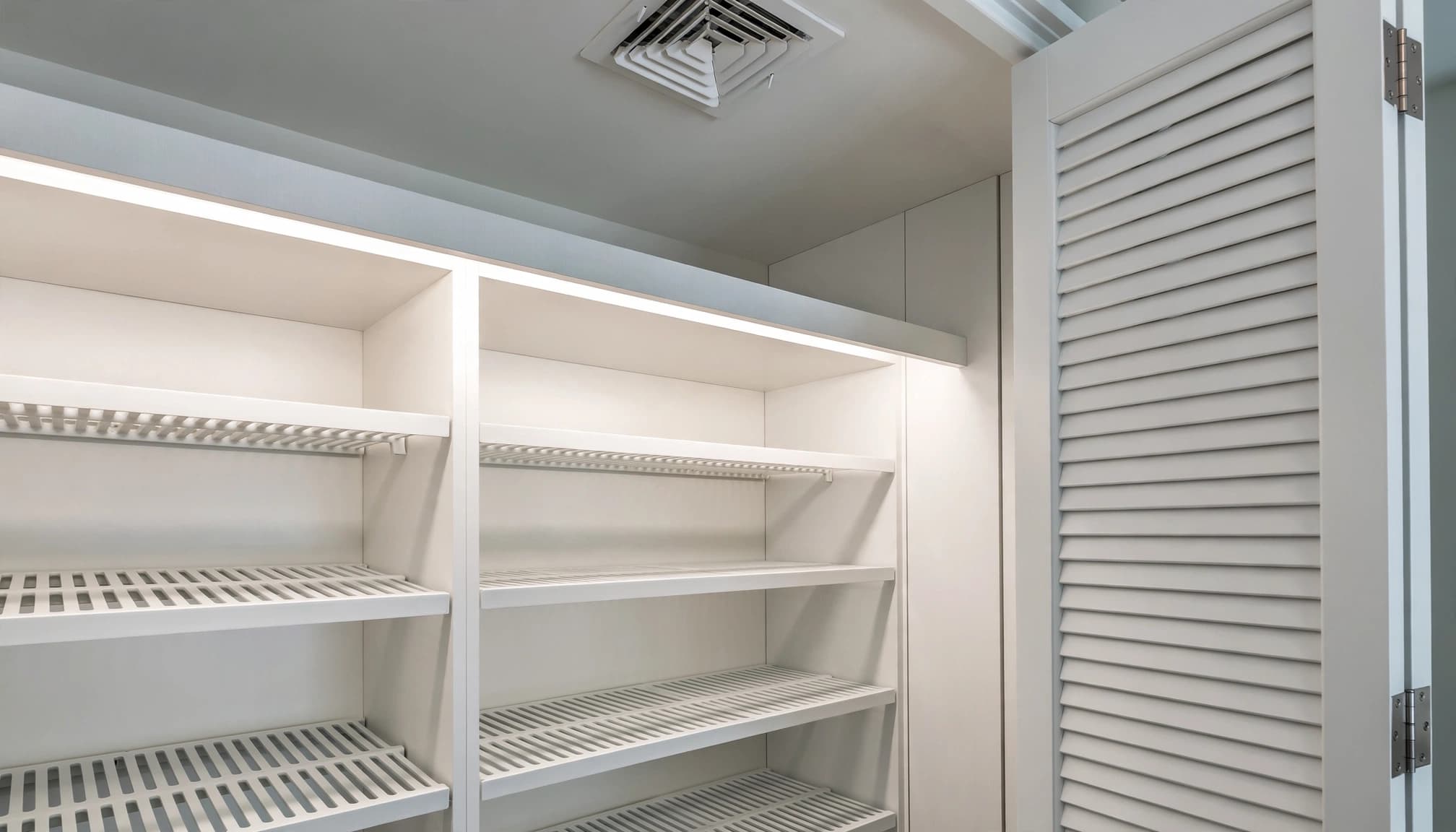
Wire shelving offers airflow, although small items can tip or leave impressions on folded clothes. A useful compromise is solid shelving for most storage, with ventilated components in areas where airflow is helpful.
Plan Ventilation and Lighting Before Cabinets Go In
Cabinets can block vents, cover electrical boxes, or leave dark corners if these details aren't addressed during design. Review the closet's ceiling, HVAC supply and return locations, and electrical layout before installation begins.
Good air movement and useful lighting protect the comfort of the room without turning it into an overbuilt space.
Maintain Airflow Around Clothing and Cabinetry
Don't cover an existing supply register, return grille, or access panel with permanent millwork. If the closet feels stale or damp during certain seasons, have the HVAC layout reviewed rather than assuming cabinetry alone is the problem.
Louvered doors can support passive airflow where they suit the home's design. Ventilated shelves may also help around shoes or laundry storage, particularly when garments aren't always fully dry.
Keep damp swimwear, towels, and gym clothes out of closed drawers until they are dry. Even the best closet materials benefit from sensible daily use.
Layer Light for Better Visibility
Recessed ceiling lights provide general illumination, while LED strip lighting inside hanging sections and shelves reduces shadows. Motion sensors are convenient when your hands are full, and they prevent lights from being left on.
Warm-white lighting between 2700K and 3000K usually gives clothing a comfortable, natural appearance. For color matching, choose fixtures with a color rendering index of 90 or higher when possible.
Put lighting controls near the closet entry. If the remodel includes a dressing area, add a separate low-level light for early mornings and late nights.
Coordinate the Closet With Nearby Rooms
Many primary closets connect to bedrooms and bathrooms. Treating those spaces as separate projects can create awkward flooring transitions, mismatched trim, or competing lighting plans.
A coordinated approach gives the suite a more intentional finish.
Match the Architecture, Not Every Finish
Cabinet color doesn't need to duplicate the bathroom vanity or bedroom furniture. It should, however, relate to the home's trim profile, flooring tone, and hardware style.
For example, a warm white closet with brushed nickel pulls may pair well with a soft neutral bedroom and a bathroom that uses similar metal finishes. Durable flooring should also handle shoe traffic and make cleanup simple.
Homeowners planning broader changes can explore general home remodeling services when the closet is part of a larger suite or whole-home project.
Set a Scope Before Requesting Prices
A clear scope helps contractors prepare comparable proposals. Decide whether the project includes demolition, drywall repair, paint, flooring, electrical work, ventilation changes, doors, and custom cabinetry.
Ask how each proposal treats concealed conditions. Older homes may reveal damaged drywall, outdated wiring, or previous alterations once cabinetry comes out. A separate contingency fund helps protect the finish budget if repairs appear during construction.
Confirm Permits and Construction Details
A cabinet-only update may follow a different path than a remodel that moves walls, adds circuits, changes HVAC components, or alters plumbing nearby. The City of Bonita Springs Community Development office handles local permitting at 9220 Bonita Beach Road, Suite 111.
Confirm current requirements before work starts, since regulations and review steps can change.
Start With the Property Address and Scope
Permit authority depends on the address, not the contractor's nearest office or a neighboring municipality. Bonita Springs, Cape Coral, Fort Myers, Estero, and Lee County can follow different local procedures.
Changes to electrical wiring, mechanical systems, or structural walls deserve early review. The permit planning for a renovation process is also a useful reminder that jurisdiction and scope both affect the steps a homeowner must take.
Ask Who Handles Inspections and Coordination
Before signing a contract, ask who prepares plans, submits permit documents when required, answers review comments, and schedules inspections. Keep approved drawings and product selections together so cabinet installers, electricians, and painters work from the same plan.
If construction will happen in phases, map out future electrical, flooring, and trim work before the first phase begins. That approach can reduce avoidable demolition and patching later.
Frequently Asked Questions
How long does a primary closet remodel take?
Timing depends on the scope, cabinet lead times, electrical changes, demolition, and any repair work found after the existing closet is removed. A cabinet installation alone is different from a project that includes new lighting, flooring, drywall, doors, and built-in millwork.
Should I add an island to my primary closet?
Add an island only when the room has enough clearance for open drawers and comfortable movement. A narrow closet often works better with drawer banks along a wall, a window seat, or a movable ottoman.
What closet features add the most useful storage?
Double hanging rods, adjustable shelves, full-extension drawers, shoe storage, and a dedicated hamper usually improve daily function. The right mix depends on your clothing inventory, not on a standard showroom layout.
A Primary Closet That Works Harder
A well-planned closet gives every item a logical place and makes the morning routine feel less crowded. Prioritize storage zones, accessible drawers, durable finishes, clear lighting, and uninterrupted airflow.
The most successful closet remodeling Bonita Springs plans begin with your household's habits, then turn those habits into a layout built for years of daily use.