
Cape Coral Kitchen Flooring Options for Open-Concept Homes
An open-concept kitchen puts your flooring under constant attention. It runs beneath cabinets, around the island, into the living area, and often toward the lanai or pool door.
The right Cape Coral kitchen flooring needs to look cohesive while handling humidity, wet feet, sand, pets, children, and the occasional storm cleanup. A beautiful sample matters, but daily use matters more.
Start with how people move through the home, then compare materials by cleanup needs, comfort, and installation requirements.
Key Takeaways
- Porcelain tile and luxury vinyl plank are common choices for open kitchen and living areas because they suit active Florida households.
- Sand acts like an abrasive, so matte finishes and textured surfaces usually hide daily wear better than glossy floors.
- Open layouts need a flooring plan that considers routes to the fridge, sink, range, dining area, garage, lanai, and pool.
- Product quality, slab condition, underlayment, transitions, and edge details affect long-term results as much as the visible material.
- No floor removes the need for quick spill cleanup or a careful inspection after hurricane-related water intrusion.
Cape Coral Kitchen Flooring Starts With Real Traffic
Open kitchens work best when they guide people around the work zone instead of through it. In Cape Coral, traffic may come from the garage, a pool area, the lanai, or a nearby living room.
Protect the routes between kitchen zones
Keep clear paths between the refrigerator, sink, cooktop, dining table, and outdoor doors. An oversized island can interrupt those paths and make a large room feel crowded once stools, groceries, and family members fill the space.
Flooring should continue through these busy routes whenever possible. A single material can make the kitchen and living area feel connected, while unnecessary thresholds break up the view and collect grit.
Plan for damp feet and tracked-in sand
A wet footprint near a slider can spread quickly across an open floor plan. Likewise, fine sand from shoes and paws can scratch softer finishes over time.
Choose a surface with a finish that doesn't reveal every speck of dust. Lighter wood tones, soft stone looks, and low-sheen finishes often suit coastal interiors better than very dark or highly polished floors.
In an open kitchen, the busiest walkway is often more important than the area directly in front of the cabinets.
Compare Cape Coral Kitchen Flooring Materials
The best material depends on your household, design goals, and the condition of the existing floor. This comparison gives a practical starting point for Cape Coral kitchen flooring selections.
| Flooring type | Moisture and sand | Daily upkeep | Best fit |
|---|---|---|---|
| Luxury vinyl plank | Handles routine wet cleanup well when seams and edges are protected | Sweep or vacuum grit, then use a damp microfiber mop | Busy homes with pets, children, and connected living areas |
| Porcelain tile | Handles moisture and sand well | Easy surface cleanup, but grout needs care | Kitchens, entries, baths, and high-traffic homes |
| Ceramic tile | Works well in moisture-prone rooms | Similar cleanup needs to porcelain, with grout care | Moderate-traffic projects and budget-conscious plans |
| Laminate | Product-dependent around spills and seams | Requires prompt cleanup and approved cleaners | Bedrooms or lower-risk living spaces |
| Engineered hardwood | Needs more protection from water and grit | Requires careful cleaning and finish protection | Main living areas where a natural wood look is the priority |
Porcelain tile and quality vinyl often fit the demands of coastal households. However, engineered hardwood may be worth the extra care when warmth underfoot and natural grain matter most.
Look beyond the showroom sample
Bring home large samples and view them near windows, sliders, and the island. Florida sunlight can make undertones look very different than they do under store lighting.
Also consider texture. A matte surface can disguise small marks and sandy footprints better than a smooth, glossy finish. Too much texture, though, can make routine mopping less convenient.
Match the floor to the whole room
Cabinet color, countertop pattern, wall paint, and trim all affect how the floor reads. A busy floor can compete with strongly veined quartz, while a quiet tile or plank may give the room more balance.
For a larger renovation that carries finishes beyond the kitchen, Cape Coral whole-home remodeling can help coordinate connected spaces and storm-damage put-backs.
Porcelain Tile for Open Florida Kitchens
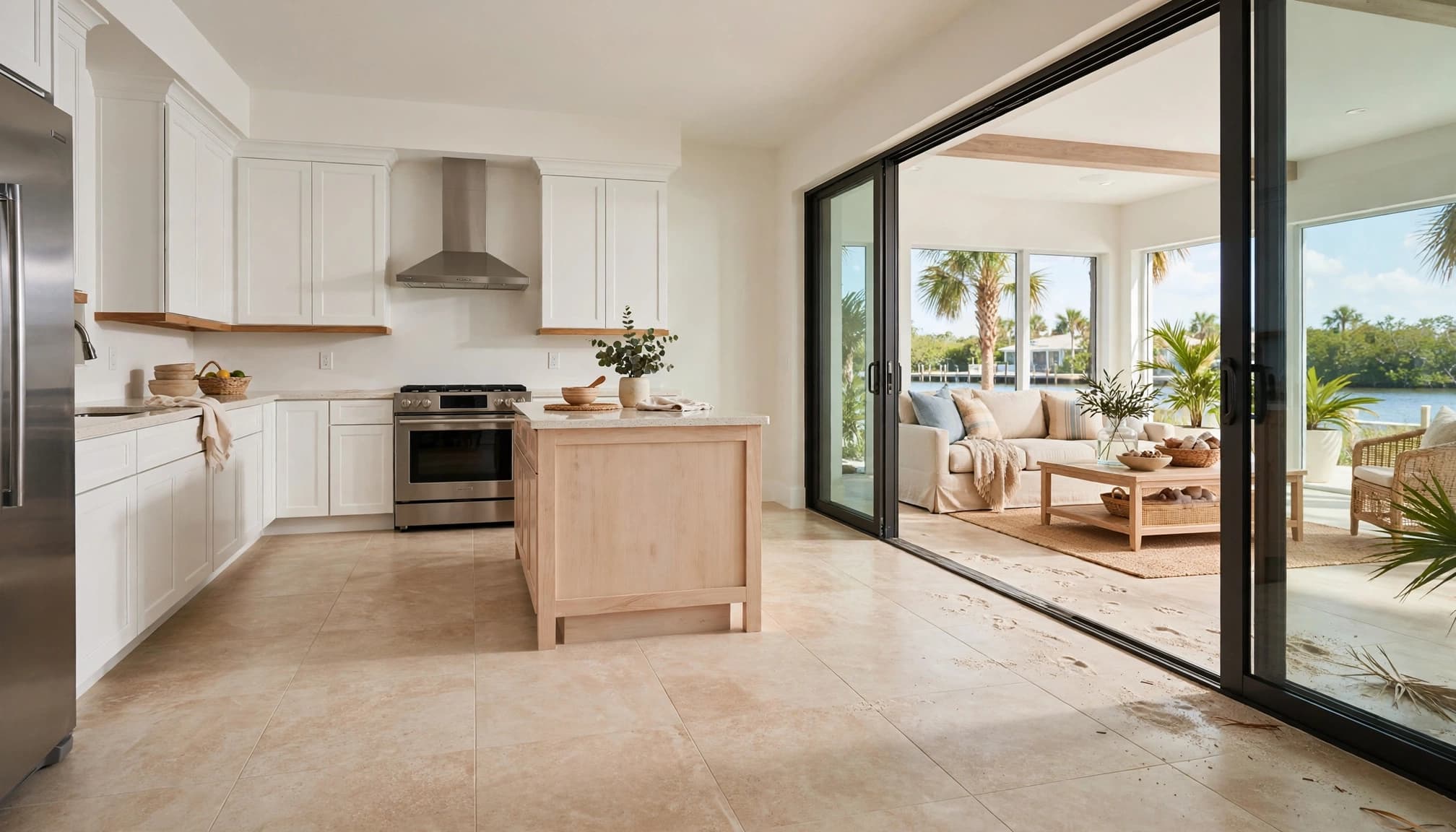
Porcelain tile remains a practical favorite in Florida kitchens. It has a dense surface, cleans easily, and handles the wet, sandy traffic common near entries and outdoor doors.
Choose size and finish with care
Large-format tile can reduce the number of grout lines across an open room. That can make the floor look more continuous from the kitchen to the living area.
Still, tile size should fit the room and slab conditions. A qualified installer can help determine layout, joint placement, and whether the floor needs preparation before installation.
Grout is part of the flooring decision
Grout color changes how much maintenance a tile floor requires. Bright white grout can look sharp at first, but it may show dirt faster in a kitchen entrance or near a lanai door.
A mid-tone grout often hides everyday dust better. Ask about grout sealing and cleaning needs before choosing a color, especially in areas where spills and pet traffic are common.
Luxury Vinyl Plank and Warmer-Looking Options
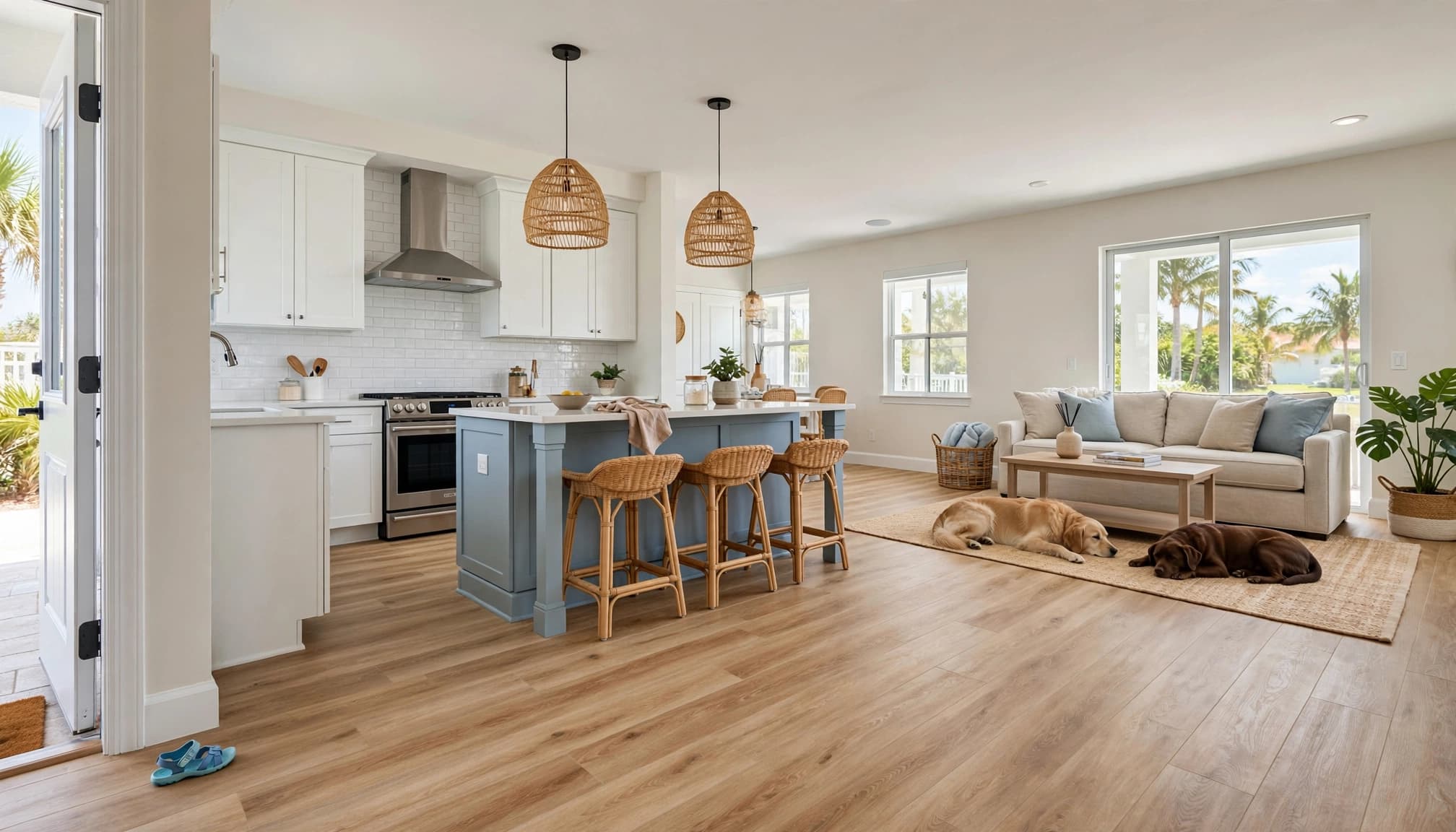
Luxury vinyl plank, often called LVP, gives an open-concept room a warmer visual feel than tile. It can also feel less hard underfoot during long cooking sessions.
Use quality vinyl where daily life is hard on floors
For homes with dogs, children, and frequent trips outside, a quality LVP product can be a forgiving option. Textured matte finishes tend to look more natural in bright rooms and can hide light scratches better than shiny planks.
Product construction matters. Review the manufacturer's installation instructions, furniture limits, cleaning guidance, and moisture requirements before making a final selection.
Consider engineered hardwood and laminate honestly
Engineered hardwood brings real wood character to a kitchen-adjacent living space. Yet it needs faster cleanup around water bowls, dishwasher leaks, and wet paws. A satin finish usually disguises minor wear better than a glossy one.
Laminate can work in a lower-risk room, but its performance near moisture varies by product. Avoid treating all wood-look floors as interchangeable, because their core materials and seam details differ.
Plan Flooring Before Cabinets and Demolition
Flooring decisions affect cabinet height, appliance clearances, island placement, and transitions to nearby rooms. Make those calls before materials arrive, especially if walls, plumbing, or electrical locations will change.
Check the slab and transitions first
Cape Coral homes commonly have concrete slab foundations. A flooring professional should inspect for flatness, cracks, moisture concerns, and old adhesive before installation begins.
Plan where flooring will meet bedrooms, baths, entries, and exterior doors. A well-placed transition protects exposed edges and reduces a tripping point. It also gives installers room to accommodate the material's requirements.
Keep the layout useful for years
A practical open kitchen leaves room for family routines and future needs. Clear aisles, reachable storage, and stable flooring can make the space easier to use if mobility changes later.
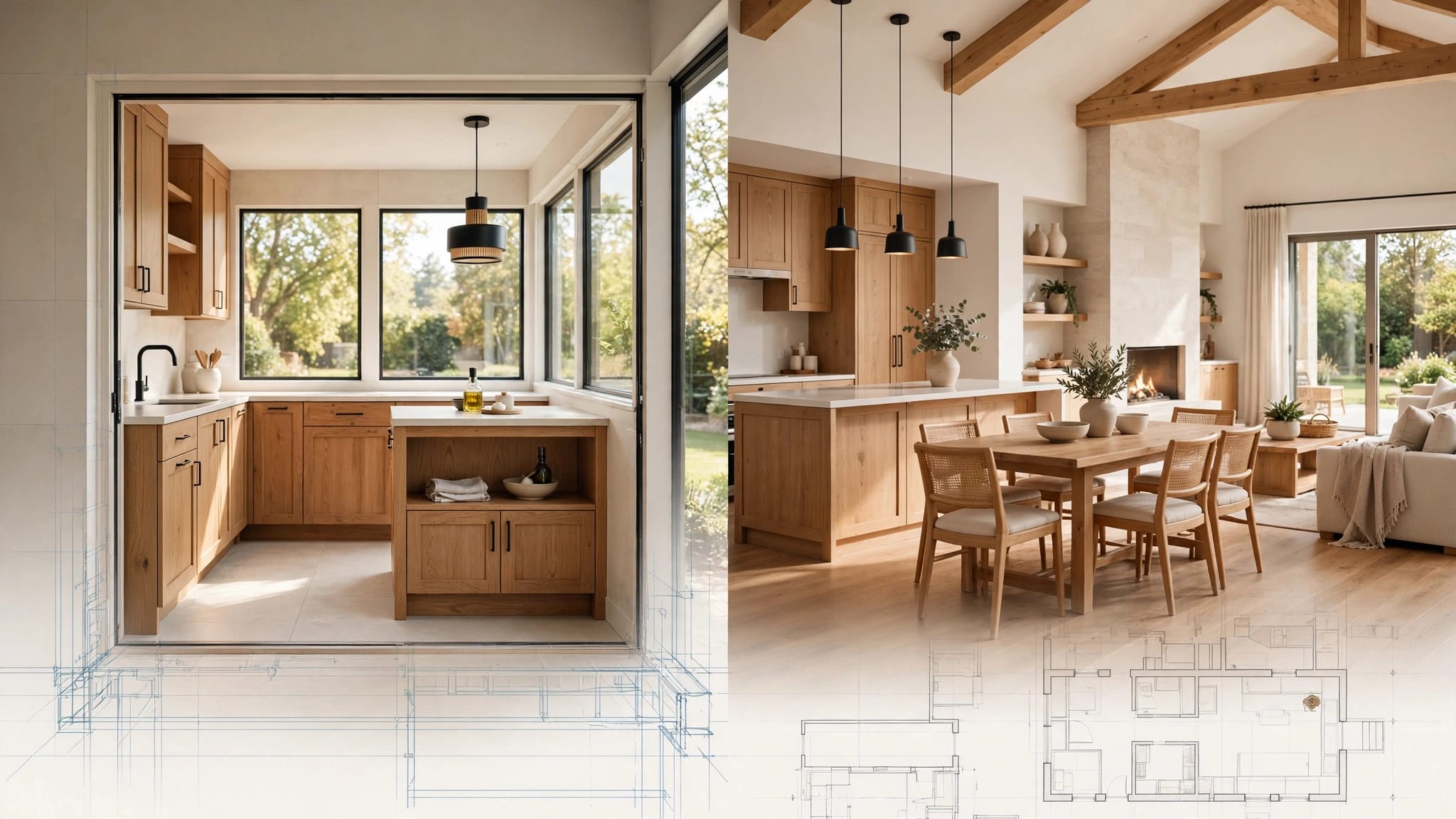
For projects involving structural changes, cabinetry, ventilation, and finish coordination, Cape Coral kitchen remodeling brings those decisions into one plan. New-home projects can also establish flooring continuity early through Cape Coral custom floor plans.
Maintain Floors Through Florida Weather and Family Life
Regular care protects any finish better than occasional deep cleaning. Place sturdy mats at the garage entry, front door, and lanai door, then shake them out often before sand travels farther inside.
Use simple cleaning habits
Sweep or vacuum several times each week to remove abrasive grit. A microfiber mop picks up fine dust and pet hair without leaving heavy residue.
Use cleaners approved for the flooring product. Steam mops can create problems for some laminate, vinyl, and engineered wood floors. Felt pads beneath chairs and movable furniture also reduce surface marks.
Prepare for storm-related cleanup
After a hurricane or water intrusion, remove standing water promptly when it is safe to do so. Document visible damage for insurance purposes, and don't assume a floor is unaffected because its top surface looks dry.
Water can reach seams, transitions, subfloor layers, cabinet bases, and wall edges. A contractor or restoration professional can assess the full area before repairs begin.
Frequently Asked Questions
Should kitchen flooring match the living room in an open layout?
Matching flooring usually creates the cleanest visual flow. It makes an open kitchen feel larger because the eye moves across one continuous surface.
A change can still work when it has a clear purpose, such as tile at an exterior entry or a different surface in a laundry room. Keep transitions limited and intentional.
Is tile or vinyl better for a home with pets?
Both can work well. Porcelain tile is a strong option for sand, damp paws, and quick cleanup, although grout needs maintenance. Quality LVP can offer a warmer look and softer feel underfoot.
Your choice should reflect the product details, your pets' activity level, and how often outdoor traffic enters the home.
What flooring finish hides sand best?
Matte and lightly textured finishes usually hide sand, paw prints, and minor scuffs better than high-gloss surfaces. Mid-tone colors also tend to show less than very dark or very pale floors.
Sample the finish near your doors and windows. Sunlight can reveal dust and surface texture more than a showroom display does.
Choose a Floor That Fits Daily Life
The strongest Cape Coral kitchen flooring choice is the one that still looks good after pool days, family meals, pet traffic, and humid afternoons. It should support your layout, clean up without constant effort, and connect the kitchen naturally to the rest of the home.
Porcelain tile, luxury vinyl plank, engineered hardwood, laminate, and ceramic tile all have a place in the right project. A thoughtful plan turns that choice into a floor that suits how your household lives.