

Plan an Estero EV Charger Before Your Home Is Built
An EV charger is easiest to plan when your home is still lines on a drawing. Once the slab is poured, walls are closed, and the driveway is complete, changes can mean trenching, patching, and added labor.
For an Estero EV charger , early electrical planning gives you more choices and a cleaner finished result. It also helps the electrician size the system around the way your household will actually use power.
The best time to make these decisions is during design development, before the electrical plan and site work are final.
Why an Estero EV Charger Belongs in the Design Phase
A home charger is more than an outlet near the garage. It affects the electrical panel, service size, wire path, parking layout, and sometimes the driveway itself.
A Level 2 charger typically uses 240-volt power on a dedicated circuit. That makes it a practical fit for overnight charging, but it also means the electrical design must account for its ongoing load alongside air conditioning, pool equipment, cooking appliances, water heating, and other large systems.
Protect the slab, walls, and driveway
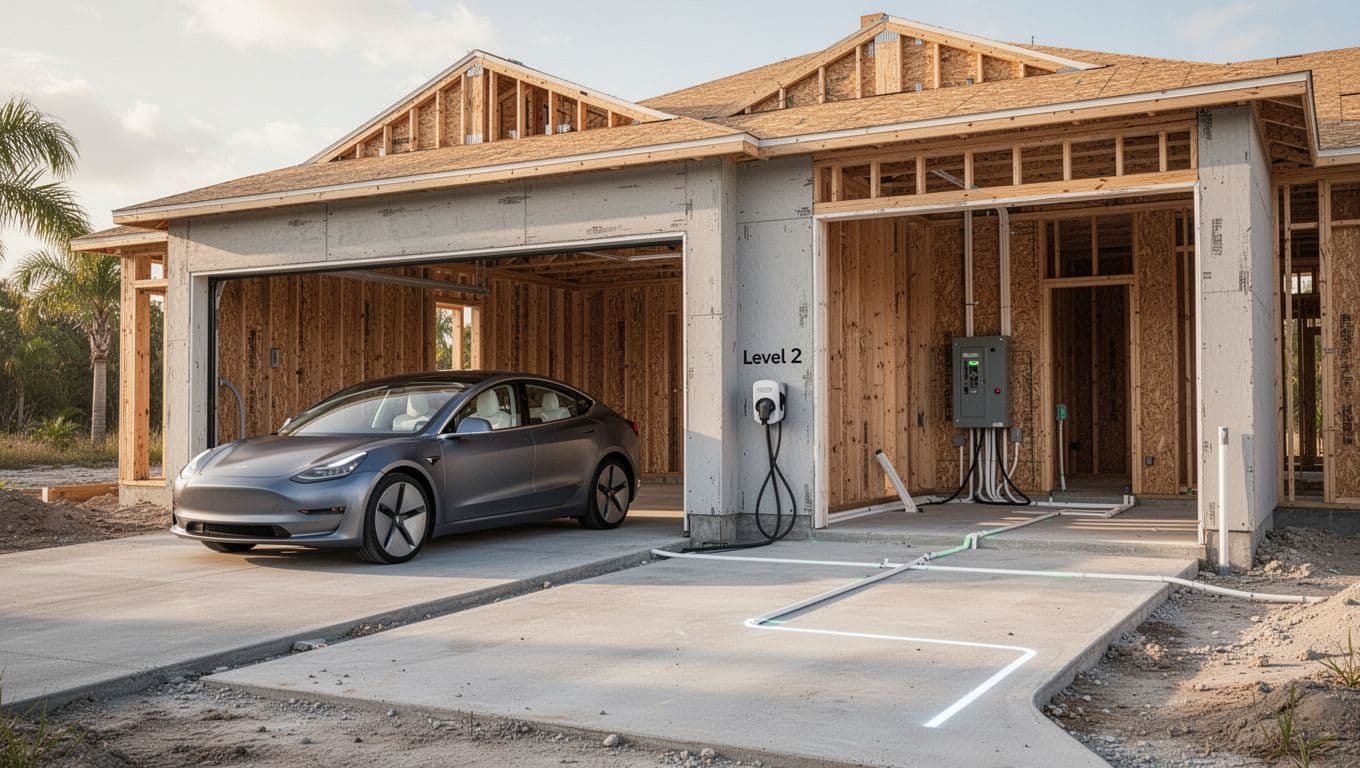
Conduit is inexpensive when it goes in before concrete and drywall. It becomes more involved after the home is finished.
For example, a charger on the far side of a garage may need a pathway beneath the slab or across a finished ceiling. An exterior pedestal near the driveway might need underground conduit before pavers, landscaping, or concrete go in.
Ask where each vehicle will park, including a future EV. Then mark the likely charger location on the garage and site plans.
Keep options open for the next owner
Even if you don't own an EV today, a planned circuit and conduit route can make the home easier to adapt later. You may install a charger at move-in, add one after purchasing a vehicle, or leave the final equipment choice open.
A well-planned electrical layout also avoids an awkward surface-mounted conduit run across a finished garage wall. The visible details matter in a custom home.
A capped conduit with room for future conductors can cost far less during construction than opening finished surfaces later.
Choose the Right Level 2 Charging Setup
Most custom-home owners who want daily EV charging should discuss a Level 2 setup. Charging equipment, also called EVSE, manages the connection between the home and vehicle. The vehicle's onboard charger determines how much power it can accept.
A Level 2 unit can have different output ratings. Higher output isn't always the right answer. Your vehicle, driving habits, available electrical capacity, and charger location should guide the decision.
Start with your real driving routine
Review the miles you drive on a typical weekday and how long the vehicle will sit at home. A commuter who parks overnight has different needs than a household with two EVs sharing one charger.
Also consider future changes. A second EV, a plug-in hybrid, a visiting family member, or a work vehicle can change the plan. In many cases, preparing for two charging locations makes more sense than installing two units immediately.
Bring the vehicle make and model to the design meeting if you have one. If you haven't selected a vehicle, tell the electrician whether you want a moderate-capacity charger now or a pathway for higher-capacity equipment later.
Give the charger its own circuit
A licensed electrician should determine the breaker, conductor size, and equipment rating for the selected unit. The charger should have a dedicated branch circuit designed around the manufacturer's instructions and the applicable electrical code.
The service calculation matters as much as the circuit. Electricians treat EV charging as a continuous load, so the system must have enough capacity after every other planned load is counted.
Don't assume a larger panel solves every issue. Panel space, service capacity, meter equipment, and utility infrastructure all need to work together.
Blue Heron's electrical features for new home construction include options such as EV-ready electrical planning, which is worth discussing while your floor plan is still flexible.
Put the Charger Where It Will Work Every Day
The ideal location has a short, natural cable path to the vehicle charge port. It also keeps the cable out of walking paths, door swings, storage areas, and garage traffic.
Park your expected vehicle position on the plan, not only on paper but in relation to the garage doors, rear entry door, workbench, and storage cabinets. Charge-port locations vary by vehicle, so a wall that works for one model may be inconvenient for another.
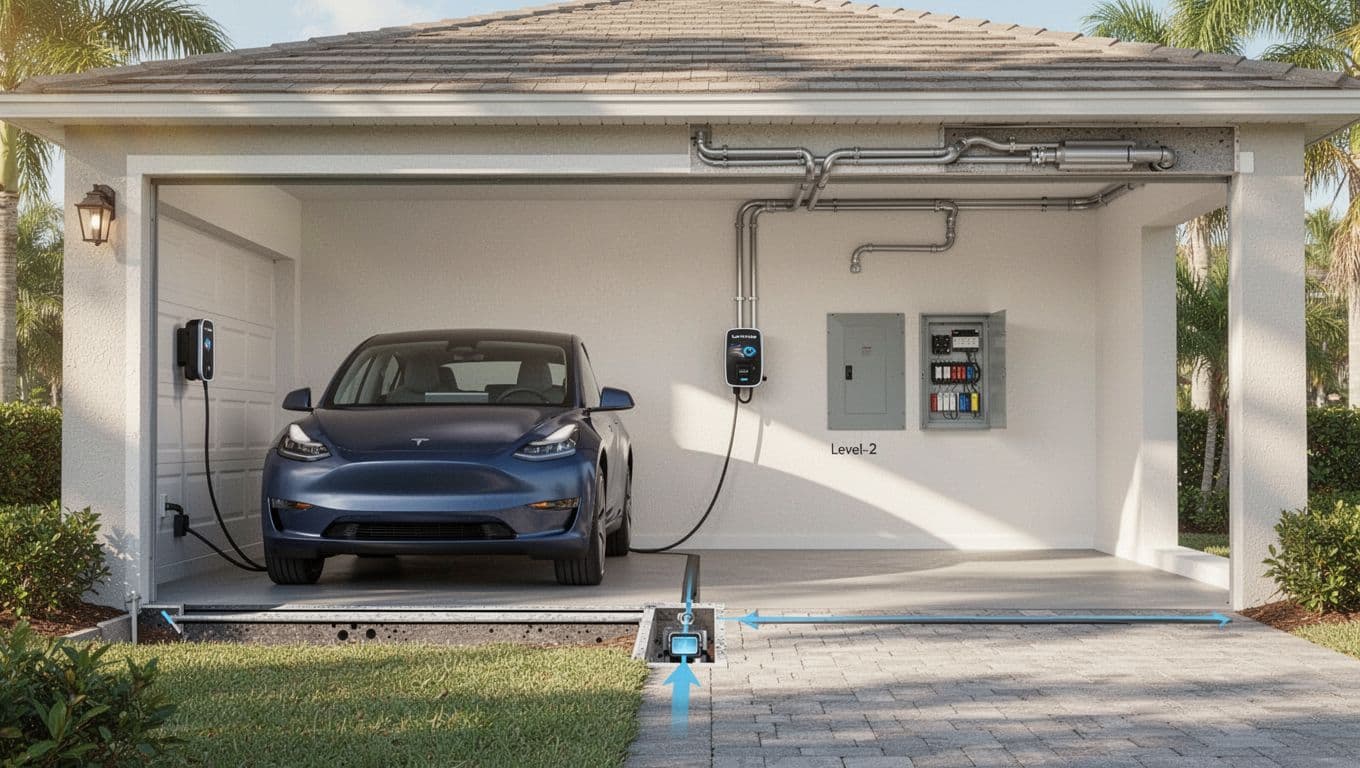
Garage installations are usually straightforward
A garage wall protects charging equipment from direct sun, heavy rain, and wind-driven debris. It also makes it easier to keep the unit close to the electrical panel, which can reduce the length of the wire run.
Still, avoid placing the charger behind shelving or in a spot where a parked vehicle can strike it. Leave practical access for the charging cable and future service. Your electrician can also confirm required working clearances around the panel and equipment.
If the home has a side-load garage, consider whether a future vehicle will pull in forward or back in. That single detail can change the best wall location.
Exterior chargers need more protection
An exterior unit may be the right choice for a carport, driveway parking, or an EV that rarely enters the garage. However, Southwest Florida heat, humidity, rain, and storm conditions call for equipment rated for its intended location.
Choose a protected wall when possible. Consider a location under a covered entry or garage overhang, while keeping the charger clear of vehicle movement. The electrical contractor should confirm the equipment listing, mounting method, weather exposure, protection requirements, and local rules for the final site.
Map Conduit and Wire Routes Before Rough-In
The shortest route from the electrical panel isn't always the best route. A direct path may cross a future window, conflict with a structural beam, or create a difficult pull for the electrician.
During electrical rough-in, the team can plan concealed routes through walls, attic areas, or dedicated chases. For a detached garage, driveway charger, or future second charger, underground conduit may be the sensible choice.
Plan for future capacity, not only today's charger
A spare conduit route creates flexibility. It can support a second EV circuit, upgraded conductors, communications wiring, or a different charging location later.
The conduit needs enough space and appropriate bends for the intended use. Ask the electrician to document where it begins and ends before drywall goes up. Photos of rough-in work are useful years later when you want to make a change.
Avoid guessing at wire size based on a charger you might buy later. Instead, identify the desired charging capacity and have the electrician design a pathway that supports it.
Coordinate charger space with storage plans
Garage cabinets, refrigerators, water treatment equipment, golf carts, and workbenches can take over a wall quickly. A charger should have a protected, dedicated zone on the plan.
This coordination is especially helpful in homes with a three-car garage or tandem bay. A builder and designer can reserve the right wall before cabinetry and overhead storage become fixed decisions.
Coordinate EV Charging With Solar, Batteries, and Backup Power
An Estero custom home may include solar panels, a battery system, a standby generator, or a transfer switch. Each choice affects how EV charging fits into the electrical design.
An EV's battery holds substantial energy, yet a standard home charger doesn't automatically turn it into backup power for the house. Vehicle-to-home capability depends on the vehicle, charging equipment, transfer equipment, and approved installation design.
Decide what happens during an outage
Some homeowners want the charger to stop when the home operates on battery or generator power. Others may want limited EV charging under certain conditions. Make that preference clear before the electrical plans are issued.
The electrician can coordinate the charger circuit with the backup-power design. This may include load management, a non-backed-up panel, or equipment that limits charging when major household loads are active.
Do not assume every smart charger works with every solar or battery system. Compatibility varies by equipment brand and model.
Smart features are useful, but they need a plan
Wi-Fi-connected chargers can schedule charging, track energy use, and sometimes respond to utility or home-energy settings. Those features may be useful if you want to charge during selected hours or monitor separate vehicle energy use.
However, the charger still needs a reliable physical installation. Ask about Wi-Fi coverage in the garage, the need for a hardwired network connection, and what happens if internet service drops. A charging unit should remain safe and functional even when app features are unavailable.
Permits, Inspections, and Local Utility Questions
Inside the Village of Estero, the Building Department and Permitting Services states that regulated electrical work requires a building permit. Projects outside Village limits may fall under Lee County permitting instead.
Confirm the property's jurisdiction before the design phase moves too far ahead. The Village of Estero or Lee County can explain the current permit path, whether the charger circuit belongs in the original new-home permit, and the inspection sequence for the specific project.
Verify the service with the utility
Florida Power & Light is the utility to verify for many Estero properties, but service territory and project details should be confirmed for your specific parcel. Ask whether the planned service can support the home's anticipated electrical load and an EV charger without additional utility work.
A custom home with multiple HVAC systems, a pool, spa heater, induction range, electric dryer, and future solar may need closer review. The utility and electrician should address service questions before equipment selections become difficult to change.
Keep the builder and electrician in one conversation
The builder, architect, electrical contractor, and homeowner should agree on charger location before rough-in. That discussion should cover structural walls, garage layout, equipment clearances, panel location, conduit routes, and exterior finishes.
Ask for the charger circuit and future provisions to appear clearly on the electrical plan. Then confirm the installed work matches the plan before insulation and drywall conceal it.
Questions to Bring to Your Design Meeting
A short list of direct questions can prevent expensive revisions later:
- Where will each current and future EV park, and where are the charging ports likely to face?
- What Level 2 charging capacity fits our vehicle plans and household electrical load?
- Will the panel have adequate space and service capacity after the EV load is included?
- Can we run conduit for a second charger or an exterior charging location?
- Does the garage layout leave enough room for the charger, cable, storage, and electrical panel access?
- If we add solar, batteries, or a generator, how will the charger operate during an outage?
- Which permits and inspections apply to this lot, and will the charger be included with the new-home electrical permit?
- What charger specifications should we provide before the electrician orders breakers and conductors?
Record the answers in the construction documents. A clear plan gives every trade the same target and keeps late-stage decisions from disrupting finished work.
Build the Electrical Plan Around How You Live
An EV charger is a small visible fixture connected to a much larger home system. When you decide its location, charging capacity, circuit, and future pathway before construction, the result looks intentional and works with the rest of the home.
Confirm local permitting with the Village of Estero or Lee County, verify service details with the utility, and rely on a licensed electrician for the final design. A thoughtfully planned Estero EV charger turns a future upgrade into part of the home from day one.