

Kitchen Drawer Configurations That Improve Everyday Storage in Naples Homes
A kitchen can have plenty of cabinets and still feel short on storage. The difference often comes down to how easily you can reach what you use every day. The right kitchen drawer configurations keep cookware, utensils, pantry goods, and waste in practical zones instead of forcing everything into deep, dark cabinets.
For Naples homeowners planning a remodel, drawer placement matters as much as cabinet style. A well-planned layout protects counter space, reduces unnecessary bending, and makes limited square footage work harder. Start with the way your household cooks, cleans, shops, and moves through the room.
Key Takeaways
- Deep drawers are useful for pots, pans, mixing bowls, and heavier cookware.
- Shallow drawers control utensils, spices, wraps, snack bars, and baking tools.
- Full-extension slides bring items at the back of a cabinet into view.
- Pull-out waste and recycling bins belong near the sink or main prep area.
- Drawer width and depth should match the cabinet opening, appliance clearances, and slide capacity.
- Moisture-resistant materials, sealed edges, and easy-clean surfaces help cabinetry handle daily kitchen use.
- Leave some open capacity in pantry drawers and shelves so the storage system can adapt over time.
Kitchen Drawer Configurations for Everyday Cooking
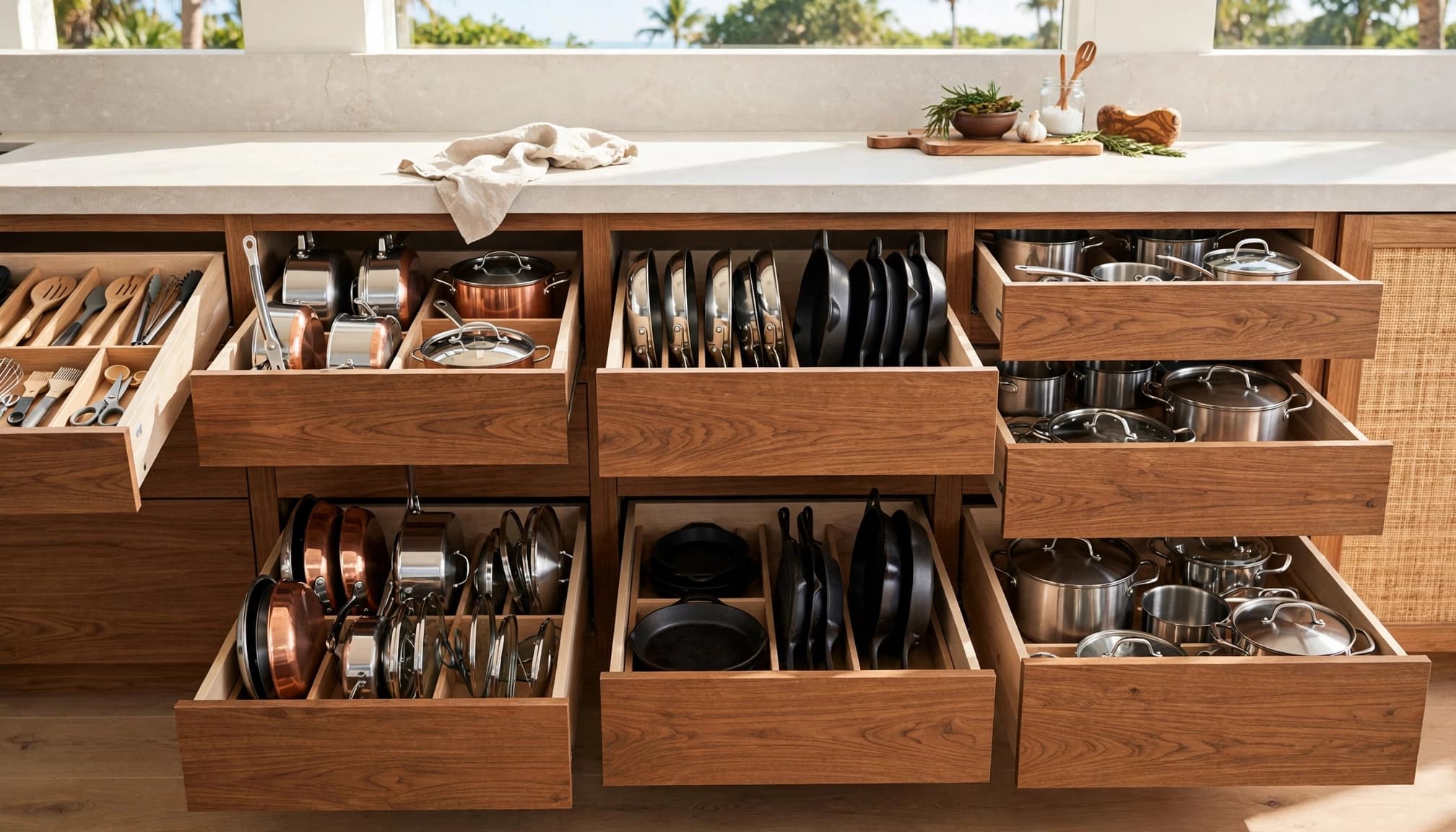
Cookware storage works best when the drawer matches the weight and shape of the items inside. Deep drawers usually make better use of lower cabinet space than a stack of fixed shelves because you can lift out a pan without moving everything in front of it.
Use deep drawers for cookware
Reserve the lowest, strongest drawers for Dutch ovens, saucepans, skillets, and mixing bowls. Place cookware near the range or cooktop when possible, so preparation does not require crossing the kitchen.
Wide drawers can hold several pans in a single layer or use peg systems and adjustable dividers to stop items from shifting. Before choosing a wide drawer, confirm that the cabinet box and hardware can support the expected load. A heavy drawer that sticks or sags will quickly become frustrating.
Keep utensils in shallow drawers
Shallow drawers are easier to organize for spatulas, measuring spoons, peelers, knives, and everyday serving tools. Adjustable dividers are more flexible than permanent grids because utensil collections change over time.
A drawer near the main prep counter can hold cutting tools and measuring equipment. Another near the dishwasher can store flatware and serving pieces. This arrangement reduces the distance between storage and the task that uses it.
Place storage near the work zone
The best kitchen drawer configurations follow a cooking routine. Baking tools belong near the counter where dough is prepared. Pots and pans should stay close to the cooktop. Plates, bowls, and flatware should be convenient to the dishwasher and dining area.
Leave enough aisle clearance for a drawer to open fully. A deep drawer near an island may conflict with a dishwasher door, another cabinet, or a walkway. Those clearances should be tested on the plan before cabinets are ordered.
Make Limited Kitchen Space Work Harder
A small or narrow kitchen benefits from storage that uses depth and height without creating difficult reach points. Fixed shelves may hold more on paper, but they often hide items at the back.
Add pull-outs to pantry cabinets
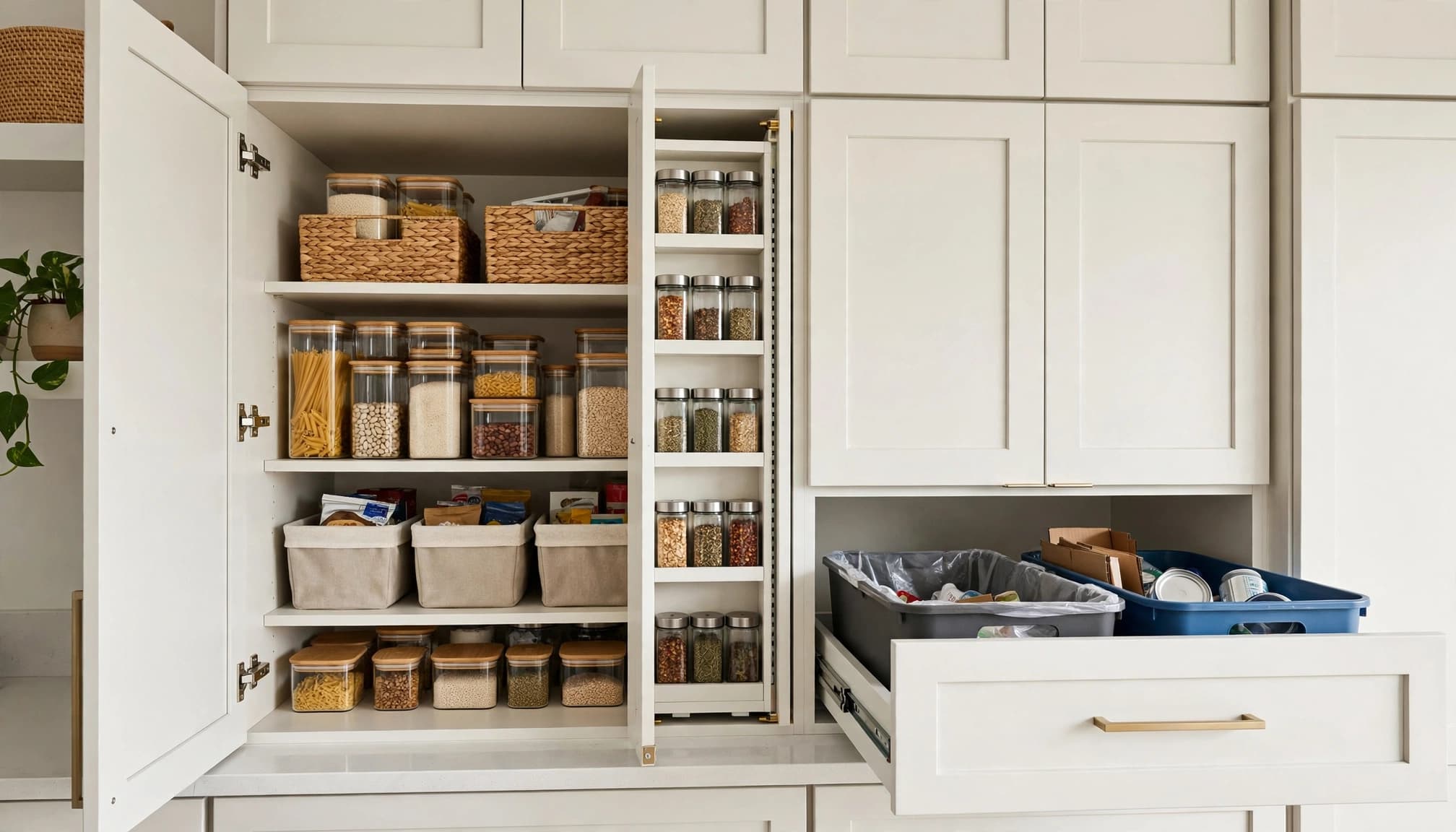
Full-extension pull-out shelves bring stored goods forward, making canned food, bulk packages, and small appliances easier to see. Strong slides matter because pantry shelves often carry concentrated weight.
A raised front edge can help keep containers in place as the shelf moves. Choose shelf heights that match the products you actually buy, then leave room for taller items and future changes. Clear, lidded containers can also make flour, rice, cereal, and snacks easier to identify while reducing loose bags and wasted shelf space.
Tall pantry cabinets can hold dry goods, paper products, and small appliances without spreading those items across the countertop. However, avoid filling every shelf to the edge. A little spare room makes restocking and rearranging easier.
Use vertical storage for flat items
Tray dividers turn unused vertical space into storage for cutting boards, baking sheets, cooling racks, and serving platters. Keeping these pieces upright prevents them from becoming a heavy stack that must be lifted apart.
This type of storage works well beside an oven or prep area. Check the width of each opening before installation, especially if you plan to store large platters or oversized baking sheets.
Give small appliances a dedicated home
A toaster, blender, slow cooker, or coffee machine can take over the counter when it has no assigned storage zone. A deep drawer or pull-out shelf near a properly planned outlet can keep the appliance accessible without leaving it visible all day.
Make sure the appliance can be lifted out safely and that doors, shelves, and cords won't interfere with nearby drawers. Frequently used appliances deserve easier access than items used only a few times each year.
Plan Specialty Drawers for the Items That Cause Clutter
Some kitchen items create mess because they don't fit well in ordinary cabinets. Specialty drawers give these items a defined location without adding open shelving or countertop containers.
Create a spice and wrap station
A narrow drawer near the prep surface can hold spice jars, packets, foil, parchment paper, and food-storage bags. Store spice containers in a single layer when possible, with labels facing upward. That makes it easier to find the right jar without pulling out several others.
Adjustable dividers can separate small packages while allowing the drawer to change as your supplies change. Keep the drawer away from direct heat and steam, since both can shorten the life of spices and affect packaging.
Hide waste and recycling near cleanup
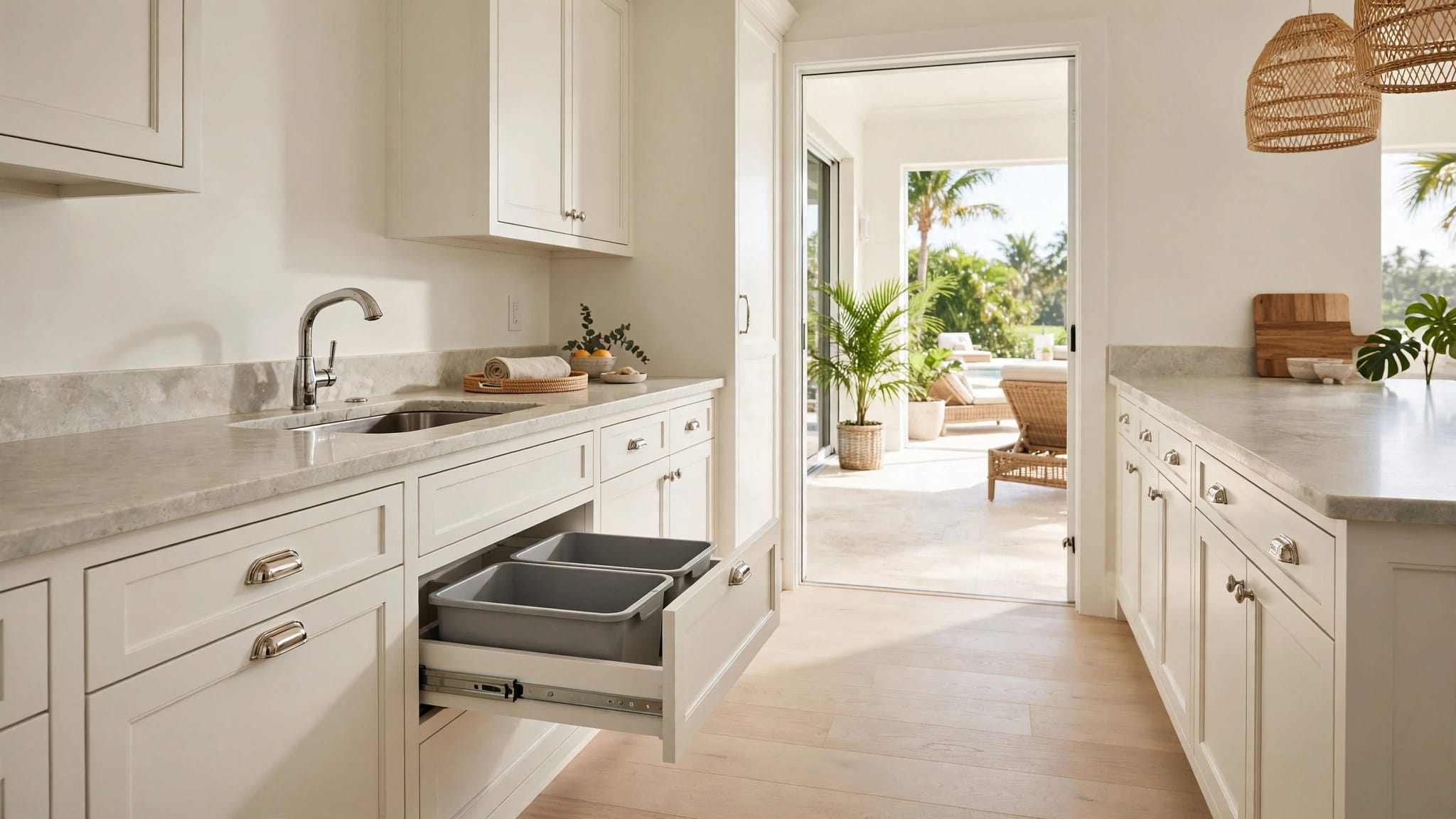
A pull-out cabinet near the sink or prep area gives trash and recycling a clear home. Separating the bins inside one cabinet can keep the floor clear while making sorting easier.
Check the cabinet width, bin height, plumbing location, and nearby drawer movement before choosing this configuration. The cabinet should open without striking the dishwasher, and the bins should lift out easily for cleaning.
A removable liner or smooth interior surface helps contain spills. Since this cabinet is near water and food residue, sealed edges and durable hardware deserve extra attention.
Match Drawer Size to the Cabinet and the Room
Drawer size affects storage capacity, access, and movement through the kitchen. Wider is not always better. A large drawer can hold more, but it also needs stronger hardware and more clearance when open.
Choose width based on the contents
Use narrower drawers for spices, utensils, wraps, and small baking supplies. Medium-width drawers suit plates, containers, and everyday tools. Wide drawers work well for pans, mixing bowls, and larger cookware when the cabinet structure supports them.
Avoid making every base cabinet a drawer stack without checking the layout. Some areas need a door cabinet for plumbing, a pull-out shelf, or a dedicated appliance opening. A balanced plan uses each type where it solves a real storage problem.
Check depth, reach, and clearances
Deep drawers are useful for bulky items, but excessive depth can encourage stacking. If cookware is piled too high, the items at the bottom become difficult to reach. Use dividers or separate drawers when the contents have different sizes and weights.
Full-extension slides improve visibility because the drawer comes forward instead of leaving a hidden rear section. Soft-close hardware can reduce slamming and daily impact, although it should support easy use rather than replace good placement.
Before finalizing the plan, open each drawer on paper or with floor markings. Confirm that it won't block the refrigerator, oven, dishwasher, seating, or the main route through the room.
Select Materials That Are Easy to Clean and Maintain
Kitchen storage must handle food spills, steam, cleaning products, and repeated opening. A beautiful drawer system can age poorly if moisture reaches unsealed edges or weak cabinet components.
Prioritize stable cabinet construction
Plywood cabinet boxes are a strong choice for many humid kitchen environments when the edges are properly sealed. Moisture-resistant MDF can work well for painted doors and panels if the finish remains intact. Particleboard is more vulnerable to swelling and delamination near sinks, dishwashers, and leak-prone areas.
The material alone doesn't determine performance. Joinery, edge sealing, drawer slides, and installation quality also matter. Inspect the sink base and nearby cabinets carefully during a remodel, since hidden moisture damage should be corrected before new fronts or hardware are installed.
Use smooth, washable interiors
Smooth laminate or melamine surfaces are practical for pantry shelves and drawer interiors because they wipe clean. Avoid rough surfaces that trap crumbs, especially in drawers used for food storage.
For a larger renovation, review the available kitchen and pantry storage features early in the planning process. The listed project features include all-wood kitchen cabinet bases and uppers, soft-close details, and plan-specific pantry shelving, but the final specifications should be confirmed for the individual design.
Organize Drawers Around Kitchen Work Zones
A storage plan becomes easier to use when each zone supports a specific task. Grouping items by habit reduces walking and prevents random storage decisions.
Build a prep zone
The prep area should hold cutting boards, knives, measuring tools, mixing bowls, food wraps, and frequently used ingredients. A shallow utensil drawer above or beside a deeper cookware drawer creates a useful vertical arrangement.
Keep cutting boards upright in a tray divider. Store oils and seasonings where they remain away from direct heat but close enough to reach during preparation.
Keep cooking storage near the range
The drawers nearest the cooktop should hold skillets, saucepans, pot holders, and cooking utensils. Tray dividers can separate baking sheets and cooling racks near the oven.
If the plan includes a wall oven, in-cabinet microwave, or other built-in appliance, select the actual appliance models before finalizing the cabinet layout. Appliance dimensions, ventilation, outlets, and door swings can change the storage available beside them.
A detailed Cape Coral kitchen remodeling plan can help coordinate cabinet placement with appliance and utility changes. For a Naples project, the same planning principle applies: resolve these conflicts before installation begins.
Keep cleanup storage efficient
Place plates, glasses, flatware, dishwasher supplies, and waste bins close to the sink and dishwasher. This arrangement shortens the distance for both loading and unloading.
Avoid storing heavy cookware above shoulder height. Lower drawers provide easier access for large items and can reduce awkward lifting. Everyday dishes can also move into accessible drawers if the cabinet design and hardware support their weight.
Frequently Asked Questions
Are deep drawers better than lower cabinet doors?
Deep drawers are often more convenient for cookware because the contents come toward you. Lower doors can still work well for plumbing, tall items, and pull-out shelves. The right choice depends on the cabinet width, available clearance, and what you plan to store.
How wide should a kitchen drawer be?
There is no single width that fits every kitchen. Measure the cabinet opening, consider the weight of the contents, and confirm the slide manufacturer's requirements. Very wide drawers may need stronger hardware or a different internal arrangement. Keep the drawer size proportional to the room so it doesn't block nearby doors or walkways.
Where should a trash and recycling drawer go?
Place it near the sink or main prep area, provided the cabinet doesn't interfere with the dishwasher. The bins should lift out easily, and the interior should have a surface that wipes clean. If the kitchen has an island, check that an open pull-out won't conflict with seating or traffic.
Do pull-out pantry shelves waste space?
Pull-outs can use slightly more cabinet hardware and clearance than fixed shelves, but they make the rear of a cabinet easier to reach. They are especially useful for canned goods, bulk packages, and small appliances. Use them where visibility and access matter most, rather than installing every shelf as a pull-out.
Conclusion
The most useful kitchen drawer configurations match storage to daily habits. Deep drawers handle cookware, shallow drawers control small tools, and pull-outs bring pantry goods forward. Specialty storage gives spices, appliances, waste, and recycling a clear place without crowding the counters.
For a Naples remodel, review cabinet width, drawer depth, clearances, hardware capacity, moisture protection, and cleaning needs before finalizing the design. A kitchen feels more spacious when every drawer has a sensible job and the items you use most stay within easy reach.