
Fort Myers Kitchen Corner Cabinet Storage Ideas That Fit
The cabinet you avoid opening may be taking up some of the most valuable space in your kitchen. If pots disappear behind a narrow door or you have to kneel to reach a back shelf, access is the problem.
Good kitchen corner cabinet storage makes useful items visible and reachable without forcing more into the cabinet. For Fort Myers homeowners, the right fix depends on the corner's shape, what you store, and whether you're updating existing cabinets or planning a remodel. Start by identifying the layout you have.
Key Takeaways
- Match the organizer to the cabinet opening, not just the space hidden behind it.
- Use rotating shelves for accessible L-shaped corners and pull-out systems for deep blind corners.
- Check door clearance, shelf strength, and how you'll use the cabinet before buying hardware.
- During a remodel, compare specialized corner fittings with a simpler layout that gives you more drawers.
Identify the corner before choosing an organizer
Open the cabinet and look at its footprint. An L-shaped corner cabinet has an opening that follows both cabinet runs, often through folding doors. A blind corner has one narrow opening, while much of its interior extends behind the adjoining cabinets. A diagonal cabinet presents an angled door across the corner.
Those shapes call for different solutions. A rotating shelf needs room to turn. A sliding organizer needs room to travel out through the opening. Neither works well if a hinge, plumbing line, or neighboring handle blocks its path.
Measure the clear door opening and the usable interior, including height under fixed shelves. Then open nearby drawers, the dishwasher, and the oven. A mechanism that fits inside the box can still make the kitchen awkward when it's fully extended.
Finally, empty the cabinet before judging its capacity. If rarely used items fill the rear, you may need a better storage assignment rather than a more elaborate fitting.
Choose kitchen corner cabinet storage by layout
Put a rotating shelf in an open L-shaped corner
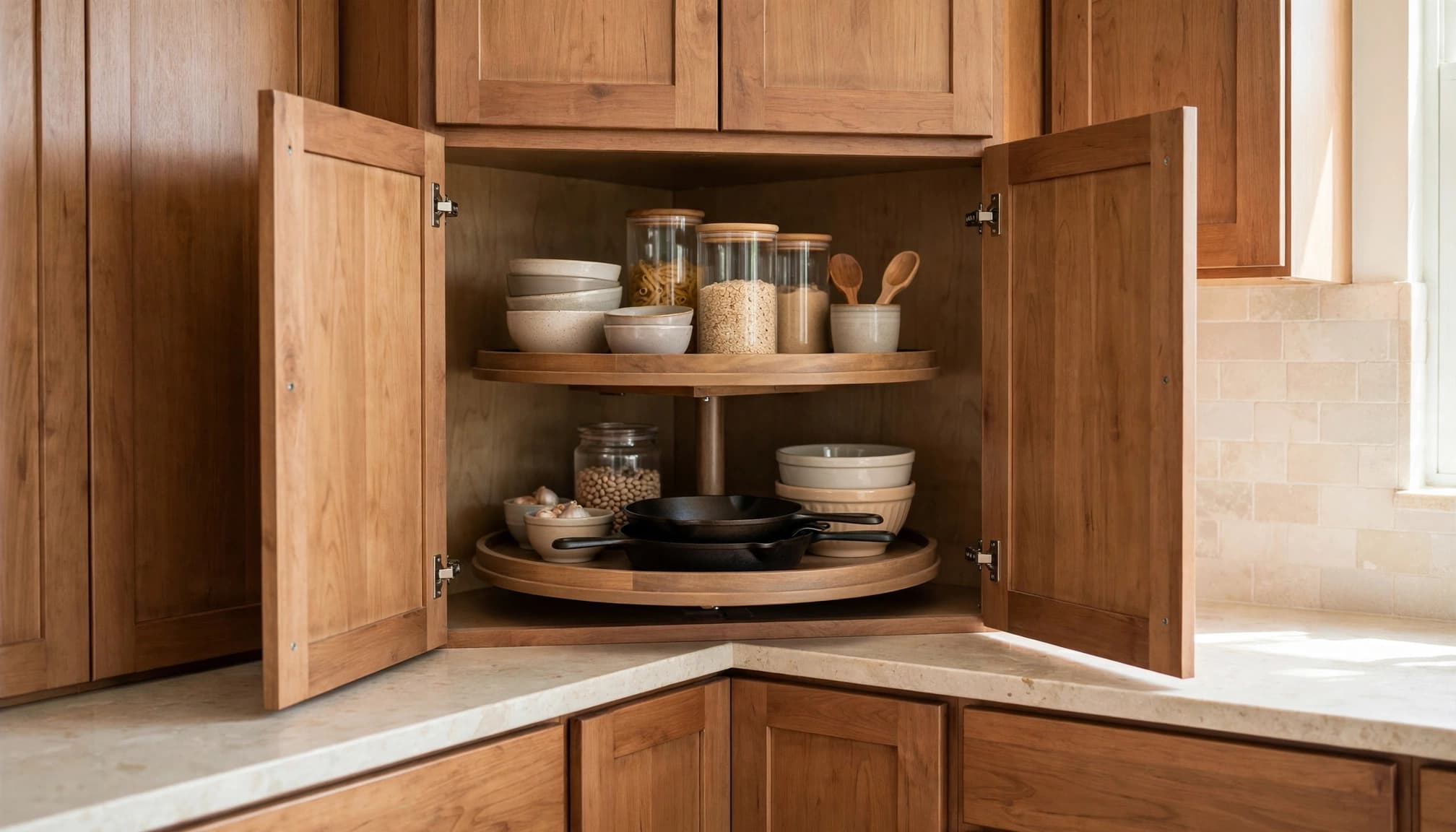
A Lazy Susan brings items around to the door instead of leaving them against the back wall. It's well suited to mixing bowls, food containers, and other moderately sized items you reach for often.
Look at how the shelf turns with its expected contents. A tray loaded with tall bottles can be harder to manage than one holding low, stable pieces. Raised edges help keep smaller items in place, but bulky handles may catch on the cabinet frame. Also check whether an existing center post limits what you can store.
Consider shelf shape when replacing the cabinet
In a new kitchen, a pie-cut rotating unit can pair with doors that move with the shelves. Other corner designs use independently opening doors and separate rotating trays. The door arrangement affects access, so test the movement instead of choosing by appearance alone.
If you already own a sound cabinet, confirm that a proposed retrofit suits its opening and construction. Replacing a cabinet just to accommodate one organizer may be a poor use of your renovation budget.
Make a blind corner easier to use
Bring deep storage out with pull-out trays
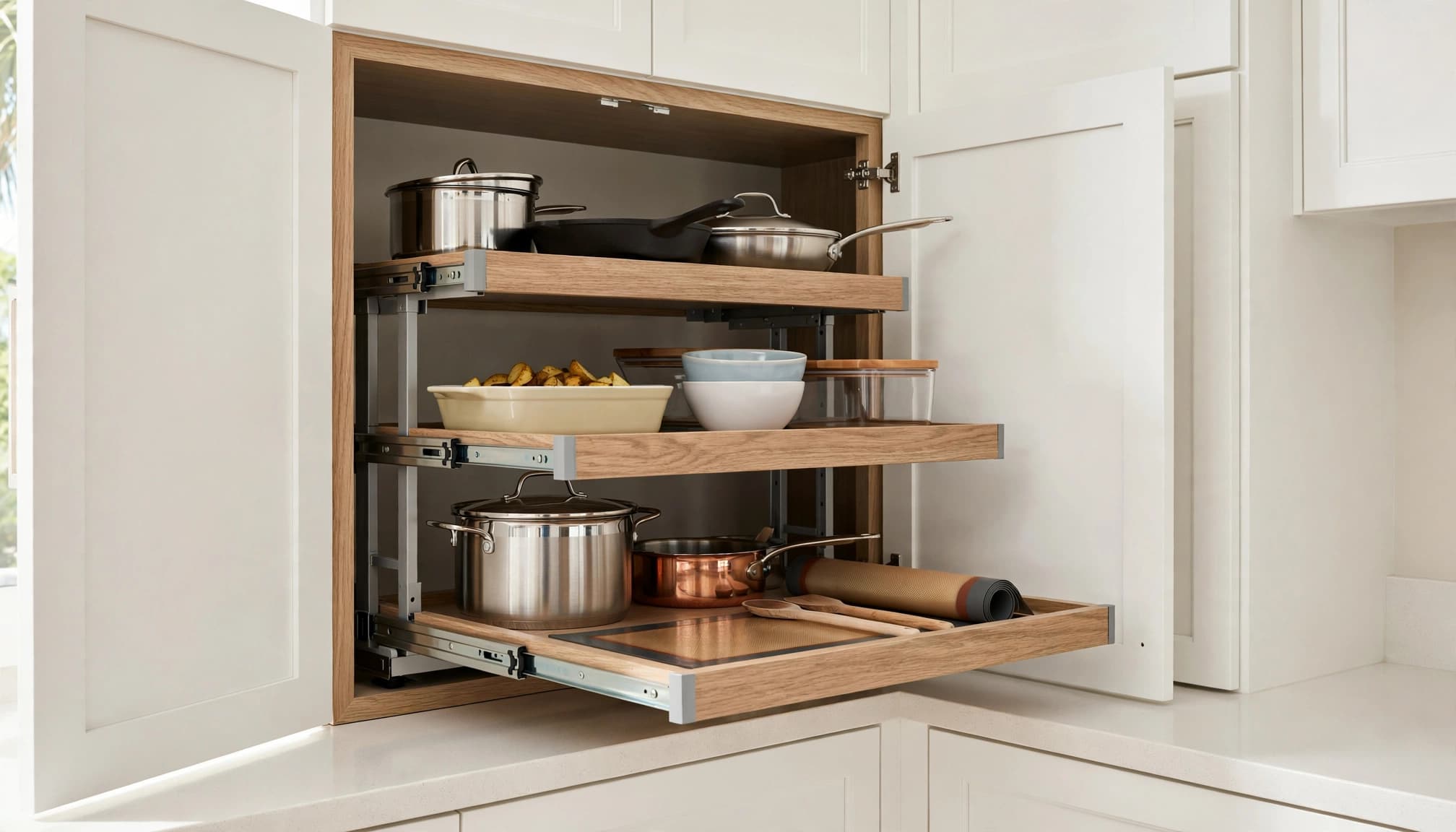
A blind corner hides usable space behind an offset door. Pull-out systems solve the reach problem by moving trays toward you, then exposing items stored farther inside. Some use trays that swing; others slide in stages. Their movement and mounting requirements differ.
These systems are useful for cookware you want to see without unloading the front of the cabinet. However, the opening matters as much as the interior volume. Ask to see the organizer's full travel, and check its installation requirements against the actual cabinet.
Keep a fixed shelf when access is occasional
A pull-out isn't always the sensible purchase. If the corner holds a holiday platter or an appliance used a few times a year, a sturdy fixed shelf and a removable bin may be enough. Store the least-used pieces at the back and keep an unobstructed path to retrieve them.
The useful capacity of a blind corner depends on what you can remove without emptying everything in front of it.
Avoid placing heavy cookware in a loose bin that must be lifted around a door. If reaching the rear requires straining, choose a sliding solution or give that item a different home.
Give upper and diagonal corners a distinct job
Upper corner cabinets often have plenty of volume but limited visibility. Put lighter, less frequently used items there, such as serving dishes or spare food-storage containers. Adjustable shelves can separate short items so they don't form a stack that's difficult to lift.
A small turntable can work on a secure shelf for jars or mugs. Check that it turns freely and doesn't crowd the door. For deep upper cabinets, clear bins let you pull out a group of light items without reaching blindly into the back.
Diagonal cabinets deserve a closer look during a remodel. Their angled face can make a room feel crowded, especially near a window or a busy walkway. If the cabinet isn't earning its footprint, ask whether a different upper-cabinet arrangement would improve both reach and the look of the room.
Store items according to weight and routine
Keep daily cookware close to the work zone
A corner organizer is most useful when its contents belong near the tasks you do every day. Pots used at the range should be easy to carry there. Prep bowls belong near counter space. If a rotating tray sits across the kitchen from where you use its contents, the storage may be tidy but inconvenient.
Keep heavier pieces on lower, stable storage. Before putting a stand mixer or a cast-iron pan on moving hardware, check the product's published load rating and the condition of the cabinet supporting it. A lower drawer near the prep area may be a better choice.
Leave breathing room around moving parts
Overfilling a tray can stop it from turning smoothly. Pan handles may strike the cabinet wall, while loose lids can slip into the mechanism. Group similar items, test the organizer while it's loaded, and move anything that catches.
Fort Myers kitchens also benefit from surfaces that are easy to wipe down. Spills left behind a crowded shelf are harder to find and clean. During a cabinet replacement, discuss box materials, finishes, and hinges with your remodeler. Blue Heron Construction's kitchen cabinetry and feature details offer examples of cabinet features considered in its home plans, including soft-close hardware.
Compare fixes before committing to a budget
Start with the least disruptive option that solves the reach problem. The comparison below separates changes to existing cabinets from choices better made during a renovation.
| Approach | Best fit | Main trade-off |
|---|---|---|
| Reorganize or add removable bins | Sound cabinet with occasional-use contents | Rear items still require reaching |
| Add a turntable | Accessible corner with adequate shelf clearance | Shape and load may limit what fits |
| Install a blind-corner pull-out | Deep cabinet with a suitable opening | Higher hardware and installation cost |
| Redesign the cabinet run | Kitchen remodel with poor overall storage | More construction and coordination |
The most expensive mechanism isn't automatically the best value. If a corner pull-out takes space away from a useful drawer bank, compare what the whole kitchen gains.
Get a quote based on the actual cabinet, not a product photo. Ask whether the price includes the organizer, any door changes, cabinet reinforcement, installation, and adjustments. When cabinets are worn or the layout is already changing, put that money toward a broader plan instead of retrofitting hardware into a failing box.
Plan corner storage with the rest of the kitchen
Check cabinet condition before retrofitting
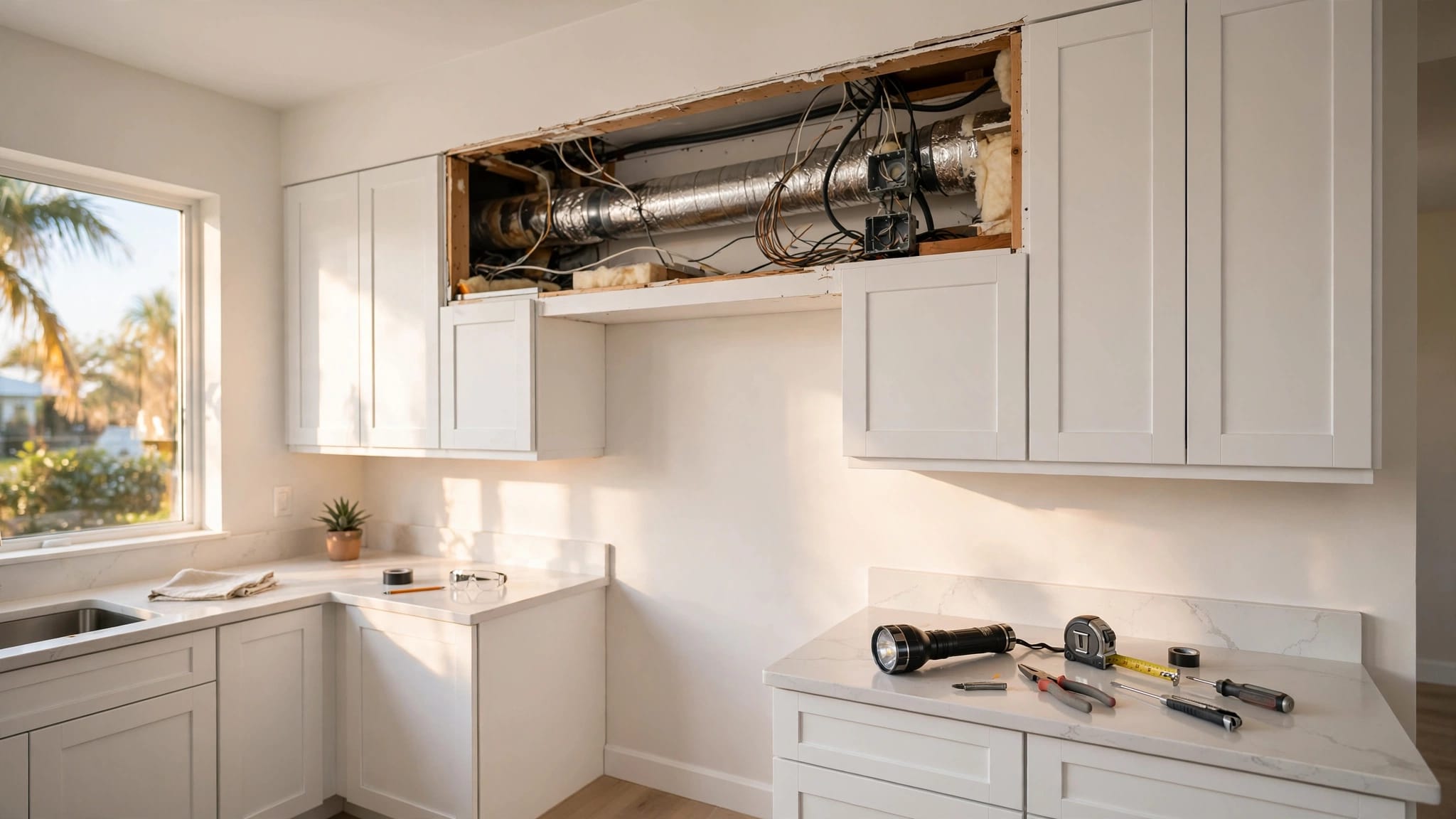
Inspect the cabinet floor, sides, face frame, and hinges. Swollen panels, loose joints, or a sagging door can undermine a new organizer. Fix those issues first, and ask an installer to confirm that the cabinet can support the proposed hardware.
If you're considering new doors and finishes, remember that refacing usually keeps the existing cabinet footprint. It can refresh sound cabinets, but it won't turn a poorly placed corner into an easy-to-reach drawer run. Replacement gives you more freedom to change the layout.
Test the full room, not just the cabinet
During a kitchen renovation, mark door swings and appliance clearances on the plan. Then consider where someone stands while using the corner. A pull-out beside an open dishwasher or across a narrow walkway may create a new daily obstacle.
Plan the contents before ordering cabinets, too. Deep drawers may handle pots better than a corner mechanism, while a pantry can take small appliances out of the base cabinets. For homeowners comparing these changes with a larger update, Blue Heron Construction's Cape Coral kitchen remodeling services show the range from a refresh to more extensive kitchen work.
Frequently Asked Questions
Can you add a Lazy Susan to an existing corner cabinet?
Often, but first confirm the opening, interior shape, shelf clearance, and cabinet condition. Freestanding turntables need a stable shelf; built-in rotating systems have their own mounting requirements. Don't assume a unit pictured in an L-shaped cabinet will fit a blind corner.
Are blind-corner pull-outs worth the cost?
They're worth considering when you use the cabinet often and struggle to reach its contents. Their value is lower when the corner stores occasional-use items or the cabinet needs major repairs. Test access with the organizer fully extended before you commit.
What should go in a corner cabinet?
Store items that fit the organizer and are easy to lift safely. Rotating lower shelves often suit bowls or containers; a suitable pull-out can make cookware easier to reach. Keep heavy pieces off hardware unless its load rating and installation support them.
Make the space easy to reach
That cabinet you avoid opening can become useful again when its storage matches its shape. Start with the door opening and the items you need to retrieve, then choose the simplest fitting that makes access comfortable.
For a larger renovation, compare corner hardware with a better cabinet layout. Reachable storage matters more than filling every inch behind the door.