
Bonita Springs Kitchen Remodels With Built-In Coffee Bars
Morning coffee can reveal every weakness in a kitchen. The machine crowds the counter, mugs fill a cabinet, and coffee grounds end up beside the sink. For homeowners planning Bonita Springs kitchen remodels , a built-in coffee bar creates a dedicated place for the routine without sacrificing the open, polished look of a coastal Florida home.
The best coffee stations are planned with the rest of the kitchen. Their location, electrical needs, cabinet storage, countertop material, and lighting should all support how you use the space each morning. Start with the design details that make the station practical.
Why a Built-In Coffee Bar Fits a Bonita Springs Home
A built-in coffee bar gives small appliances a permanent home. Instead of moving an espresso machine each morning, you can keep it connected, organized, and ready to use. The station also separates coffee preparation from the main cooking area, which helps two people work in the kitchen at the same time.
This layout suits many Bonita Springs homes with open kitchens and connected dining areas. A coffee station near the refrigerator or breakfast space makes sense for everyday use. A location beside the range may look convenient during design, but it can create congestion when someone is cooking.
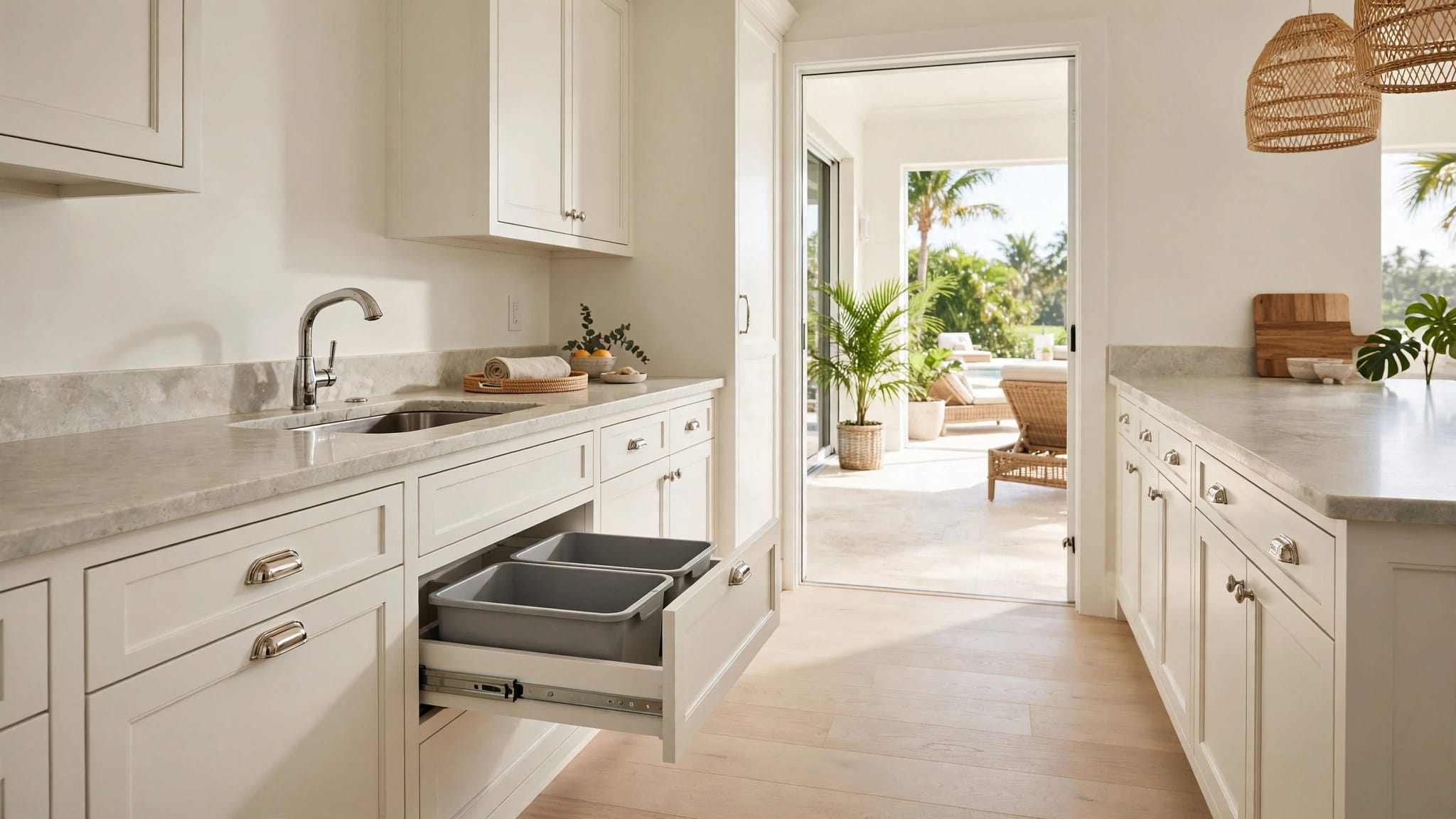
The finish should match the kitchen rather than look like a separate furniture piece. Light wood, painted white cabinetry, quartz counters, and simple hardware work well in a coastal interior without relying on an overly themed beach style. A narrow backsplash in stone, porcelain tile, or slab material can define the station while keeping cleanup simple.
Southwest Florida homes also need materials that handle humidity, bright sunlight, and regular moisture. Cabinet finishes should have sealed edges, especially near a sink or water dispenser. Quartz is a practical countertop choice because it resists staining and doesn't require routine sealing, although hot appliances still need proper protection.
Photo by Peter Vang
A coffee bar can also improve the appearance of the entire kitchen. When the grinder, mugs, filters, and syrups have designated storage, the main countertop stays clearer throughout the day.
In Bonita Springs kitchen remodels, start with the coffee routine
The right coffee bar begins with your equipment and habits. A homeowner who uses a compact drip brewer needs a different setup than someone who weighs beans, grinds them fresh, and operates a large espresso machine.
Measure every appliance before finalizing cabinet drawings. Include the height of the machine with its water reservoir open, the space required for a grinder, and the clearance needed to remove a portafilter or fill a kettle. A Breville countertop espresso machine, for example, may need more open space above it than a compact pod brewer. A Miele built-in coffee system requires a cabinet opening based on the manufacturer's installation specifications.
Location options usually fall into three practical categories.
| Location | Works well for | Detail to plan |
|---|---|---|
| Countertop niche | Daily coffee preparation in an open kitchen | Keep the station near the refrigerator and away from cooking traffic |
| Tall cabinet wall | A clean, furniture-like appearance | Provide ventilation and enough height for the equipment |
| Pantry or beverage area | Multiple appliances and extra supplies | Add task lighting, outlets, and easy access to water |
A counter-height station usually feels comfortable for most users, but the final height should fit the people who prepare coffee most often. Standard kitchen counters are about 36 inches high. Taller homeowners may prefer a slightly different working height, while a lower surface may help children prepare simple drinks safely.
Landing space matters as much as the machine opening. Leave room for a mug, a scale, a milk pitcher, or a small tray beside the brewer. If the station has an appliance garage, keep the door open while equipment produces heat or steam unless the appliance instructions allow enclosed operation.
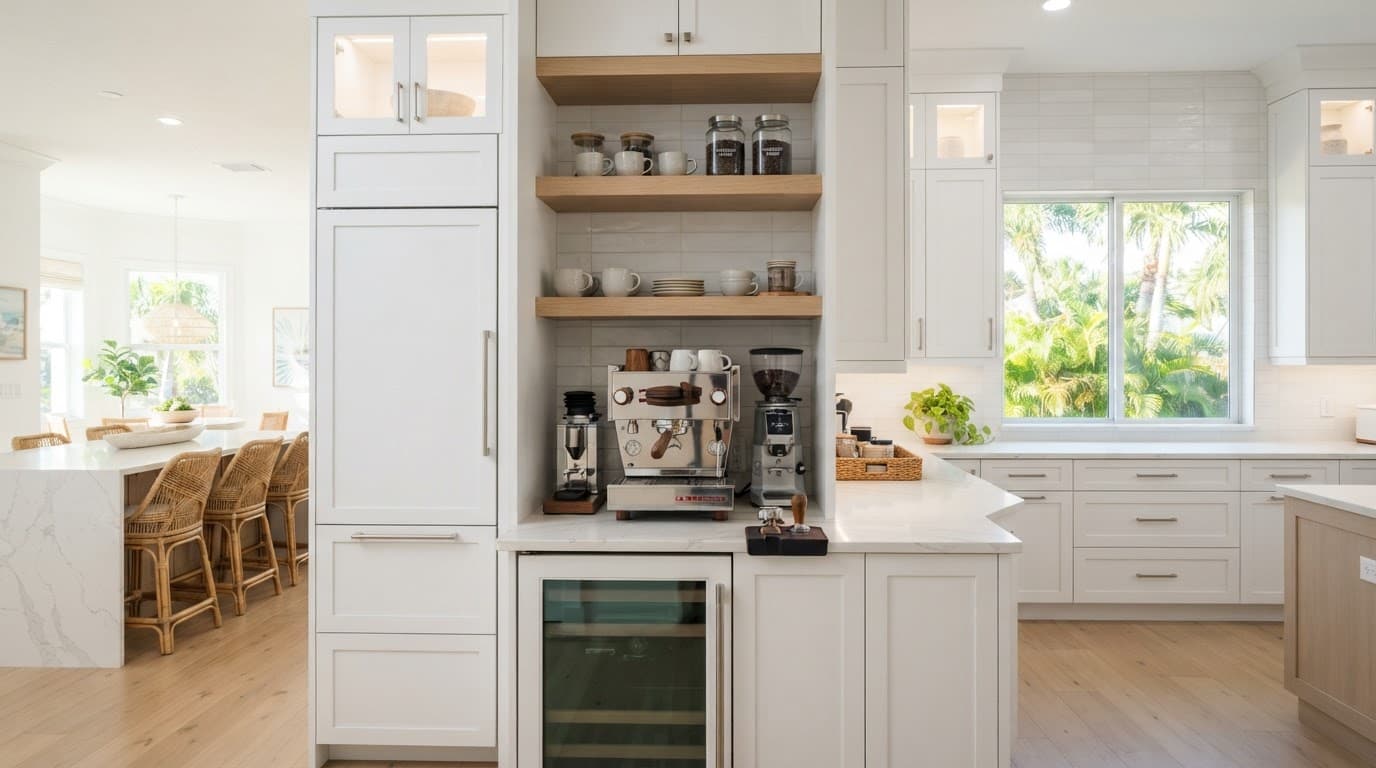
During Bonita Springs kitchen remodels, designers should also consider the path between the station, refrigerator, sink, and dining area. You shouldn't have to cross the primary work zone every time you need milk or water.
Cabinetry and storage that support daily coffee use
A coffee bar works best when storage follows the order of the routine. Place mugs and everyday cups in the easiest-to-reach cabinet. Keep beans, filters, and measuring tools close to the grinder. Store less frequently used serving pieces higher up or in a nearby drawer.
Deep drawers are useful for coffee supplies because they keep small items visible. A divided drawer can hold filters, scoops, towels, and tasting spoons without forcing you to search through a crowded cabinet. Pull-out shelves may help with heavier appliances, but the hardware must support the machine's weight and stay stable during use.
Cabinet doors can conceal a station when guests arrive. Lift-up doors, pocket doors, and appliance garages all offer different advantages. A lift-up door keeps the work area open, while pocket doors can hide more of the equipment. Either option needs enough clearance for the door, cords, and steam.
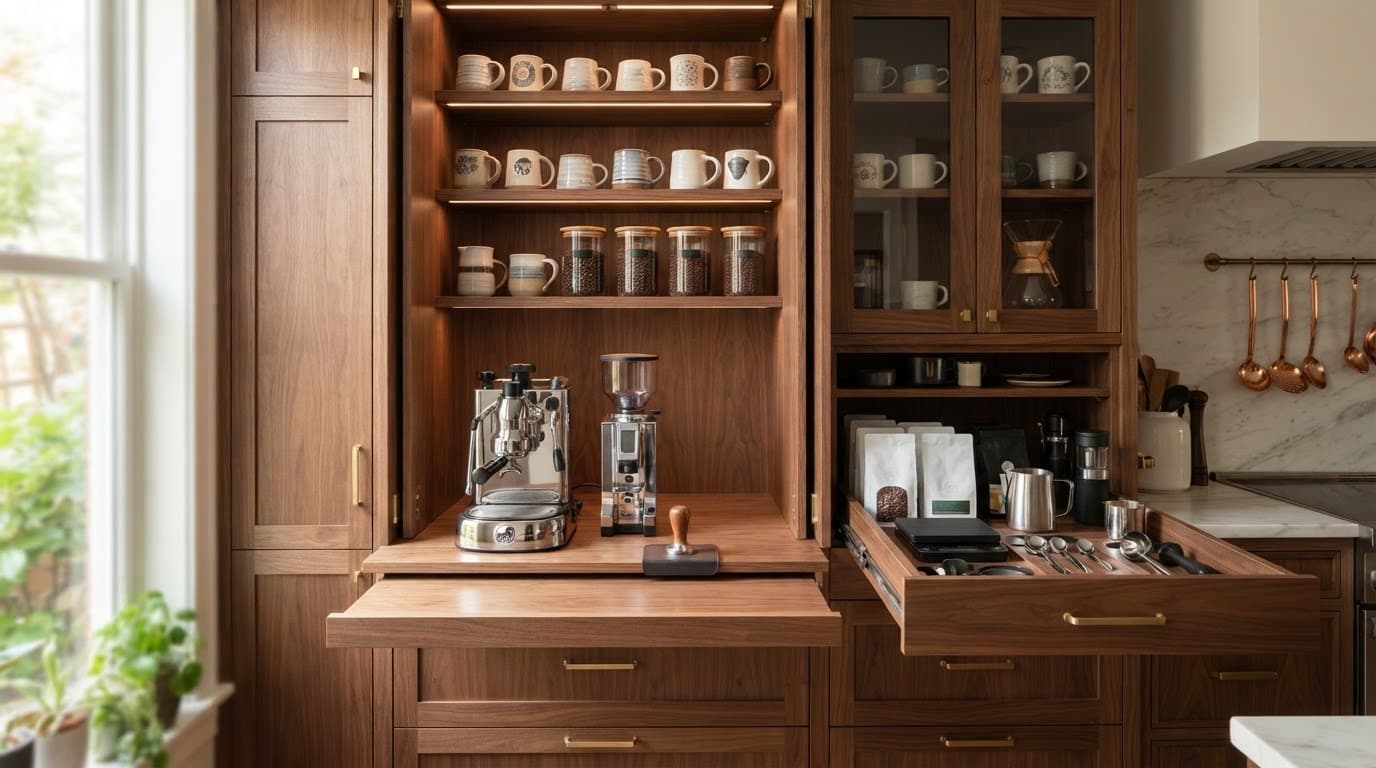
Don't place a coffee machine in a tight cabinet simply because the opening looks tidy. Heat and steam need somewhere to go, and the user needs room to fill the reservoir and remove the brew group. The cabinet plan should also leave access to outlets and shutoff valves for future service.
Countertop material affects everyday maintenance. Quartz handles spills well, while porcelain slabs offer another durable surface option. Natural stone can work too, but the selected material may need sealing and specific cleaning products. A small backsplash protects the wall behind the machine from splashes and coffee stains.
For a refined coastal look, use the same cabinet finish as the main kitchen, then add a slightly different backsplash or shelf material. That creates a defined coffee zone without making it feel disconnected.
Plan electrical, plumbing, and lighting before construction
Electrical planning needs to happen before the cabinets arrive. Coffee equipment can include a brewer, grinder, kettle, milk frother, and undercabinet lighting. The total load depends on the actual appliances, so a licensed electrician should review the specifications and determine the appropriate circuit and receptacle layout.
Countertop outlets should stay accessible without leaving cords across the work surface. An outlet inside an appliance garage may work for storage, but the machine may need to run with the door open. Cord routing should keep plugs away from areas where water collects.
Plumbing is optional, but it can improve convenience for a high-use station. A direct water connection may suit a built-in coffee maker or an espresso machine with a fixed supply. If you choose that setup, include a shutoff valve, filtration plan, and service access. A drain may also be needed for certain appliances.
Many homeowners prefer a refillable reservoir because it reduces plumbing work. That choice still requires enough clearance to remove the reservoir without hitting an upper cabinet or backsplash. A nearby sink makes refilling easier, but the station doesn't have to sit directly beside it.
Lighting should cover the work surface without creating glare on glossy counters. Under-cabinet lights with a warm-neutral color temperature around 3000K can provide comfortable morning task lighting. A dimmer lets you lower the light when the kitchen is used early or late.
If the coffee bar sits near a cooking area, keep its materials and equipment clear of the range's heat and splatter. A coffee station doesn't replace the ventilation required for cooking appliances.
Budget, timing, and contractor questions
A coffee bar may occupy only a few feet of wall, yet its price depends on more than cabinet width. Custom doors, countertop fabrication, electrical work, plumbing, lighting, backsplash installation, and appliance requirements all affect the project total.
The largest cost factors usually include:
- Cabinet construction and special features, such as pocket doors or pull-out shelves.
- The countertop material, edge profile, backsplash, and installation details.
- New circuits, outlet locations, lighting, water lines, filtration, or drainage.
- The coffee equipment itself, especially built-in models that require precise cabinet openings.
- Changes to walls, flooring, or nearby plumbing during the larger kitchen renovation.
Planning the station during the main remodel usually makes coordination easier. The design team can place outlets before drywall, run plumbing before cabinets, and order the counter with the correct cutouts. A later retrofit may require removing finished materials or accepting exposed cords.
Before choosing a contractor, ask who will prepare the cabinet layout, who coordinates electrical and plumbing work, and how the team handles appliance specifications. Also ask how service access will remain available after installation. A beautiful coffee bar becomes frustrating if a technician has to remove cabinetry to reach one outlet.
Review the contractor's kitchen remodeling services and look for experience with custom layouts, finish coordination, and projects that require several trades. If a remodel includes wall removal or major plumbing changes, ask how architectural and structural planning fits into the process.
A clear proposal should identify allowances for appliances and finish materials. It should also show what happens during demolition, when rough-in work occurs, and how the final installation gets inspected.
Conclusion
A built-in coffee bar gives your kitchen a defined place for equipment, supplies, and morning preparation. In Bonita Springs kitchen remodels , the strongest designs account for humidity, sunlight, coastal materials, appliance ventilation, and easy access to power and water.
Plan around the equipment you already use, then choose cabinetry and finishes that match the rest of the home. When the coffee station feels like part of the kitchen instead of an afterthought, your daily routine becomes easier and the room stays cleaner.