
Best Flooring for Pets and Sand in Cape Coral Homes
When you live with dogs or cats in Cape Coral, flooring has to handle sand as well as claws. Tracked-in grit works like fine sandpaper, and humidity can expose weak spots fast.
The right surface needs to clean easily, resist scratches, and hold up to pet accidents without constant stress. It also has to fit the way coastal homes really get used, with busy entries, damp paws, and plenty of foot traffic.
Key Takeaways
- Luxury vinyl plank is usually the easiest all-around choice for pet homes in Cape Coral.
- Porcelain tile handles moisture and sand extremely well, but grout needs attention.
- Laminate can work in lower-risk rooms, yet not every product handles spills the same way.
- Engineered hardwood brings warmth and style, but it needs more care than vinyl or tile.
- Color, texture, and finish matter as much as the material when you want to hide sand and paw prints.
What Cape Coral Homes Need From Flooring
Cape Coral homes deal with a specific mix of problems. Dogs come in with wet paws after a quick rain. Cats shed fine hair that clings to corners. Sand slips in on shoes, on rugs, and sometimes from the backyard before you even notice it.
That means flooring has to do three things well. It needs a tough wear surface, it needs to resist moisture, and it needs a finish that won't show every speck of grit.
If the flooring change is part of a larger project, see our full range of home improvement solutions that can be folded into a remodel. The right install matters too, because slab prep, transitions, and trim details affect how the floor performs long term.
How the Main Flooring Options Compare
A quick side-by-side look makes the differences easier to see.
| Flooring Type | Pet Cleanup | Scratch Resistance | Moisture Handling | Best Fit |
|---|---|---|---|---|
| Luxury vinyl plank | Very easy | Very good | Excellent | Busy family rooms, open living spaces |
| Porcelain tile | Very easy | Excellent | Excellent | Kitchens, entries, baths, high-traffic homes |
| Ceramic tile | Very easy | Good | Excellent | Moderate-traffic areas, budget-conscious projects |
| Laminate | Easy | Good | Fair to good, product dependent | Bedrooms, lower-risk living areas |
| Engineered hardwood | Moderate | Fair to good | Better than solid wood | Main living spaces where warmth matters |
Luxury vinyl plank and porcelain tile usually lead for pet-heavy homes. Laminate can be a smart compromise. Engineered hardwood works best when you want the look of real wood and you're willing to protect it.
Luxury Vinyl Plank Handles the Most Daily Abuse
Luxury vinyl plank, or LVP , is hard to beat in a pet-friendly Cape Coral home. It gives you the wood look without the same worry about water or staining, and many products have a tough wear layer that stands up well to claws and grit.
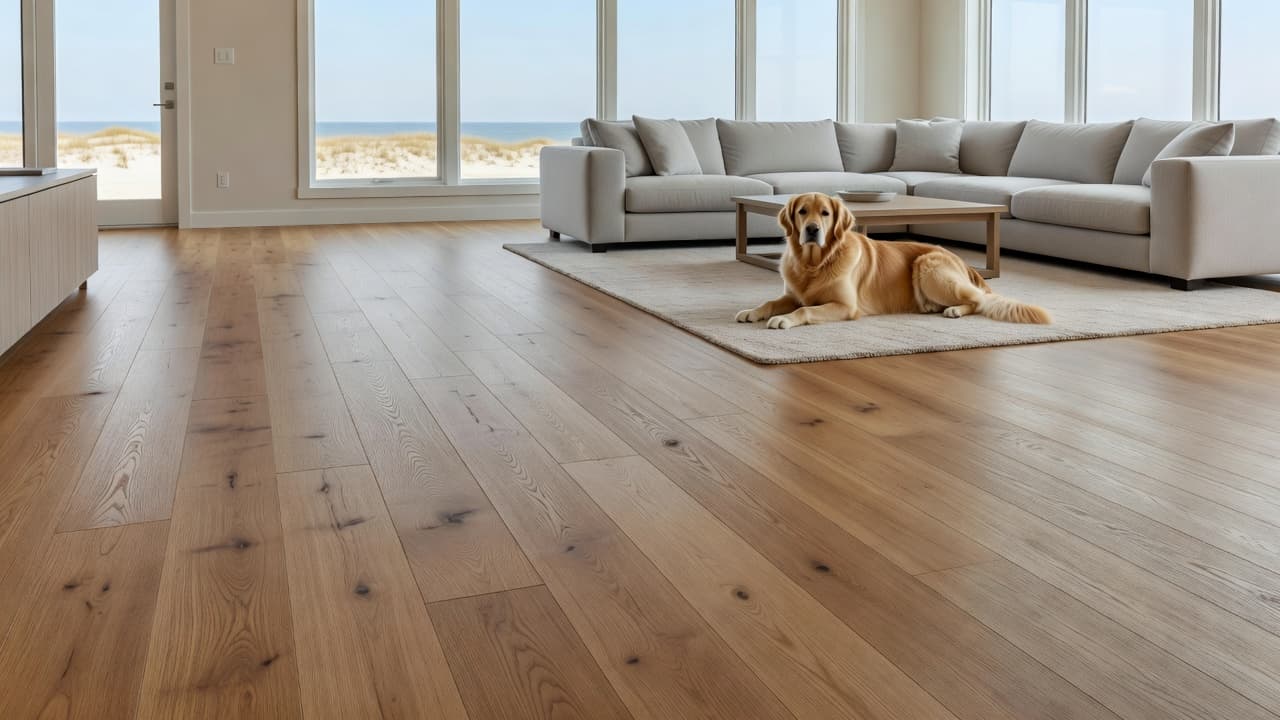
Look for a rigid-core product with a textured matte finish. That kind of surface hides light scratches better than a glossy one, and it looks less plastic in bright Florida sun.
LVP also cleans quickly. A broom, vacuum, or damp microfiber mop usually handles everyday messes. Still, quality matters. Cheaper planks can dent under heavy furniture, and some products look flat after a few years of use.
For homes with pets, LVP is often the most forgiving choice because it balances comfort, durability, and easy cleanup.
Porcelain Tile Stays Cool and Cleans Fast
Porcelain tile is one of the strongest choices for sand, moisture, and pet traffic. It's dense, hard, and easy to wipe clean. That makes it a great fit for Cape Coral entries, kitchens, laundry rooms, and baths.
Porcelain usually performs better than ceramic when the space gets heavy use. It also handles humidity well, which matters in coastal Florida. Large-format tile can reduce grout lines, and fewer grout lines mean less place for sand and hair to settle.
The tradeoff is feel. Tile is hard underfoot, so it can be less comfortable for pets that like to sprawl in one place. It also needs grout care. If you choose tile, a slightly textured or matte finish works better than a high-gloss surface because it hides paw marks and gives a little more traction.
Ceramic tile can still be a good option in lower-traffic rooms, but porcelain is usually the safer long-term bet for a pet-heavy home.
Laminate Works, With a Few Caveats
Laminate has improved a lot over the years. Good products can mimic wood well, and many newer options offer better water resistance than older styles. For homeowners who want a lower price point, laminate can make sense in bedrooms or secondary living areas.
The catch is moisture. Laminate is more sensitive to spills and standing water than LVP or tile, especially at the seams. That makes it a weaker choice for homes with pets that have frequent accidents or for entryways that see wet paws all day.
Scratch resistance is decent, and a textured surface helps hide small marks. Even so, you need to read the product details closely. One laminate may handle everyday cleaning fine, while another may swell after a little water exposure.
Laminate works best when the room stays dry and the homeowner wants a wood look without the cost of engineered hardwood.
Engineered Hardwood Brings Warmth, but Needs Care
Engineered hardwood gives you real wood on top, which many homeowners prefer for main living spaces. It feels warmer than tile and often looks richer than vinyl. In the right room, that matters.
The layered core makes it more stable than solid hardwood in humid weather. That helps in Cape Coral, where moisture can stress traditional wood floors. Even so, engineered hardwood is still wood, so it needs more care than LVP or porcelain.
Pet nails can leave marks, especially on softer species or glossier finishes. Water from bowls, accidents, or wet paws also needs quick cleanup. A matte or satin finish is usually better than a shiny one because it hides small wear marks and looks more relaxed in a coastal home.
For homeowners who want a softer, more natural feel, engineered hardwood can work well. It just asks for more attention than the most pet-proof surfaces.
A Few Other Options Can Work in the Right Room
Sheet vinyl still has a place in utility rooms, laundry spaces, and some budget remodels. It has few seams, so cleanup is simple, and moisture resistance is strong.
Polished concrete can also work in modern Cape Coral homes, especially on slab foundations. It handles sand well and cleans easily, but it's hard underfoot. Pets that like to lie on the floor may prefer a rug or mat in their favorite spot.
These options are less common in main living spaces, but they can make sense where function matters more than warmth.
Finishes and Colors That Hide Sand Better
Color choice changes how often a floor looks dirty. Very dark floors show pale sand fast. Very light floors show paw prints and hair. A mid-tone floor usually hides both better.
Warm oak, driftwood, greige, and sandy taupe are strong choices for coastal homes. Subtle grain movement or pattern variation helps too, because sand disappears more easily on a surface that isn't perfectly flat in appearance.
Texture matters as well. A light embossing on LVP, a matte tile finish, or a satin wood sheen hides wear better than a reflective surface. Deep hand-scraped textures can trap dirt, so a little texture is enough. You want visual movement, not grooves that hold debris.
Grout color matters on tile. Pick a grout shade that sits close to the tile body, and the floor will look cleaner longer.
Simple Care Habits That Protect Pet-Friendly Floors
The right floor still needs the right routine. A good entry mat catches a lot of sand before it spreads through the house. A second mat near the back door helps even more, especially if pets use the yard often.
Vacuuming or sweeping a few times a week keeps grit from acting like sandpaper. A microfiber mop handles fine dust and hair without leaving much residue. If a pet accident happens, clean it quickly so moisture doesn't sit on the surface or work into seams.
Nail trims also matter. Sharp nails leave more marks on vinyl and wood-look surfaces, and they wear down soft finishes faster. Felt pads under furniture can prevent scratches from a chair leg or a moved side table.
For laminate and engineered hardwood, use cleaners that the manufacturer approves. Steam mops can cause trouble on the wrong product. On tile, pay attention to grout and reseal it when needed.
Conclusion
For Cape Coral homes with pets and sand, the smartest flooring choices are the ones that keep cleanup simple and wear under control. Luxury vinyl plank and porcelain tile usually offer the best mix of durability, moisture resistance, and easy maintenance.
If you want a warmer look, engineered hardwood can still work, but it asks for more care. Laminate is a reasonable option in the right room, while ceramic tile and sheet vinyl fit specific spaces and budgets.
The floor that works best is the one that stays attractive after the first busy month, not just the first clean install. In a coastal home, that usually means a surface that can handle paws, grit, and humidity without making daily life harder.