

Pantry Design Ideas for Less Clutter in Fort Myers Kitchens
A pantry can hold plenty of food and still feel impossible to use. Deep shelves, duplicate purchases, loose bags, and crowded appliance storage turn a small kitchen into a daily obstacle course.
The right pantry design ideas make every item easier to see, reach, and put away. For Fort Myers homeowners, the best solutions also use durable surfaces, adjustable storage, and finishes that clean up quickly after spills, sand, or humidity.
Start with the way your household uses the kitchen, then build the pantry around those habits.
Key Takeaways
- Divide pantry storage into clear zones for staples, snacks, baking supplies, and appliances.
- Use pull-out shelves and shallow drawers instead of relying on deep, fixed shelves.
- Choose moisture-resistant, easy-to-clean materials for Fort Myers conditions.
- Add vertical storage, door-mounted racks, and labeled containers to control small items.
- Plan pantry dimensions and storage hardware before starting a kitchen renovation.
Build Pantry Zones Around Daily Kitchen Tasks
Good pantry organization starts with placement. If every shelf holds a random mix of groceries, the pantry will become cluttered again after the next shopping trip.
Begin by grouping items according to how you use them. Keep everyday staples near eye level, including cereal, rice, pasta, canned goods, and cooking oils. Place snacks in a lower zone that children can reach safely. Baking supplies can share a dedicated shelf, while less-used serving pieces can occupy higher storage.
A walk-in pantry can support larger zones because you have more wall space. A tall cabinet pantry needs tighter planning, but it can still separate food by shelf height and container type. Keep the most frequently used items between waist and shoulder height. Reserve the top shelf for seasonal goods and the bottom area for heavier products.
Shelf depth also affects clutter. Many pantry shelves work well at about 12 to 16 inches deep. Deeper shelves can store more, but they also hide items behind one another. If you need deeper storage, use full-extension pull-outs so the back of each shelf remains accessible.
A pantry works best when you can see most of its contents without moving several items first.
Leave room for growth, too. A shelf packed to its edge has no flexibility when you buy larger packages or stock up before guests arrive. Adjustable shelf pins let you change the spacing as your storage needs shift.
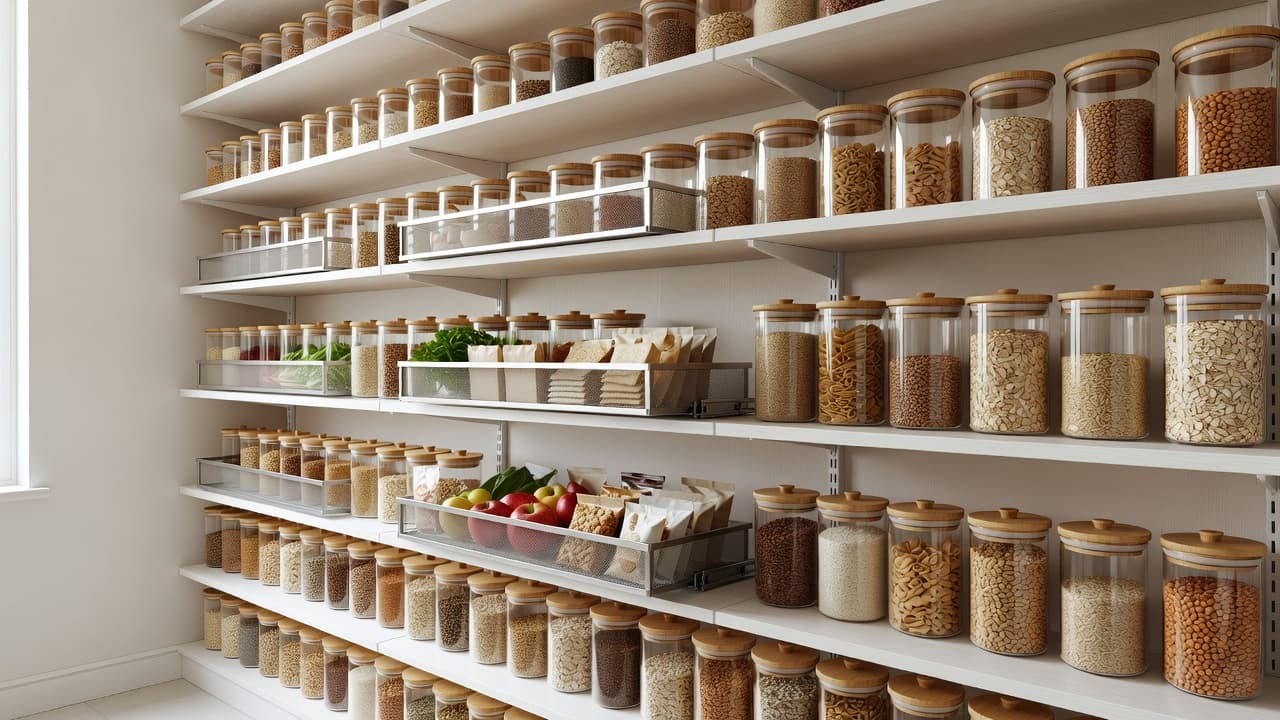
Use Pull-Out Shelves, Drawers, and Vertical Storage
Fixed shelves are inexpensive, but they often waste the back half of a pantry. Pull-out shelves solve that problem by bringing stored items forward. They work well for canned foods, small appliances, pots, and bulk packages.
Choose full-extension slides that allow the shelf to move almost completely out of the cabinet. A sturdy shelf should support the weight of canned goods without sagging or sticking. Add a raised front edge when possible, so containers stay in place as the shelf moves.
Drawers provide another useful layer of control. Shallow drawers are ideal for spice packets, snack bars, food wraps, and small baking tools. Drawer dividers keep these items from sliding into one crowded pile. Adjustable dividers are more useful than permanent grids because they can accommodate changing package sizes.
Vertical storage takes advantage of unused wall height. Narrow tray dividers can hold cutting boards, cooling racks, serving platters, and baking sheets on their edges. This arrangement keeps flat items from leaning across the shelf and blocking other products.
A door-mounted rack adds storage without taking up shelf space. Use it for seasoning bottles, foil, parchment paper, lunch supplies, or small jars. Choose a rack that leaves enough clearance for the pantry door to close. Heavy items can strain hinges, so keep door storage light and evenly distributed.
For small appliances, create a dedicated zone instead of stacking them wherever space remains. A pull-out shelf near an outlet can hold a toaster, blender, or slow cooker. If you use an appliance often, leave enough clearance to operate it without carrying it across the kitchen.
The most effective pantry storage hardware usually has three qualities:
- Adjustability , so shelf heights can change with your household's needs.
- Full access , so items at the back don't disappear.
- Stable movement , so loaded shelves open without tipping or sticking.
These features cost more than basic fixed shelving, but they reduce wasted space and daily frustration.
Choose Easy-Clean Materials for Fort Myers Kitchens
Fort Myers kitchens need pantry materials that handle frequent cleaning and a warm, humid environment. Food spills, tracked-in sand, and condensation can make rough or porous surfaces difficult to maintain.
Melamine shelving is a practical choice for many pantry renovations. It has a smooth finished surface that wipes clean, and it comes in several colors and wood-look patterns. Choose sealed edges and durable hardware to protect shelves from moisture and wear.
High-pressure laminate is another useful option for cabinet interiors and countertops inside a larger pantry. It resists everyday stains and gives you a broad range of colors. Light finishes can make a narrow pantry look brighter, but very pale surfaces may show crumbs quickly. A medium tone can offer a balanced appearance.
Powder-coated metal baskets are useful for onions, potatoes, packaged snacks, and cleaning supplies. The open design improves visibility and allows air to circulate. Select baskets with a coating that resists chipping, since exposed metal can become harder to clean.
Stainless steel works well for hardware and selected storage components. It handles regular wiping and has a clean appearance, although fingerprints may show. Plastic bins also have a place in the pantry, especially for lightweight packets and children's snacks. Look for thick, washable containers with smooth interiors.
Avoid unfinished wood, fabric bins, and unsealed particleboard in areas that may face spills or damp air. These materials can absorb moisture and hold onto odors. If you prefer wood shelving, use a sealed finish and confirm that the edges receive equal protection.
Lighting affects cleanliness, too. Install bright, even lighting so you can spot crumbs, expired food, and spills. A ceiling fixture may leave shadows behind deep shelves, so under-shelf or vertical lighting can improve visibility in a walk-in pantry.
A simple material plan might look like this:
| Pantry area | Practical material choice |
|---|---|
| Fixed shelves | Sealed melamine or laminate |
| Pull-out shelves | Finished wood or laminate with strong slides |
| Baskets | Powder-coated metal or washable plastic |
| Door rack | Coated metal with secure mounting |
| Containers | Clear, lidded plastic or glass |
The goal is a pantry that looks orderly after cleaning and stays useful through years of regular kitchen activity.
Control Small Items With Containers and Labels
Open bags create visual clutter and waste shelf space. Flour, sugar, cereal, rice, and snacks fit better in clear, stackable containers with secure lids. Uniform containers also make shelf heights easier to plan.
Choose container sizes based on the foods you buy most often. A tall container may suit pasta, while a wider one can hold cereal or baking flour. Avoid buying a large set before measuring your shelves. Containers that fit poorly can create a new kind of clutter.
Labels help every household member return items to the right location. Use simple names such as "rice," "snacks," or "baking supplies." A label on the front or lid makes the contents easy to identify, even when containers sit on a high shelf.
Bins can group loose items without requiring every package to transfer into a container. Use one bin for drink mixes, another for lunch items, and a third for small snack packages. Open-front bins work well on pull-out shelves because you can see the contents while shopping your pantry.
Keep an inventory zone for backup supplies. Store unopened extras behind or below the active container, but don't mix old and new products without checking dates. A first-in, first-out arrangement helps you use older food before newer purchases.
The same principle applies to paper products and household supplies. Keep paper towels, napkins, disposable containers, and cleaning products in separate bins. Store cleaning products away from food, preferably in a lower cabinet with a secure door.
For a compact pantry, use the inside of the door for lightweight items and reserve the shelves for food. For a walk-in pantry, consider a narrow counter for small appliances or grocery staging. That surface can keep bags off the kitchen island while you put items away.
If your pantry upgrade is part of a larger renovation, professional kitchen remodeling in Cape Coral can help coordinate cabinet dimensions, electrical placement, lighting, and storage hardware before construction begins.
Plan the Pantry Before Ordering Cabinets
Measure the pantry area before choosing shelves, bins, or appliances. Record the width, height, depth, door swing, nearby outlets, and any plumbing or air-conditioning components that affect the layout.
Then make a short inventory of what you store. Count small appliances, note oversized packages, and identify items that currently sit on the counter. This information helps determine whether you need more drawers, taller shelves, or a dedicated appliance station.
Door clearance deserves attention. A pull-out shelf may look useful on paper, but it won't work if the door, adjacent cabinet, or refrigerator blocks its movement. Walk through the layout with a tape measure before finalizing the design.
Place storage where it supports your cooking routine. Baking supplies belong near the work area if you bake often. Coffee items may deserve a zone close to the beverage station. Bulk goods need a sturdy, lower shelf because their weight makes them awkward to lift.
Finally, leave some empty space. A pantry with no room for a new box or serving platter will feel crowded within weeks. Adjustable shelves and movable bins let you respond to changes without rebuilding the entire system.
Conclusion
A less cluttered Fort Myers pantry starts with clear zones, accessible shelves, and materials that tolerate daily use. Pull-outs bring hidden items forward, dividers control drawers, and door racks use space that often goes unused.
The strongest pantry design ideas fit your actual shopping and cooking habits. When the layout, hardware, lighting, and finishes work together, every item has a logical home, and the pantry stays easier to maintain.