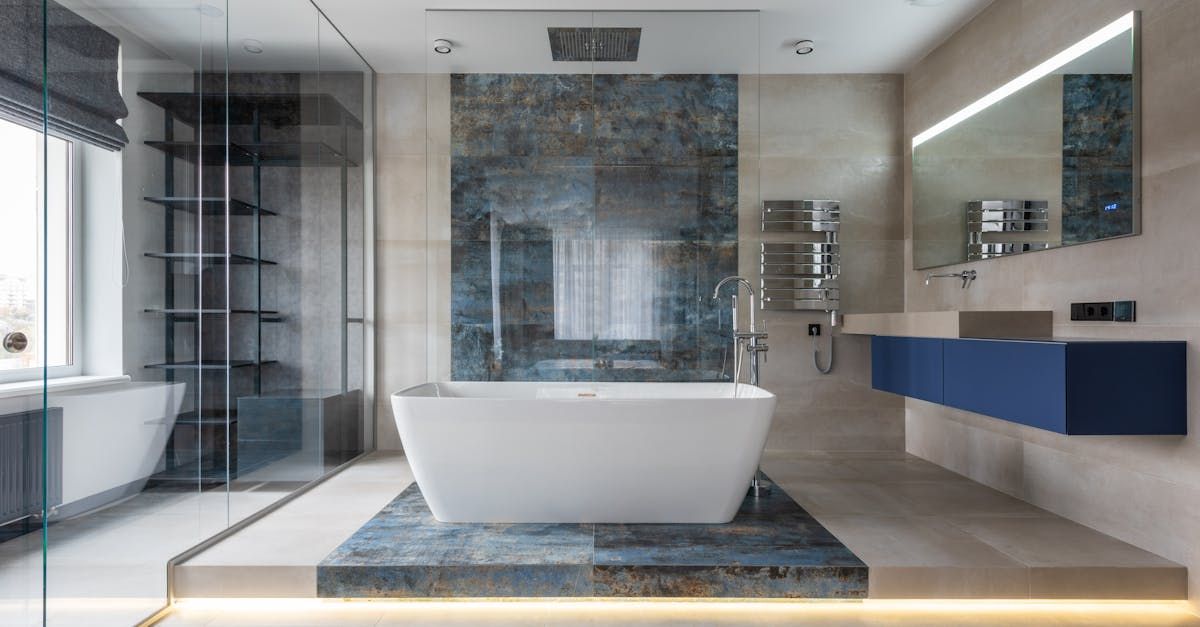

Naples Kitchen Backsplash Materials for Humid Homes
A kitchen backsplash in Naples has to handle more than cooking splashes. High humidity, salt air, frequent sink use, and acidic foods can expose weak materials and grout quickly.
The right Naples kitchen backsplash combines a low-absorption surface with suitable grout and careful installation. Porcelain, glass, stainless steel, quartz, and slab materials can all work well, but each has different cleaning and sealing needs. Start by matching the material to the area around your range, sink, and prep counters.
Key Takeaways
- Porcelain, glass, stainless steel, quartz, and solid-surface panels resist moisture well when installed correctly.
- Cement grout absorbs water and stains unless you seal and maintain it regularly.
- Epoxy grout offers stronger stain resistance for busy cooking areas and sink walls.
- Natural stone can work in Naples kitchens, but marble, limestone, travertine, and some granite require sealing.
- Fewer seams make a backsplash easier to clean and less vulnerable to discoloration.
What a Naples Kitchen Backsplash Needs to Handle
Humidity alone usually won't damage a quality backsplash surface. The bigger concern is repeated exposure to water, grease, food acids, and damp grout joints. A surface near the sink may receive dozens of wet splashes each week. The wall behind a range can collect oil vapor that turns sticky when mixed with dust.
Naples homes also face coastal conditions. Salt carried through open windows or outdoor air can leave a film on nearby surfaces, while strong air conditioning can create temperature changes around windows and exterior walls. These conditions don't make every material unsuitable, but they make easy cleaning and proper sealing more important.
Look for a backsplash surface with low water absorption , a smooth or lightly textured finish, and joints that don't trap grease. Large-format panels reduce grout lines. Smaller tiles provide more design flexibility, but they require more cleaning around the joints.
Water resistance and stain resistance aren't the same thing. Porcelain tile may resist water without any sealer, while the cement grout between those tiles can absorb both moisture and cooking residue. A backsplash can therefore contain a highly durable tile and a maintenance-heavy grout system.
Before choosing a material, consider:
- How close it will sit to the range or cooktop
- Whether the sink wall receives direct splashes
- How many seams and grout lines the design will have
- Whether the material needs periodic sealing
- Which cleaners the manufacturer allows
- Whether the wall is flat, sound, and ready for installation
The material matters, but the complete system matters more.
Backsplash Materials That Resist Humidity and Stains
Porcelain and ceramic tile
Porcelain is one of the strongest choices for a humid Naples kitchen. Quality porcelain tile has very low water absorption, so the tile body doesn't readily take in moisture, grease, or food coloring. It also handles heat near a range better than many resin-based surfaces.
Porcelain comes in large formats, slim mosaics, concrete looks, marble patterns, and solid colors. A large-format tile can create a cleaner wall with fewer joints. Rectangular subway tile remains practical, but the grout color and joint width will affect maintenance.
Ceramic tile can also work well on a backsplash. It usually has a softer body than porcelain, so it may offer fewer options for heavy-duty applications, but a glazed ceramic tile still provides a washable surface for most kitchen walls.
Neither material makes the entire installation maintenance-free. The tile may be water-resistant, while ordinary cement grout remains absorbent. Pair porcelain or ceramic with a suitable grout, especially behind the range and around the sink.
Glass tile
Glass tile is nonporous and doesn't absorb cooking liquids. Its smooth face wipes clean easily, which helps around a sink or prep area. Translucent glass can also reflect light in a kitchen with limited natural brightness.
Glass works best when the installation has clean, well-finished joints. Grease won't soak into the glass, but it can collect along grout lines or at the edges of outlets and trim. Choose a simple pattern if low maintenance is the priority.
Some glass tiles can scratch or chip if handled roughly. They also need an installer who understands the correct mortar, layout, and cutting methods. Ask about heat limits before placing glass directly behind a high-output range.
Quartz and porcelain slabs
Quartz backsplash panels provide a nearly seamless appearance and pair naturally with quartz countertops. The engineered surface is nonporous, so it doesn't need routine sealing. It resists many common kitchen stains, including coffee, wine, and tomato-based foods, when cleaned according to the manufacturer's instructions.
Quartz still needs reasonable care. Harsh chemicals, abrasive pads, and prolonged heat can damage some finishes or resin binders. Behind a cooktop, follow the fabricator's clearance and heat recommendations rather than assuming every quartz product has the same rating.
Porcelain slabs and other sintered surfaces offer another low-absorption option. Their large dimensions can reduce seams and grout, which is valuable in a wall that receives moisture and grease. However, slabs require careful transport, cutting, and installation. Costs can also rise because of fabrication and edge details.
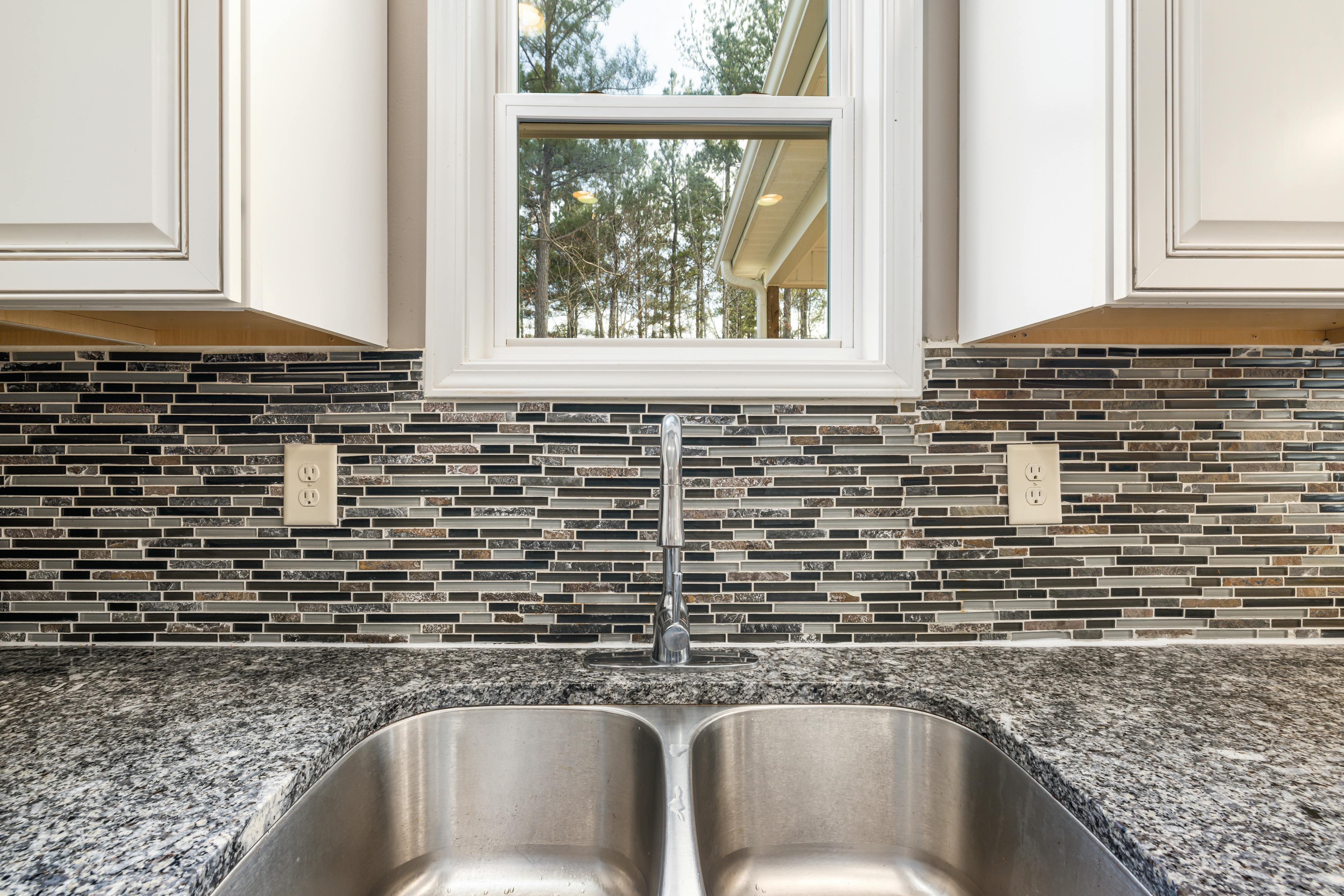
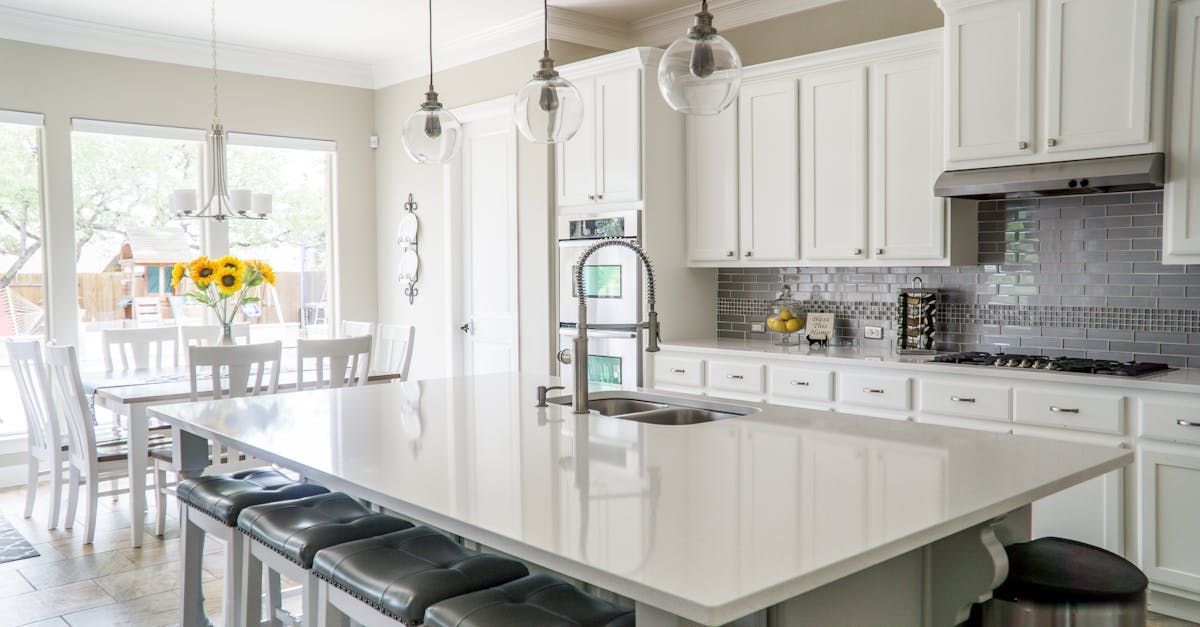
Photo by Curtis Adams
Stainless steel
Stainless steel is nonporous, heat tolerant, and easy to sanitize. A sheet backsplash behind the range eliminates most grout, making it a strong choice for homeowners who cook often.
The tradeoff is appearance and daily upkeep. Fingerprints, water spots, and fine scratches show more clearly on some polished finishes. Brushed stainless steel usually hides small marks better than a mirror finish. Clean it with a soft cloth and a product approved for stainless steel, and wipe in the direction of the grain.
Stainless steel can look especially effective in modern, industrial, or coastal kitchens. It also works as a small protective panel behind a range while another material covers the rest of the wall.
Solid-surface panels
Acrylic or polyester solid-surface products create a smooth, nonporous backsplash with few or no visible seams. They can be shaped around outlets and installed as a continuation of the countertop. Because the material has no porous grout, daily wiping is simple.
Solid surface is more sensitive to heat and scratching than porcelain or stainless steel. It may fit well behind a sink or along a beverage station, but the manufacturer may restrict its use directly behind a range. Confirm the product rating before ordering.
| Material | Water resistance | Sealing need | Best use |
|---|---|---|---|
| Porcelain tile | High | Tile usually no, grout may need it | Full kitchen walls and range areas |
| Glass tile | High | Grout may need it | Sinks, prep areas, bright coastal kitchens |
| Quartz | High | No routine sealing | Low-seam countertop-height backsplashes |
| Stainless steel | High | No | Behind ranges and busy prep zones |
| Natural stone | Varies | Usually yes | Design-focused areas with planned maintenance |
A low-absorption material reduces risk, but grout, seams, caulk, and installation details still deserve attention.
Grout Can Decide How Much Maintenance You Do
Grout often collects the stains homeowners blame on the tile. Cement-based grout contains pores that can absorb colored liquids and moisture. Sealing slows absorption, but it doesn't turn cement grout into a nonporous material.
Use a penetrating grout sealer after installation if the grout manufacturer requires one. Resealing intervals depend on the product, exposure, and cleaning routine. A backsplash near a sink or range may need closer attention than a lightly used wall.
Epoxy grout is a better fit for homeowners who want stronger stain and moisture resistance. It doesn't require the same type of penetrating sealer, and it resists many kitchen spills better than standard cement grout. Installers must work within its pot life and clean residue carefully, so labor can cost more.
Some urethane and premixed grouts also offer strong stain resistance. Their performance depends on the product and installation conditions. Read the technical data sheet before pairing a grout with glass, natural stone, or a large-format tile.
Color affects the appearance of maintenance. White grout can show tomato sauce, coffee, and cooking oils quickly. Very dark grout may reveal mineral deposits or dried cleaner. A mid-tone gray or taupe often gives homeowners more visual tolerance, though the right choice depends on the tile and kitchen lighting.
A waterproof tile with poorly maintained grout can still develop dark, stained joints.
Use flexible, mildew-resistant caulk where the backsplash meets the countertop, cabinets, windows, or inside corners. Grout belongs in tile joints, while movement joints need an appropriate sealant. This distinction helps prevent cracking and water entry.
Match Materials to the Range, Sink, and Coastal Conditions
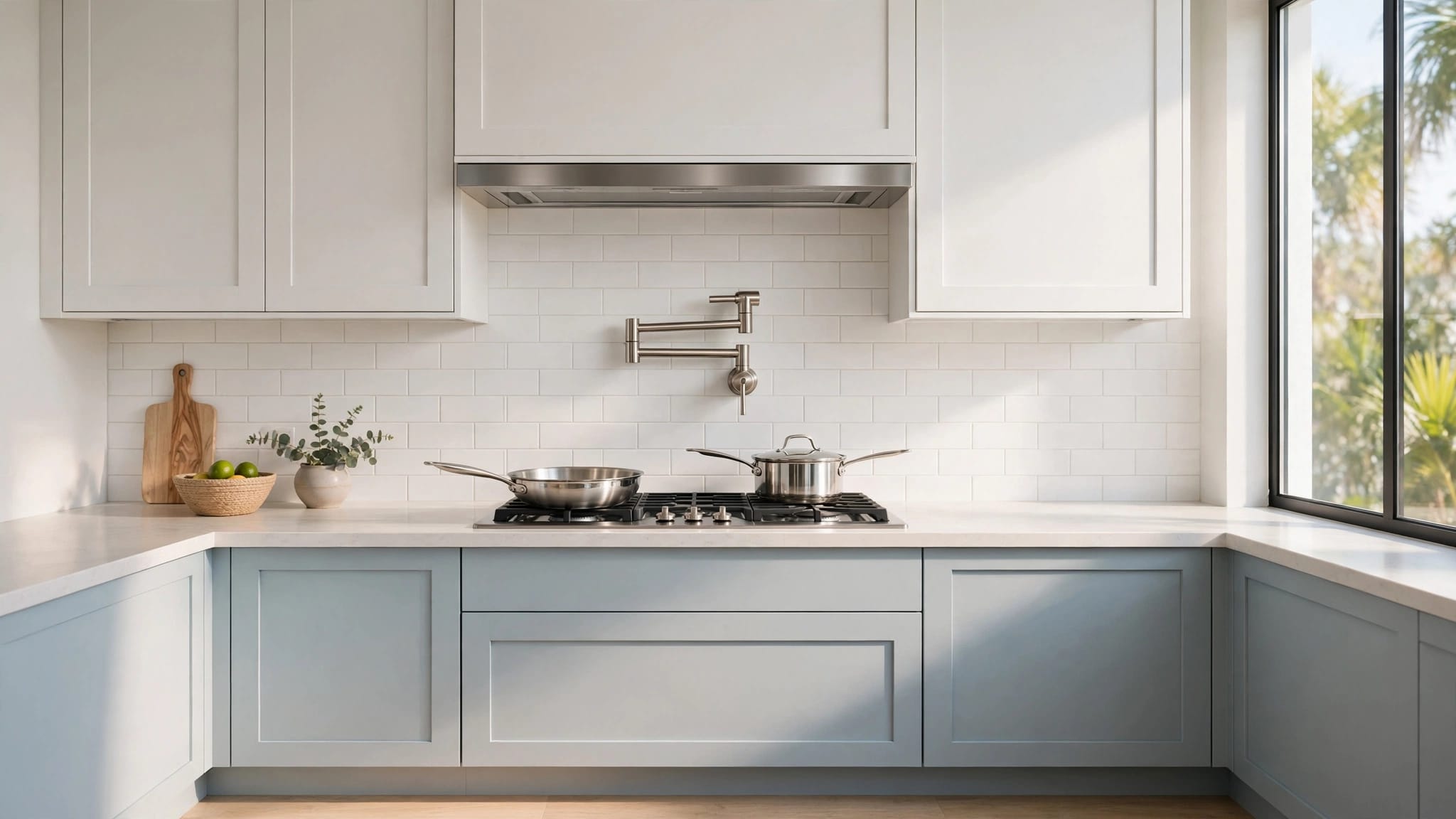
The wall behind a range needs the most protection from grease and heat. Porcelain tile, porcelain slab, stainless steel, and properly rated glass are strong candidates. Keep the layout simple enough to wipe without working around deep grooves or heavily textured surfaces.
Natural marble deserves extra caution behind a cooktop. Marble can etch when acidic foods or cleaners contact the surface, even if the stone has been sealed. A sealer reduces absorption but doesn't prevent etching. If you choose marble for its veining, use a honed or polished product only after understanding its care requirements.
Around the sink, prioritize water resistance and easy drying. Glass, porcelain, quartz, and solid-surface materials are practical choices. Large tiles or panels reduce the number of joints that can darken near the faucet.
The countertop-to-backsplash joint should receive a neat bead of kitchen-grade silicone or another approved sealant. Check the joint periodically for gaps, peeling, or discoloration. Repairing a small failed joint is easier than allowing water to reach the wall behind the counter.
For a coastal Naples home, avoid materials that demand constant drying unless you enjoy that routine. Textured stone, open-grain travertine, and unsealed grout can hold moisture and residue. If you prefer their appearance, limit them to areas with less direct exposure or commit to the required maintenance.
A kitchen renovation also gives you a chance to improve ventilation. Run the range hood during cooking and for a short period afterward. Good ventilation reduces grease deposits and moisture on every backsplash material.
Installation and Care Tips for Humid Kitchens
A durable backsplash starts with a dry, stable substrate. The wall should be clean, flat, and free from loose paint or moisture damage. If the existing wall has staining, bubbling, or a musty odor, identify and correct the source before covering it.
Use materials and setting products rated for the installation. Around a sink, the installer should treat penetrations for outlets, rails, and fixtures carefully. Behind a range, follow the appliance and backsplash manufacturer's clearance requirements.
Daily care can stay simple:
- Wipe cooking splashes soon after they occur, especially oil, coffee, wine, and tomato sauce.
- Use warm water and a mild cleaner approved for the surface.
- Dry the area around the sink to limit mineral spots and standing moisture.
- Skip abrasive powders, rough scrub pads, and acidic cleaners unless the manufacturer approves them.
- Check grout and caulk twice a year for cracks, gaps, or darkening.
- Reseal cement grout and natural stone according to the product instructions.
Hard-water residue may appear even when the backsplash is clean. A soft cloth and compatible cleaner usually work better than aggressive scrubbing. Natural stone requires extra care because vinegar, lemon-based products, and some bathroom cleaners can etch calcium-based stone.
When selecting a contractor for a kitchen remodeling project, ask for the exact tile, grout, sealer, caulk, and care instructions in writing. Product names matter because two materials with similar appearances can have different absorption rates and cleaning limits.
Conclusion
A reliable Naples kitchen backsplash starts with a material that resists moisture, but the grout and installation determine much of its long-term performance. Porcelain, glass, quartz, stainless steel, and solid-surface options make practical choices for humid homes when you match them to the range and sink.
Natural stone can still bring character to a kitchen, provided you accept sealing and surface-specific care. For the lowest maintenance, choose a low-absorption surface, limit grout lines, use the right joint sealant, and wipe away spills before they set.